


Transcriptional Regulation and Covalent Small-Molecule Inhibitors Transforming the Cyclin Dependent Kinase 7 Market
Targeting cell cycle progression and basal transcription machinery through selective Cyclin-Dependent Kinase 7 (CDK7) inhibition is opening novel therapeutic avenues across the Cyclin Dependent Kinase 7 Market. CDK7 functions as a dual-regulator controlling both cell cycle transition (via cyclin-dependent activating kinase activity) and RNA polymerase II transcription initiation. Inhibiting CDK7 selectively blocks the transcription of short-lived oncogenic driver proteins—such as MYC and MCL-1—triggering rapid apoptosis in transcription-addicted solid tumors and hematological malignancies.
Additionally, covalent small-molecule CDK7 inhibitors (such as SY-1365 and Samuraciclib) are demonstrating synergistic efficacy when combined with anti-estrogen therapies in hormone-receptor-positive breast cancer clinical trials.
Beyond breast cancer, preclinical research highlights the therapeutic potential of CDK7 inhibitors in treating advanced ovarian cancer, small-cell lung carcinoma, and MYC-driven cancers.
Furthermore, structure-based drug design and covalent binding chemistry enable high target selectivity, minimizing off-target toxicities traditionally associated with pan-CDK inhibitors.
Covalent CDK7 inhibitors selectively suppress transcription-addicted cancer cells by blocking RNA polymerase II activation.
People Also Ask
How does CDK7 dual-functionality regulate both cell cycle progression and gene transcription?
CDK7 acts as a CDK-activating kinase (CAK) driving cell cycle checkpoints while simultaneously phosphorylating RNA polymerase II C-terminal domains to initiate gene transcription.
Why are MYC-driven cancers particularly vulnerable to selective CDK7 inhibition?
MYC-amplified tumors depend on continuous high-level transcription; targeted CDK7 inhibition shuts down short-lived oncogenic transcripts, inducing rapid tumor cell death.
#CDK7 #TargetedTherapy #OncologyResearch #PrecisionMedicine #CancerDrugs
Categorie
Leggi tutto
The China Sleep Testing Services Market is undergoing a profound technological transformation, with wearable devices, AI-driven analytics, and telehealth platforms reshaping how sleep disorders are diagnosed and monitored. The market was valued at USD 2,515.53 Million in 2025 and is projected to reach USD 7,426.94 Million by 2035, at a CAGR of 11.43% — growth driven substantially by...

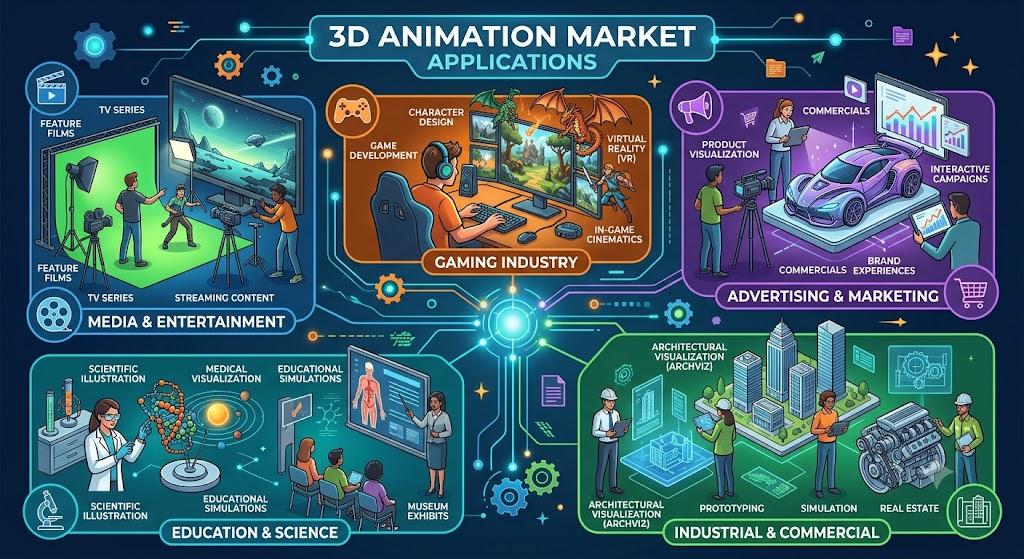
Unveiling the Latest Trends in the 3D Animation Market Maximize Market Research, a leading business consultancy firm, has released a comprehensive analysis of the 3D Animation Market. The report offers valuable business insights, including demand and pricing analysis, as well as an overview of the competitive landscape. It provides a detailed examination of the current state...
The convergence of artificial intelligence, real-world data analytics, and remote patient monitoring is transforming execution strategies across clinical trial operations. Detailed analysis within the Contract Research Organization Market report reveals that AI-driven data management platforms enable CROs to monitor continuous trial data streams, detect protocol deviations automatically, and...
Market Overview The angina market is integrating enhanced external counterpulsation (EECP) therapy as a non-invasive option for no-option angina patients who are not candidates for further revascularization and remain symptomatic despite maximal medical therapy. EECP devices apply synchronized cuff inflation to lower extremities during diastole, augmenting coronary perfusion and reducing...
Frequency conversion equipment changes the frequency of incoming power to control motor speed, enabling variable output from fixed-speed machines across industrial, utility and infrastructure applications. According to Market Research Future, frequency conversion equipment in the above-1kV voltage class is emerging as the fastest-growing segment, driven by increasing industrial automation and...