


How Are Laser and Detector Innovations Transforming Multiphoton Microscopy?
The performance of a multiphoton microscope depends on its core components—the laser that excites the sample and the detectors that capture emitted fluorescence. Innovations in both areas are transforming the technology, enabling faster imaging, deeper penetration, and more precise visualization. These advances are a major driver of growth in the Multiphoton Microscopy Market.
Advances in Ultrafast Lasers
The primary innovation is in laser technology. Traditional femtosecond lasers were bulky and expensive, but newer fiber-based and integrated ultrafast lasers are more compact, reliable, and affordable. These lasers also offer wider tunability, allowing researchers to excite multiple fluorophores with a single system. The shift toward turnkey lasers is lowering barriers to adoption and expanding the technology beyond specialized facilities.
Improved Detectors and Faster Imaging
A second transformation is in detectors. Gallium arsenide phosphide (GaAsP) detectors and newer high-sensitivity alternatives have improved signal-to-noise ratios, enabling clearer images at lower light levels. Coupled with faster scanning mechanisms, these advances allow multiphoton microscopes to capture higher-frame-rate images, enabling real-time observation of dynamic biological processes. As detector and scanning technology matures, the technology becomes more versatile and accessible.
People Also Ask
What laser technology is used in multiphoton microscopy?
Ultrafast, typically femtosecond, lasers are used. Newer fiber-based and integrated lasers are making systems more compact, tunable, and affordable.
How are detector improvements transforming multiphoton microscopy?
Improved detectors increase sensitivity, reduce noise, and enable faster, clearer imaging of dynamic biological processes.
As laser and detector technology continues to advance, multiphoton microscopy will become more powerful and accessible, driving further market growth.
Tags: #MultiphotonMicroscopy #UltrafastLasers #DetectorTechnology #ImagingTechnology #Microscopy
Categories
Read More
The China Sound Therapy Market is gaining momentum as mobile applications, streaming platforms, wearable devices, and digital wellness services make sound-based relaxation and therapeutic content more accessible. The growth of smartphones and digital health ecosystems is helping sound therapy reach consumers beyond traditional wellness centers. The China Sound Therapy Market includes digital...

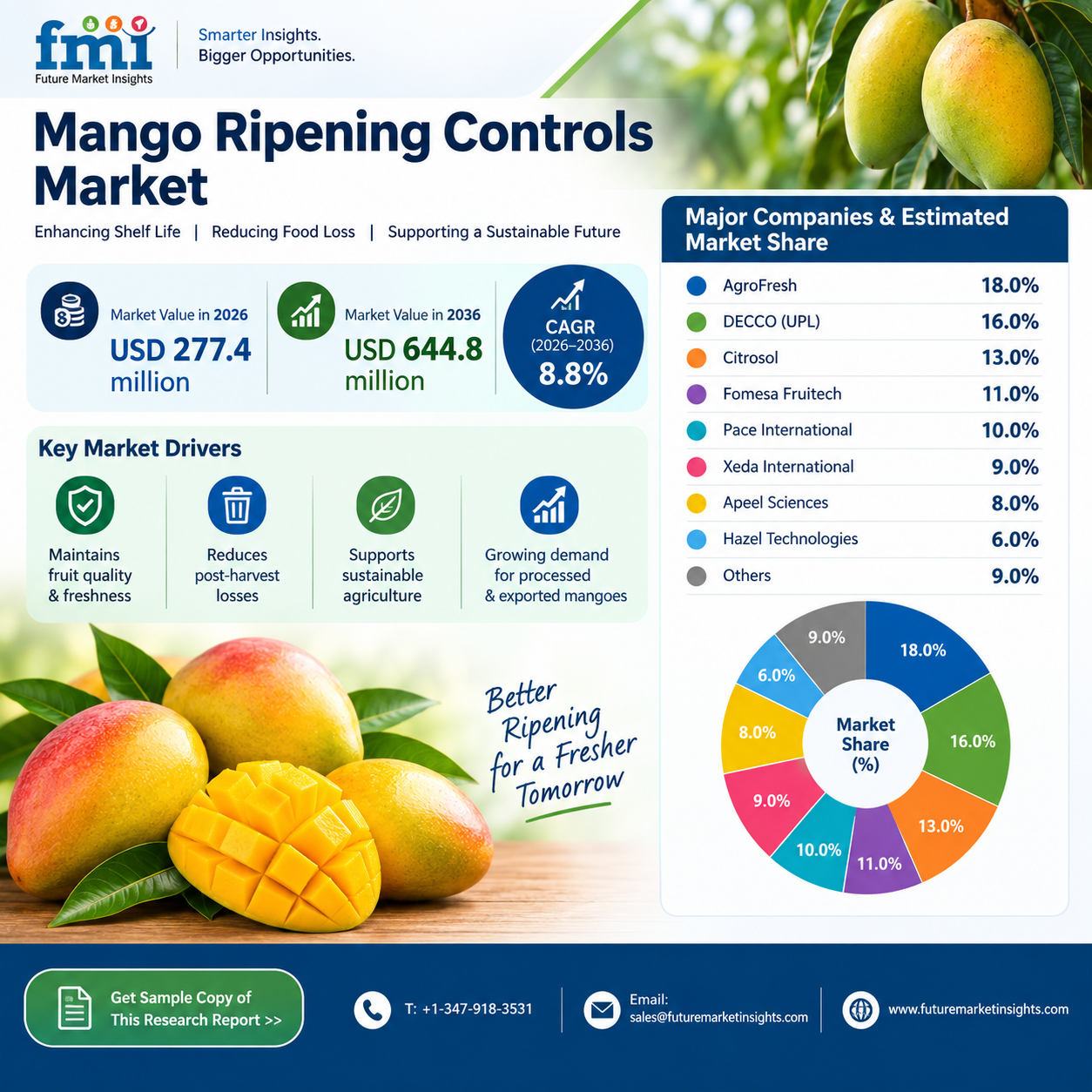
Mango Ripening Controls Market Edible Coatings Lead Product Type at 47.4% The global mango ripening controls market is forecast to increase from USD 277.4 million in 2026 to USD 644.8 million by 2036, expanding at an 8.8% CAGR during the 2026-2036 forecast period, according to Future Market Insights. The market stood at USD 255.0 million in 2025. Growth is being supported by the increasing...
Rising global prevalence of type 1 and type 2 diabetes mellitus, expanding clinical recognition of idiopathic delayed gastric emptying, and continuous biopharmaceutical commercialization of targeted prokinetic agents are driving expansion across the global Gastroparesis Drugs Market. Gastroparesis—a chronic neuromuscular GI disorder characterized by delayed gastric emptying without...
The Healthcare Middleware Market was valued at USD 4 billion in 2025 and is projected to grow to USD 8.5 billion by 2035, registering a CAGR of 6.7% during the forecast period. This robust growth trajectory reflects the fundamental role of healthcare middleware in addressing the demand for interoperability, seamless data integration, and enhanced operational efficiency across the global...
The rapid implementation of zero-trust network access frameworks, unified digital workspaces, and high-performance wireless connectivity is defining transformative South Korea Virtual Desktop Market Trends. Traditional perimeter-based enterprise cybersecurity frameworks have proven insufficient against modern lateral cyber threats, prompting domestic IT executives to build zero-trust models...