Comprehensive Value Chain Analysis Evaluates Gauge Architecture Across Civil and Process Verticals
A comprehensive Nuclear Density Gauge Market Analysis reveals an integrated, specialized industrial technology ecosystem connecting radioactive isotope producers, radiation detection component fabricators, precision mechanical shielding foundries, embedded software developers, and field testing end-users. At the foundational layer of this value chain are certified isotope processors producing sealed radioactive sources ($^{137}\text{Cs}$ and $^{241}\text{Am/Be}$) encapsulated in double-welded stainless steel capsules, alongside suppliers of heavy shielding metals like sintered tungsten alloys and depleted uranium. The intermediate manufacturing tier comprises specialized instrument builders that machine extruded aluminum chassis, assemble source-rod indexing mechanisms, calibrate radiation detectors (Geiger-Mueller tubes, Helium-3 gas tubes, and sodium iodide scintillators), and develop embedded firmware. Regional distributor networks, certified calibration laboratories, and radiation safety consultancies market these units, manage regulatory licensing paperwork, conduct mandatory periodic wipe tests, and provide field technician safety certifications. Finally, geotechnical engineering testing consultancies, general earthwork contractors, highway paving companies, and mining process plants deploy these systems to inspect compaction and fluid density across operational sites worldwide.
From a product configuration perspective, the market is broadly divided into Portable Nuclear Density Gauges and Stationary / Online Process Gauges. Portable nuclear density gauges account for the dominant share of total market valuation and equipment unit volume. Portable gauges are engineered for harsh, muddy, and dusty job-site conditions, featuring impact-resistant housings, weather-sealed mechanical shafts, and long-lasting rechargeable batteries. These instruments dominate the civil infrastructure and highway construction sectors, where geotechnical technicians transport them in certified Type A yellow transport cases to evaluate soil subgrades, aggregate base courses, and hot-mix asphalt. Stationary and online process gauges represent a high-value industrial segment, permanently bolted to heavy industrial pipelines or storage vessels in mineral beneficiation plants, chemical synthesis facilities, and wastewater treatment complexes to measure pulp density, fluid interface levels, and mass flow rates continuously.
Key Nuclear Density Gauge Value Chain and Operational Stages:
-
Isotopic Sourcing and Hermetic Encapsulation: Sourcing $^{137}\text{Cs}$ and $^{241}\text{Am/Be}$ capsules from nuclear research reactors with certified leak-free containment.
-
Shielding and Mechanical Safety Fabrication: Sintering heavy tungsten radiation blocks and assembling spring-loaded mechanical source shutter mechanisms.
-
Electronic and Sensor Integration: Assembling Geiger-Mueller tubes, $^3\text{He}$ neutron tubes, high-voltage power supplies, and digital pulse counters.
-
NIST-Traceable Calibration Blocks: Calibrating instruments against certified granite, limestone, and magnesium blocks to establish exact calibration constants.
-
Regulatory Packaging and Compliance Screening: Certifying Type A transport containers, executing radioactive wipe testing, and issuing NRC/IAEA documentation.
-
Field Deployment and Annual Servicing: Providing RSO safety training, five-year source shutter inspections, and recalibration services for end-users.
From an application vertical perspective, the market is categorized into Road Construction & Paving, Earthworks & Embankments, Mining & Mineral Processing, Oil & Gas Processing, and Building Foundations. Road construction and paving represents the largest demand vertical by valuation, driven by high testing frequency mandates enforced by highway authorities that require density measurements for every asphalt lift and aggregate layer. Earthworks and embankments represent the second-largest volume segment, utilized extensively during reservoir levee grading, railway subgrade preparation, and airport runway earthmoving. Mining and mineral processing represents the highest-value stationary segment, as operators rely on non-contact radiometric slurry gauges to optimize grinding mill outputs and manage tailings dam stability. Building foundations, pipeline backfill compaction, and civil utility trenches maintain steady procurement volumes, requiring verified compaction to prevent settlement cracks in residential and commercial developments.
A regional examination indicates clear variations in infrastructure spending, nuclear regulatory frameworks, and civil engineering adoption across major global territories. North America commands the leading market share by valuation, capturing significant global revenues supported by extensive highway paving projects funded under federal infrastructure legislation, high adoption of ASTM geotechnical standards, and mature nuclear licensing networks across the United States and Canada. Europe represents the second-largest market by valuation, characterized by strict civil engineering quality standards, high public transit rail investments, and stringent European nuclear safety regulations that encourage the adoption of advanced, heavily shielded instruments. Meanwhile, the Asia-Pacific region is projected to register the fastest compound annual expansion rate through the forecast window, propelled by massive transportation megaprojects, extensive highway network expansions, and heavy mining activity across China, India, Australia, and Southeast Asia.
Despite strong market drivers, the nuclear density gauge sector must navigate several operational challenges to maintain long-term profitability. Sourcing radioactive isotopes depends on a limited number of specialized international nuclear research reactors, exposing supply chains to potential allocation constraints. Furthermore, the administrative and financial burdens associated with regulatory compliance—encompassing hazardous material shipping surcharges, radioactive storage bunker requirements, annual licensing fees, and end-of-life radioactive source disposal—can encourage cost-sensitive contractors to evaluate non-nuclear alternatives. Leading nuclear gauge manufacturers navigate these hurdles by offering comprehensive regulatory assistance, providing turn-key radiation safety officer (RSO) training courses, developing low-activity source options, and offering trade-in source disposal programs. By combining sub-atomic measurement accuracy with rugged mechanical durability and integrated digital reporting, premier nuclear density gauge providers continue to defend their operating profit margins and expand their civil engineering customer bases.
Top Trending Reports :
Kategorien
Mehr lesen
Typhus treatment is evolving, driven by research, public health efforts, and the changing epidemiology of vector-borne diseases. The future promises better diagnostics, more accessible treatments, and stronger prevention. Understanding these trends helps manufacturers, providers, and policymakers anticipate what is coming. Several developments will shape the field. Rapid diagnostic tests are...

The Omega3 Omega 3 Market is a major segment of the global nutrition and functional-food industry, supported by consumer interest in nutritional supplements and products containing essential fatty acids. Omega-3 products are available through dietary supplements, functional foods, pharmaceutical applications, and animal nutrition. The Omega3 Omega 3 Market report examines the market according...
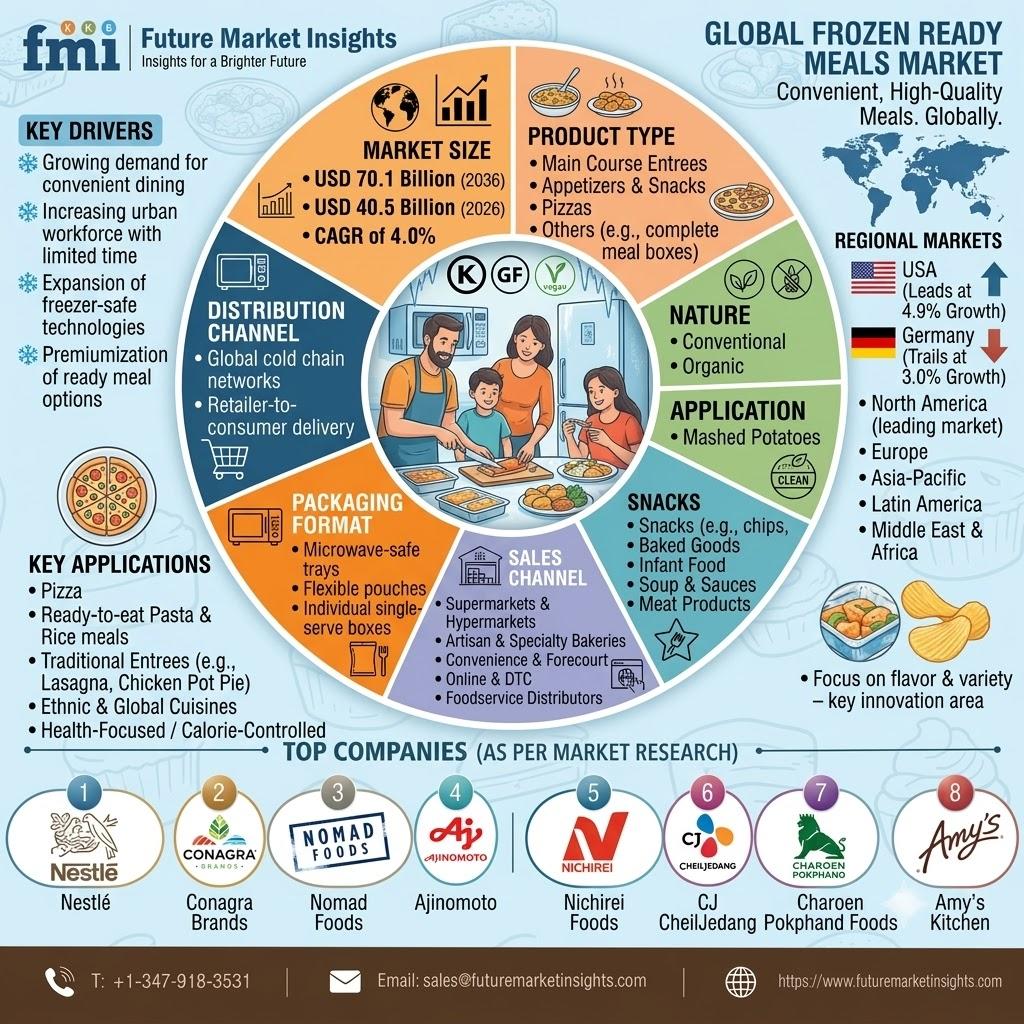
Frozen Ready Meals Market to Reach USD 70.1 Billion by 2036 at 4.0% CAGR; USA Leads Country Growth at 4.9%, Germany Trails at 3.0% The global frozen ready meals market is projected to increase from USD 47.2 billion in 2026 to USD 70.1 billion by 2036, expanding at a 4.0% CAGR during the 2026–2036 forecast period. Demand is supported by limited cooking time at home and demand for...
The increasing recognition of rare musculoskeletal tumors and the growing availability of targeted therapies have propelled substantial expansion in the oncology therapeutics domain. According to detailed industry evaluation of the Tenosynovial Giant Cell Tumor Treatment Market, CSF1R inhibitors, surgical interventions, and radiation therapy remain among the most sought-after treatment...
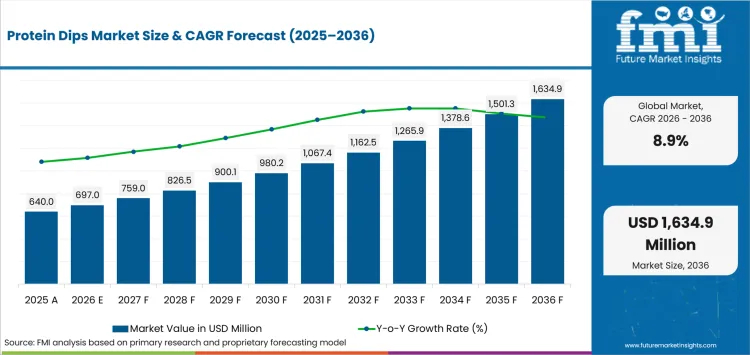
Protein Dips Market Size to Reach USD 1.63 Billion by 2036 at 8.9% CAGR, driven by Rising Demand for High-Protein Refrigerated Snacks Europe, France., October 6, 2026 — The global Protein Dips Market is expected to witness strong growth as consumers increasingly seek convenient foods that combine familiar taste and texture with higher nutritional value. According to Future Market Insights...