


LNG Carriers: Essential Vessels Powering Global Natural Gas Trade

According to Market Research Future, the LNG carriers market reached USD 16.55 billion in 2025 and is projected to reach USD 33.83 billion by 2035, expanding at a CAGR of 7.4% during the forecast period. This substantial growth reflects the critical role that LNG carriers play in enabling international natural gas trade, connecting liquefaction facilities with regasification terminals across the globe.
Understanding LNG Carriers
LNG carriers are specialized vessels designed to transport liquefied natural gas at cryogenic temperatures of approximately -162°C. These sophisticated ships incorporate advanced containment systems and propulsion technologies to safely and efficiently move large volumes of LNG across oceans.
Containment Systems
Membrane Containment: Dominant with 65.8% market share, offering superior volumetric efficiency per unit of hull steel.
Moss Containment: 21% share, providing sloshing tolerance and FSRU conversion suitability.
Prismatic Type A and B: Niche applications for specific operational requirements.
Propulsion Technologies
Steam Turbine: Legacy technology with 37.4% share, declining as efficiency requirements tighten.
X-DF Two-Stroke: Fastest-growing at 9.2% CAGR, offering low methane slip and superior fuel efficiency.
DFDE/TFDE: Mid-2010s newbuild cohort with redundancy.
ME-GI: High-pressure injection with reliquefaction pairing.
Market Drivers Accelerating Demand
Qatar's North Field Expansion
QatarEnergy's North Field East and South trains will lift liquefaction capacity from 77 to approximately 142 million tonnes per annum by 2030, triggering the largest single newbuild program in shipping history with more than 120 vessels contracted.
US Gulf Coast Liquefaction Wave
The second wave of US liquefaction capacity including Plaquemines, Corpus Christi Stage 3, and Rio Grande adds long-haul tonne-mile demand that the existing fleet cannot absorb.
IMO Efficiency Regulations
Carbon Intensity Indicator ratings create compliance pressure on older tonnage, driving fleet renewal and propulsion technology upgrades.
Asian Coal-to-Gas Switching
The IEA projects global LNG trade rising from approximately 560 bcm in 2025 to 810 bcm by 2035, with China, India, and Southeast Asia absorbing over 60% of incremental volumes.
European Import Terminal Buildout
Since 2022, Europe has commissioned or contracted more than 30 import projects, adding roughly 100 bcm of annual regasification capacity.
Market Segment Insights
By Containment Type
Membrane: 65.8% share, dominant for large-scale vessels.
Moss: 21% share, transitioning toward floating storage roles.
Prismatic: Combined 13.2% for small-scale applications.
By Propulsion Type
Steam Turbine: 37.4% share, declining fleet.
X-DF Two-Stroke: 9.2% CAGR, fastest-growing.
ME-GI: 9.5% share with reliquefaction pairing.
By Vessel Capacity
180,000-220,000 m³: USD 7.98 billion in 2025, optimal scale-to-access balance.
140,000-180,000 m³: 31.6% share for legacy trades.
Above 220,000 m³: 7.8% share for Qatar Q-Flex and Q-Max routes.
By Charter Type
Time Charter: 60.8% share for producer capacity assurance.
Spot/Voyage: 8.6% CAGR for arbitrage trading.
Bareboat: 8.8% share for leasing structures.
Regional Market Analysis
Asia-Pacific: Market Leader
Asia-Pacific holds 45.3% revenue share, driven by Chinese, Japanese, and Korean charterers plus the shipbuilding cluster. The region also posts the fastest CAGR at 7.8%.
Europe: Second Largest
Europe follows at 24.6%, sustained by the post-2022 pivot away from piped Russian volumes.
North America: Third Largest
North America holds 17.8% share with Gulf Coast liquefaction wave two.
Middle East & Africa
The region contributed USD 1.44 billion in 2025, dominated by Qatar's North Field expansion.
Technology Trends Shaping the Future
Ammonia and Methanol Dual-Readiness
Yards now offer ammonia-ready notations for a premium of roughly USD 8-12 million per hull, preserving optionality against fuel transition.
Digital Voyage Optimization
Weather-routing and speed-optimization platforms deliver documented 4-7% bunker savings per voyage.
Autonomy and Condition-Based Operations
Class societies have begun approving remote-monitoring notations permitting reduced-manning engine room operation.
Carbon Accounting Integration
The EU Emissions Trading System now covers maritime transport, making efficiency a pricing variable.
Challenges Constraining Growth
Orderbook Overhang: Nearly half of the active trade fleet is made up of confirmed orders.
Yard Concentration: Four builders control the vast majority of membrane construction capacity.
Crewing Constraints: Industry surveys point to a shortfall approaching 10,000 qualified LNG officers by 2030.
Charter Rate Volatility: Atlantic headline fixtures fell from USD 190,000 per day to less than USD 30,000 in two quarters.
Future Outlook and Opportunities
Small-Scale and Bunkering Tonnage
Vessels below 40,000 m³ serving bunkering hubs represent the fastest-expanding end-user pocket.
Emerging-Market Regasification Gaps
Vietnam, Philippines, Bangladesh, and Ghana offer conversion demand for older Moss-type hulls.
Carbon Accounting as Revenue
Vessels with superior intensity profiles capture quantifiable rate premiums.
Conclusion
The LNG carriers market provides essential vessels enabling international natural gas trade. As global LNG demand grows and fleet renewal accelerates, demand for advanced carriers will continue expanding. The market's trajectory from USD 16.55 billion in 2025 to USD 33.83 billion by 2035 reflects sustained investment in maritime infrastructure supporting global energy trade.
Discover emerging opportunities with in-depth research reports:
South Korea Power Strip Industry
Categories
Read More
The Spain Hemostasis Tissue Sealing Agents Market exhibits a dynamic competitive landscape characterized by innovation, strategic partnerships, and technological integration among key players. The market is projected to grow from USD 191.32 million in 2025 to USD 412.12 million by 2035, registering a CAGR of 7.98% during the forecast period. This growth trajectory reflects the collective...

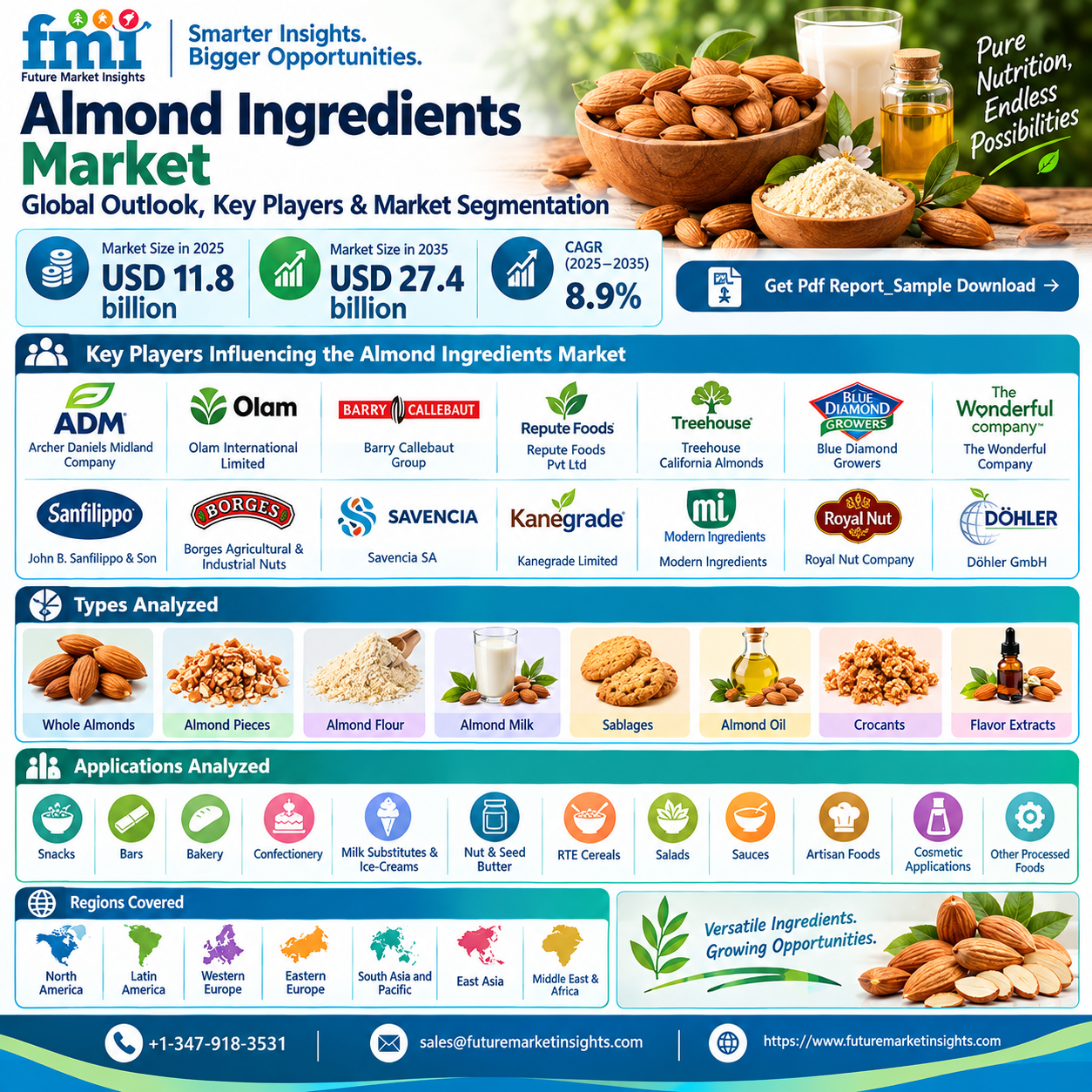
The Almond Ingredients Market Opportunity Is Getting Bigger—and More Sophisticated The global almond ingredients market was valued at USD 11.8 billion in 2025 and is projected to reach USD 27.4 billion by 2035, expanding at a CAGR of 8.9% between 2025 and 2035. That growth reflects more than rising almond consumption. It points to a broader transformation in how food manufacturers use...
The future of the US Dry Age-Related Macular Degeneration AMD Market will be defined by continued innovation, personalized medicine, and expanding applications across telemedicine, AI-driven diagnostics, and genetic profiling. The market is projected to grow at an 8.3% CAGR from 2025 to 2035, driven by advancements in treatment options and increasing patient awareness. This...
The Hydrogen production technology market is undergoing a significant transformation, driven by the accelerating adoption of green hydrogen production methods and the rapid advancement of electrolysis technologies. According to Market Research Future, the market is positioned for substantial growth as industries, governments, and energy providers increasingly recognize the importance of...

The Vonoprazan Fumarate API market is experiencing a remarkable transformation, driven by the growing demand for innovative therapies in gastrointestinal disorders. As a novel potassium-competitive acid blocker (P-CAB), Vonoprazan has emerged as a compelling alternative to traditional proton pump inhibitors (PPIs), offering superior efficacy, faster onset of action, and more consistent acid...