


Quantifying Global Deployment Dimensions and Capital Investment Projections Across Mission Critical Safety Sectors
Assessing the worldwide physical deployment and procurement trajectory of structural diagnostic systems reveals the substantial quantitative footprint defined by the global Acoustic Emission Testing Market Size. As manufacturing output, energy extraction, and transportation networks multiply in scale and technical complexity, the physical volume of assets requiring continuous structural health monitoring has reached historic highs. This structural expansion encompasses millions of kilometers of high-pressure fluid pipelines, hundreds of thousands of petrochemical storage vessels, massive fleets of commercial aircraft, and tens of thousands of offshore and onshore wind turbines worldwide, establishing an immense equipment and service procurement base.
The quantitative expansion of this sector is heavily influenced by cross-industry capital expenditure programs across conventional and low-carbon energy sectors. In the power generation domain, the global construction of next-generation nuclear facilities—including both large-scale pressurized water reactors and small modular reactors (SMRs)—requires vast multi-channel acoustic monitoring arrays built directly into reactor pressure boundaries, containment shells, and primary coolant circuits during initial construction. Concurrently, the accelerating buildout of hydrogen distribution networks, carbon capture and storage (CCS) pipelines, and high-pressure cryogenic liquid storage facilities introduces severe operating demands, including hydrogen embrittlement and cryogenic thermal stresses, which necessitate continuous, high-channel-count acoustic surveillance installations.
The volume of testing is expanding rapidly across transportation infrastructure and bridge safety networks. Thousands of critical concrete and steel bridges across North America, Europe, and Asia are operating decades beyond their original design life spans, carrying traffic volumes far exceeding initial structural specifications. Transportation authorities are deploying thousands of autonomous, solar-powered acoustic monitoring boxes across bridge suspension cables, pre-stressed concrete girders, and steel truss gusset plates. By continuously monitoring wire breaks in main suspension cables and acoustic fatigue crack propagation in heavy-load steel supports, public transportation agencies avoid premature bridge closures and make targeted, data-backed retrofits, safely extending civic asset life.
Looking forward, the global physical deployment capacity of acoustic diagnostic systems will continue to expand as manufacturing paradigms evolve toward automated Industry 4.0 standards. Advanced additive manufacturing (3D printing) of complex aerospace turbine components and pressure-retaining valves relies on acoustic emission arrays embedded directly inside build chambers to catch localized thermal cracking, porosity formation, and layer delamination in real time during the printing process. This integration into primary manufacturing quality assurance, combined with expanding aftermarket asset integrity programs across global heavy industry, firmly establishes acoustic emission testing as an indispensable, high-volume technology cornerstone of worldwide industrial safety.
Top Trending Reports :
Us Public And Personal Safety Market
Категории
Больше
Rhinoplasty is a popular cosmetic procedure that reshapes the nose to improve facial balance, address structural concerns, or enhance breathing. While the surgery itself is an important step, recovery plays an equally significant role in achieving a satisfactory outcome. Understanding what happens during each stage of healing can help patients feel more prepared and confident throughout the...

Decitabine is being explored in combination with other agents—potentially improving outcomes. These strategies are shaping the decitabine drug market. Within the Decitabine Drug Market, combination therapies are emerging. The commercial implications favor manufacturers with pipeline investments. Geographically, research is concentrated in advanced markets. Looking ahead, combinations will...

Vascular dementia is linked to the same risk factors as heart disease and stroke. That means there is good news: many of the steps that protect your heart also protect your brain. Here are five ways to reduce your risk. First, control blood pressure. Hypertension damages blood vessels in the brain. Second, manage diabetes. High blood sugar damages vessels over time. Third, lower cholesterol....
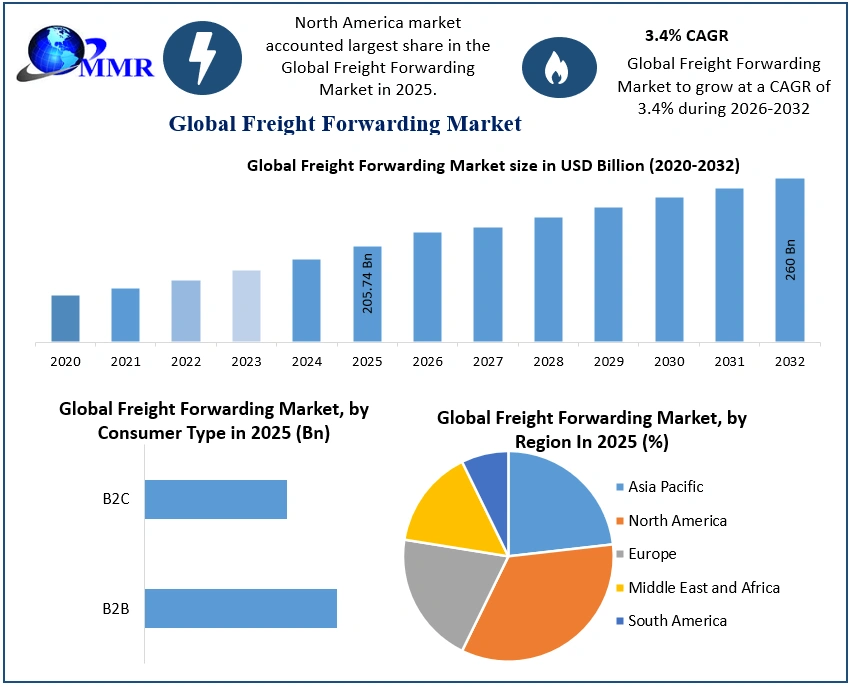
Market Overview The Freight Forwarding Market is undergoing steady transformation as international trade, cross-border e-commerce, supply-chain diversification, and digital logistics technologies reshape the movement of goods. According to Maximize Market Research, the global Freight Forwarding Market was valued at USD 205.74 billion in 2025 and is projected to grow at a CAGR of 3.4%...
Market Overview The N15 stable isotope labeled biomolecules market is growing as research institutions increasingly rely on isotope labeling for precise metabolic tracing and structural analysis. The N15 Stable Isotope Labeled Biomolecules Market is projected to grow through 2030, driven by expanding proteomics research, growing demand for accurate mass spectrometry quantification, and...