


Inside the Ovarian Cancer Diagnostics Market: Growth Drivers, Barriers, and What's Next
Ovarian cancer diagnostics sits at the intersection of oncology, medical imaging, and molecular testing — a combination that makes it both scientifically complex and commercially attractive. Demand for better diagnostic tools is rising, driven by the unmet need for early detection, growing awareness of genetic risk, and advances in biomarker and imaging technology. Yet the market also faces real barriers, from reimbursement uncertainty to the difficulty of validating screening tests.
The ovarian cancer diagnostics market is drawing investment from diagnostics companies, imaging vendors, and molecular testing labs alike. Growth is being fueled by rising incidence in aging populations, expanded genetic testing for BRCA mutations, and increasing adoption of multi-marker panels in clinical workflows.
Key Growth Drivers
-
Rising disease burden: Ovarian cancer incidence remains significant, particularly in older women.
-
Genetic testing expansion: BRCA and HRD testing are becoming standard for treatment decisions.
-
Technological advances: Liquid biopsy and AI-assisted imaging are opening new diagnostic pathways.
-
Awareness campaigns: Advocacy groups are pushing earlier evaluation of persistent symptoms.
Barriers to Adoption
New diagnostics face a familiar hurdle: reimbursement. Tests that aren't covered by payers struggle to reach routine use, regardless of clinical value. Regulatory pathways for screening tests are also rigorous, requiring large prospective trials to demonstrate that earlier detection actually improves outcomes. And in many regions, access to specialist imaging and molecular labs remains uneven.
People Also Ask
What is driving growth in the ovarian cancer diagnostics market?
Growth is driven by rising cancer incidence, expanded genetic testing, advances in biomarker and imaging technology, and growing awareness of the importance of early detection.
What are the challenges in ovarian cancer diagnostics?
Key challenges include reimbursement barriers, the difficulty of validating screening tests, limited access to specialist labs and imaging, and the biological complexity of the disease.
What to Watch
The most important developments to watch are validation results for multi-cancer early detection tests, progress in liquid biopsy for ovarian cancer specifically, and how payers respond to new biomarker panels. Companies that can demonstrate clinical utility — not just analytical performance — will be best positioned to capture share in this evolving market.
Tags: #OvarianCancerDiagnostics #MarketAnalysis #CancerTesting #Biomarkers #OncologyMarket #HealthTech #LiquidBiopsy
Categorias
Leia Mais
Designing dependable, high-voltage galvanic isolation systems for modern power conversion and industrial control infrastructure requires balancing dielectric breakdown voltages, common-mode transient noise immunity, propagation delay matching, electromagnetic interference resilience, and operating component lifecycles, engineering criteria examined within the Optocoupler IC Market Analysis....

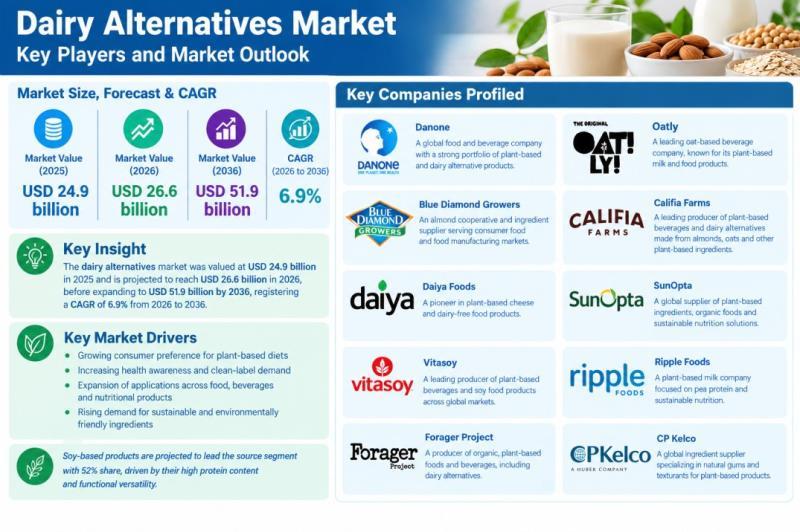
NEWARK, Del., October 13, 2026. — The global Dairy Alternatives Market was valued at USD 24.9 billion in 2025 and is projected to reach USD 26.6 billion in 2026, before expanding to USD 51.9 billion by 2036, registering a CAGR of 6.9% from 2026 to 2036, according to Future Market Insights (FMI). The growth outlook is being shaped by increasing consumer interest in plant-based...
Market OverviewThree-dimensional bioprinting is emerging as a transformative technology in the orthobiologics market, enabling patient-specific scaffolds that support bone regeneration and repair. These scaffolds can be designed to match a patient’s anatomy and may incorporate osteogenic cells, growth factors, or bioactive materials. The Orthobiologics Market is projected to grow from USD...
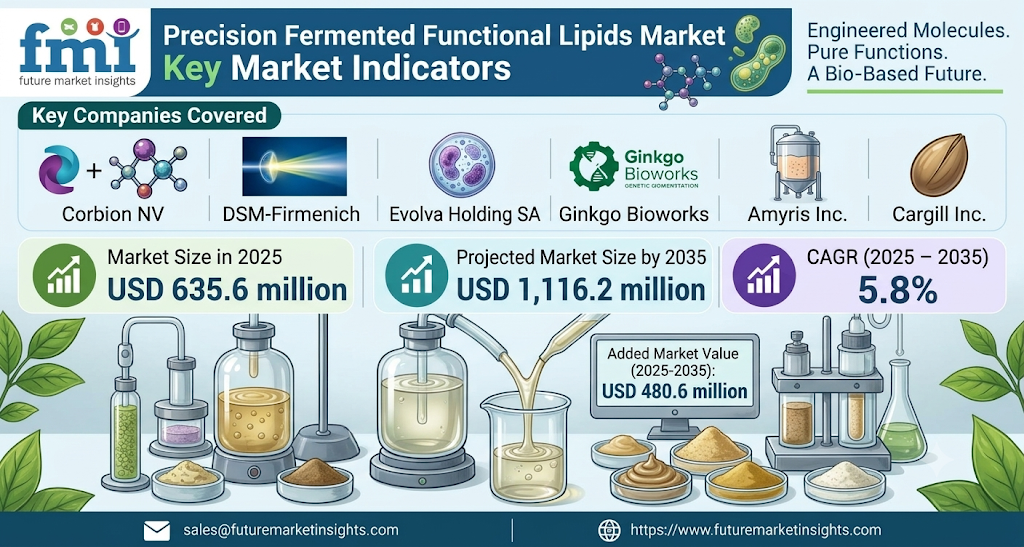
NEWARK, Del., November 3, 2026 — The global Precision Fermented Functional Lipids Market was valued at USD 635.6 million in 2025. According to Future Market Insights (FMI), the market is projected to reach USD 1,116.2 million by 2035, expanding at a CAGR of 5.8% between 2025 and 2035. This represents an additional market opportunity of USD 480.6 million over the forecast period. The...
Detailed market valuations, form-factor segmentations, and competitive vendor market shares are systematically evaluated in the Wdm Fiber Optic Module Market intelligence coverage, benchmarking high-speed optical transceivers across cloud service providers, telecommunications carriers, cable MSOs, and enterprise networks. The economic imperative of WDM module deployment centers on overcoming...