


Inside Needleless Connector Design: How Innovation Is Reducing Contamination Risk
Not all needleless connectors are equal. Behind the small plastic housing is a complex engineering challenge: the connector must seal reliably, resist bacterial colonization, allow smooth fluid flow, and be easy to disinfect. Design choices — from valve mechanics to surface materials — have real consequences for infection risk and clinical workflow. Innovation in this space is a major driver of growth in the acute care needleless connector market.
The acute care needleless connector market is seeing steady product development focused on reducing contamination, improving flush performance, and supporting compliance with disinfection protocols. Manufacturers are also investing in connectors that minimize blood reflux, which can contribute to catheter occlusion and biofilm formation.
Key Design Considerations
-
Valve mechanism: split-septum, positive displacement, negative displacement, and neutral displacement designs behave differently
-
Surface finish: smooth surfaces are easier to disinfect effectively
-
Fluid path: straight paths reduce turbulence and residue buildup
-
Reflux control: prevents blood from entering the catheter lumen
-
Material compatibility: must withstand repeated disinfection without degradation
Displacement Design and Clinical Impact
Positive displacement connectors push fluid forward when disconnected, helping prevent blood reflux. Negative displacement connectors draw blood back into the catheter. Neutral displacement designs aim to minimize fluid movement in either direction. Understanding these differences helps clinicians choose connectors that align with their protocols.
People Also Ask
What are the different types of needleless connectors?
The main types are split-septum, positive displacement, negative displacement, and neutral displacement connectors. They differ in how they manage fluid flow and reflux when connected and disconnected.
Why is connector disinfection important?
Disinfecting the connector surface before each access reduces bacterial contamination, which is critical for preventing bloodstream infections associated with vascular access.
The Innovation Outlook
Future connector designs will likely emphasize antimicrobial materials, easier disinfection, and compatibility with closed-system transfer devices. As hospitals standardize vascular access practices, connectors that support consistent protocols and reduce variability will have a competitive advantage.
Tags: #NeedlelessConnectorDesign #InfectionControl #VascularAccess #MedicalDeviceInnovation #AcuteCare #CLABSIprevention #ClinicalEngineering
Κατηγορίες
Διαβάζω περισσότερα
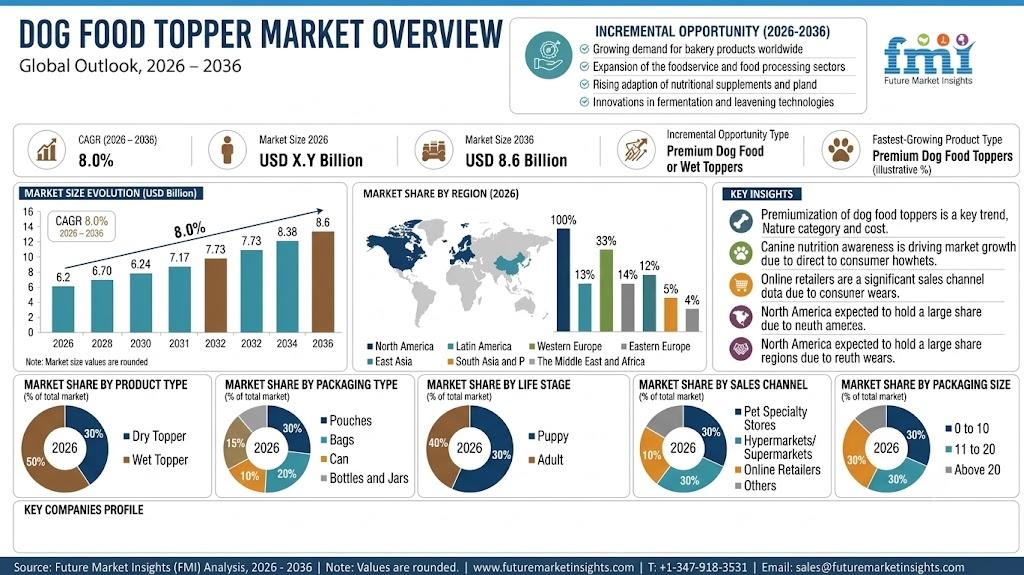
Dog Food Topper Market Premium Nutrition Trends Accelerate Growth Pune, India – Oct 1, 2026 — The global Dog Food Topper Market Size is expected to expand from USD 4.0 billion in 2026 to USD 8.6 billion by 2036. The market is projected to register a 8.0% CAGR during the forecast period. Dry topper is likely to lead product type with an 82.5% share in 2026, while pouches are...
Surging global incidence of Chronic Obstructive Pulmonary Disease (COPD), increasing ambient air pollution, and expanding clinical adoption of routine pulmonary function testing (PFT) are propelling rapid growth across the global Spirometer Market. Spirometers convert respiratory air volume and flow rates into precise diagnostic curves, serving as essential tools for diagnosing asthma, chronic...

The Veterinary Pharmaceutical Market is experiencing consistent growth, driven by the rising demand for animal health products, increasing pet ownership, and growing awareness of preventive healthcare for both companion animals and livestock. According to detailed industry evaluation, the global veterinary pharmaceuticals market comprises a wide range of products including vaccines,...
Market Overview The dental radiography equipment market is expanding as dental practices increasingly transition from film-based imaging to digital radiography systems offering faster results and lower radiation exposure. This equipment spans intraoral sensors, panoramic units, and cone-beam computed tomography systems used across general and specialty dental practice. The Dental Radiography...
Market Overview The One Health approach is becoming a central strategy in the bird flu treatment market. Because avian influenza affects birds, animals, people, food systems, and the environment, effective response requires collaboration between veterinary services, healthcare providers, laboratories, farmers, and public-health agencies. Market Research Future estimates that the market may...