


Microtissues: How 3D Cell Cultures Are Transforming Drug Discovery and Research
For decades, drug discovery relied on flat, two-dimensional cell cultures that poorly mimic human biology. Cells grown on plastic behave differently from cells in real tissue — they lack the architecture, cell-cell interactions, and microenvironment that shape how they respond to drugs. Microtissues — three-dimensional cell aggregates that more closely resemble real tissue — are changing this. They're improving drug testing, reducing reliance on animal models, and driving growth in the microtissue market.
The microtissue market includes 3D cell culture products, microtissue models, and related services used in drug discovery, toxicology, and regenerative medicine research. Growth is driven by demand for more predictive preclinical models, advances in 3D culture technology, and regulatory pressure to reduce animal testing.
What Are Microtissues?
Microtissues are small, three-dimensional aggregates of cells that self-organize into structures resembling real tissue. They can be made from a single cell type or multiple cell types, and they can be designed to mimic specific organs — liver, heart, tumor, and others.
Why 3D Matters
-
More realistic biology: cells interact as they would in real tissue
-
Better drug response prediction: 3D cultures often respond more like human tissue
-
Reduced animal use: supports ethical and regulatory goals
-
Disease modeling: enables study of disease mechanisms in controlled systems
-
Personalized medicine: patient-derived microtissues can guide treatment selection
People Also Ask
What are microtissues?
Microtissues are small, three-dimensional clusters of cells that mimic the structure and function of real tissue. They're used in research and drug testing to provide more realistic models than 2D cultures.
Why are 3D microtissues better than 2D cell cultures?
They better mimic real tissue architecture and cell interactions, leading to more predictive results for drug efficacy and toxicity testing.
The Impact on Drug Development
Microtissues offer a more human-relevant platform for testing drug candidates before clinical trials. This can help identify ineffective or toxic compounds earlier, saving time and money. As pharmaceutical companies seek to improve R&D productivity, microtissue models are becoming an important tool.
Tags: #Microtissues #3DCellCulture #DrugDiscovery #TissueEngineering #PreclinicalResearch #Organoids #BiomedicalResearch
Categorias
Leia mais
The Stationary fuel cell systems market is experiencing explosive growth, driven by increasing demand for clean, reliable energy and the urgent need for grid resilience. According to Market Research Future, the market is poised for remarkable expansion as industries, data centers, and utilities seek sustainable alternatives to conventional power generation. The convergence of technological...

USA Prenatal Vitamin Supplements Market to Reach USD 411.9 Million by 2036 at 6.4% CAGR NEWARK, Del., October 29, 2026 — The USA prenatal vitamin supplements market is gaining momentum as maternal nutrition awareness, preconception health planning, and demand for pregnancy-specific nutritional products strengthen consumer interest. Supplement manufacturers are focusing on formulations...

The increasing focus on precision medicine and targeted cancer therapies has propelled substantial expansion in the research antibody and diagnostic reagents domain. According to detailed industry evaluation of the Erk1 Antibody Market, monoclonal and polyclonal antibodies targeting extracellular signal-regulated kinase 1 remain among the most sought-after research tools globally due to...

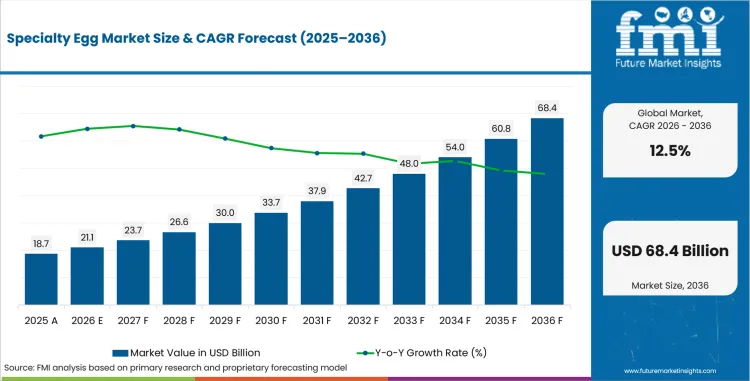
Specialty Egg Market as Consumers Shift Toward Premium and Certified Egg Products The global Specialty Egg Market is entering a period of accelerated expansion as consumers, retailers, and food producers increasingly shift toward cage-free, organic, and nutritionally enhanced egg products. According to Future Market Insights, the market is projected to increase from USD 21.1 billion in 2026 to...
Monoclonal antibodies have transformed cancer treatment by targeting specific proteins and pathways involved in tumor growth or immune regulation. As the patents of major biologic medicines expire, biosimilar versions are creating new competition in oncology. The Oncology Biosimilars Market is forecast to grow from USD 5.469 billion in 2024 to USD 14.4 billion by 2035. Monoclonal antibodies...