Vaccine Cold Chain Challenges: Why Medical Refrigerators Matter More Than Ever
The COVID-19 pandemic put vaccine logistics in the global spotlight, revealing both the remarkable capabilities and the fragile gaps in cold chain infrastructure. Billions of doses required precise temperature control from manufacturing plant to injection site, and any break in that chain threatened to render doses useless. While the pandemic's acute phase has passed, the lessons learned continue to shape investment in medical refrigeration—and the stakes remain high as routine immunization programs expand and new temperature-sensitive vaccines enter the market.
The Medical Refrigerator Market has been directly shaped by these cold chain imperatives. Vaccine storage requires strict temperature maintenance, typically between 2°C and 8°C for most routine immunizations, with some newer products demanding ultra-cold conditions. Facilities at every level—from national stockpiles to rural clinics—need reliable equipment that performs consistently despite power fluctuations, ambient temperature extremes, and limited technical support. This diversity of operating environments creates demand for a broad spectrum of refrigeration solutions, from sophisticated monitored units in urban hospitals to rugged, solar-powered refrigerators in off-grid locations.
Last-mile delivery represents a particularly persistent challenge. In many developing regions, health workers transport vaccines by motorcycle, bicycle, or on foot to reach remote communities. Portable vaccine carriers and small refrigerators designed for these conditions must balance durability, weight, and temperature performance. Passive cooling technologies using phase-change materials extend holding times without electricity, while innovative designs reduce the need for ice packs that can freeze—and thereby damage—vaccines. These specialized products represent a growing niche within the broader medical refrigerator market.
Beyond hardware, the cold chain depends on trained personnel and reliable power. Equipment failures often stem from human error—doors left open, temperature settings accidentally changed, or maintenance neglected. Manufacturers are addressing these challenges through design improvements like door alarms, lockable controls, and intuitive interfaces, but training remains essential. Power reliability is another critical factor; backup systems, voltage stabilizers, and alternative energy solutions protect temperature integrity during outages. Solar-powered refrigerators have proven transformative in regions with unreliable grid electricity, enabling reliable vaccine storage where it was previously impossible.
The policy environment also influences market dynamics. Government immunization programs, international health initiatives, and pandemic preparedness investments all drive demand for cold chain equipment. Gavi, UNICEF, and other organizations procure large volumes of vaccine refrigerators, setting specifications that shape product development. As countries strengthen health systems and expand immunization coverage, these procurement programs will continue to be significant market drivers. The medical refrigerator may be a behind-the-scenes player, but its role in protecting public health has never been more visible—or more valued.
People Also Ask
How are vaccines kept cold during transport?
Vaccines are transported in insulated containers with ice packs or phase-change materials, and portable refrigerators or vaccine carriers maintain temperature during last-mile delivery.
What happens if a vaccine freezes?
Freezing can permanently damage some vaccines, particularly aluminum-adjuvanted products, so precise temperature control that prevents both overheating and freezing is essential.
Tags
#VaccineColdChain #MedicalRefrigerator #Immunization #GlobalHealth #ColdChainLogistics #PublicHealth
Κατηγορίες
Διαβάζω περισσότερα
The Cat Deworming Medicine Market is experiencing significant growth, driven by increasing pet ownership, rising awareness of pet health, and advancements in veterinary pharmaceuticals. According to detailed industry evaluation, the market was valued at USD 1.9 billion in 2024 and is projected to reach USD 3.0 billion by 2035, exhibiting a CAGR of 4.4% during the forecast period....

The Geothermal power generation market is advancing rapidly, driven by the development of Enhanced Geothermal Systems (EGS) and the emergence of lithium co-production from geothermal brine. According to Market Research Future, the market is evolving from conventional hydrothermal power generation towards engineered systems that can access hot rock resources far beyond traditional plate...

The evolution of flexible take-home dosing guidelines, integration of smart connected pill dispensers, and growth of remote Tele-MAT (Tele-Medication-Assisted Treatment) platforms define the future scope of the Methadone Market. Public health authorities are updating legacy regulations, permitting stable MAT patients to receive extended take-home supplies to support employment and social...
The increasing prevalence of neurological disorders and the rapid advancement of brain-computer interface technology have propelled substantial expansion in the neurotechnology domain. According to detailed industry evaluation of the Implantable Neural Probes Market, single-unit probes, multi-unit probes, polymer probes, and silicon probes remain among the most sought-after devices...
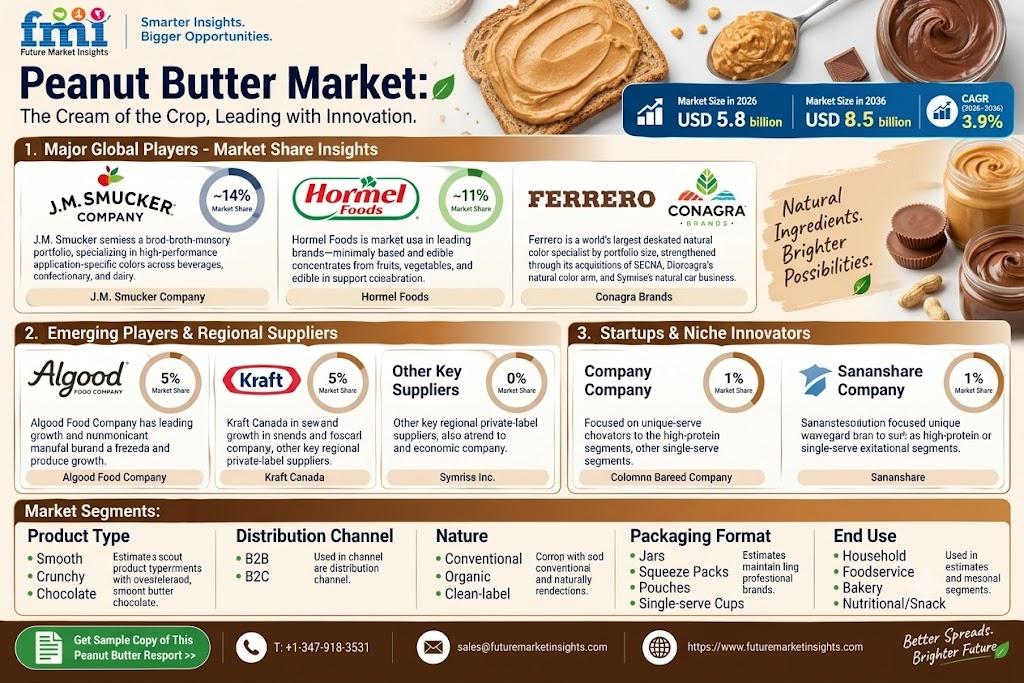
Peanut Butter Market Smooth Peanut Butter Leads Product by FMI Report The global peanut butter market is forecast to increase from USD 5.8 billion in 2026 to USD 8.5 billion by 2036, expanding at a 3.9% CAGR during the 2026-2036 forecast period, according to Future Market Insights. The market was valued at USD 5.6 billion in 2025, creating an incremental opportunity of USD 2.7 billion...