Room service efficiency and night coverage drive hotel delivery robot demand.
Room service economics collapse when a single tray requires a staff member to leave the desk for ten minutes, and Hotel Delivery Robots restore the unit economics of small deliveries at any hour. Analysis presented by WiseGuy Reports indicates that the Hotel Robot Market was valued at USD 1.82 billion in 2024 and is forecast to reach USD 15 billion by 2035, growing at 21.1% annually. Delivery robots are experiencing strong growth, significantly transforming the logistics of service delivery within hotels, facilitating timely and efficient delivery of items such as food and amenities.
The Delivery Scope Explained
Delivery robots transport towels, linens, food and amenities throughout hotels. Relay Robotics specialises in designing autonomous delivery robots for exactly these tasks, with strengths around reliability, intuitive design and effective integration into existing hotel ecosystems. The delivery functionality segment is gaining traction with moderate increase due to demand for room service solutions that save time for both guests and hotel staff, and where hotels operate multiple outlets, delivery robots move items between kitchen, laundry and guest floors without staff escort.
Report Key Statistics at a Glance
Service robots represent the highest segment valuation at USD 4,500 million by 2035, rising from USD 544 million in 2024, with delivery robots contributing to that growth alongside concierge and cleaning categories. Cleaning robots were valued at USD 0.436 billion in 2024. North America holds 33.9% of the regional breakdown in 2024, valued at USD 618 million and projected to reach USD 4,500 million by 2035, while Asia-Pacific is anticipated to reach USD 4,000 million and South America USD 1,000 million. Hotels dominate end use, with resorts, motels and hostels showing moderate increases.
Industry Trends Reshaping Delivery Demand
Room Service and Amenity Delivery
Delivery robots facilitate timely and efficient delivery of items such as food and amenities, optimising service processes and improving guest interaction. Where a guest orders food, the robot travels from kitchen to door while staff remain available for check-in and enquiries. Hotels report that delivery robots handle a substantial share of room service volume, and this capability matters most during peak periods when staff are fully occupied at the front desk.
Night Shift Coverage
Night shifts present the sharpest staffing challenge, with fewer staff covering the same building. Delivery robots provide continuous availability without overtime or shift premiums. Where a guest requests extra bedding at 2 a.m., the robot delivers without waking additional staff or delaying the person on duty, and this night capability is frequently the clearest initial justification for adoption in limited-service properties.
Elevator and Access Integration
Delivery robots must call elevators, pass secured doors and navigate guest corridors to reach room doors. Where integration is available, robots operate independently; where it is absent, staff must accompany deliveries and the labour saving disappears. Hotels deploying successfully typically involve elevator and access control suppliers during planning, and where coordination occurs late, deployment extends and cost rises.
Challenges Facing Delivery Robot Deployment
Payload and Container Design
Delivery robots carry sealed containers sized for trays, parcels and linens. Where container design is inflexible, robots cannot carry the range of items hotels actually deliver, and staff revert to manual delivery. Suppliers offering modular containers for food, linen and parcels expand usable applications, and where containers are proprietary and limited, utilisation falls below the level needed to justify investment.
Guest Interaction at the Door
Guests must retrieve items from the robot, and where the interaction is confusing, guests call the front desk for assistance, negating the labour benefit. Clear instructions delivered by phone or in-room display, combined with simple access mechanisms, determine whether the interaction succeeds. Hotels that invest in guest communication during rollout report higher satisfaction than those that deploy without explanation.
Hygiene and Cross-Contamination
Robots move between kitchen, laundry and guest floors, creating potential for cross-contamination if containers and surfaces are not managed. Hotels must define cleaning protocols for containers between uses and between categories. Where protocols are undefined, food safety and infection control concerns arise, and suppliers offering sealed, cleanable containers and documented cleaning procedures support hotel compliance.
Future Outlook and Delivery Opportunities
Contactless Service Demand
Approximately 77% of travellers expressed a desire for contactless interactions when booking accommodations and receiving services. Delivery robots satisfy this preference without requiring guests to collect items from a central point. Where hotels emphasise hygiene and minimal contact, robots support the message credibly, and post-pandemic expectations have made contactless delivery a standard expectation rather than a premium feature.
Labour Cost Economics
The global average minimum wage increased approximately 12% from 2015 to 2020, according to the International Labour Organization, escalating operational costs for hotels. Delivery robots reduce labour dependency for repetitive tasks. Marriott International and Hilton Worldwide are embracing automation, and where wage growth continues, the payback period on delivery robots shortens, making investment progressively easier to justify across property tiers.
Multi-Property Fleet Deployment
Aeolus Robotics announced in January 2025 a major contract win with Yotel to deploy a fleet of hospitality service robots across multiple Yotel properties, expanding guest-facing automation capabilities. Multi-property deployment allows centralised fleet management, shared spares and consistent guest experience across locations. Groups operating fleets gain purchasing scale and operational learning that single-property operators cannot match, and suppliers offering fleet platforms capture group-level specification.
Expert Discussion
Delivery specialists note that competitive positioning varies by scope. Relay Robotics focuses primarily on specialised delivery robots catering to niche operational needs within hotels, emphasising improvements in service efficiency and guest engagement, and has successfully positioned itself as a leading provider in this niche, catering to hotels looking to streamline operations while improving guest satisfaction. Samsung Electronics employs a broader approach, integrating advanced robotics into an extensive array of technological solutions for the hospitality sector, leveraging strong market presence and formidable resources. The two companies reflect different facets of the market, with one honing in on specialised solutions and the other tapping diverse technological capabilities for broader applications.
Frequently Asked Questions
What tasks do delivery robots perform?
Transporting towels, linens, food and amenities throughout hotels.
Which segment holds highest valuation?
Service robots, projected at USD 4,500 million by 2035.
Which region leads delivery adoption?
North America, at 33.9% of the regional breakdown in 2024.
What determines delivery robot payback?
Labour cost growth and reduction in staff escort time.
Conclusion
Hotel delivery robots address the room service and amenity logistics requirements of a market progressing from USD 1.82 billion in 2024 toward USD 15 billion by 2035. The industry's current position is defined by service robot dominance, night shift capability and accelerating multi-property deployment. Emerging opportunities in contactless service, labour economics and fleet management offer substantial growth avenues. Technological developments in elevator integration, container modularity and hygiene protocols will determine product competitiveness. The Hotel Robot Market will ultimately reward suppliers who combine autonomous reliability with guest-facing simplicity and documented hygiene assurance.
الأقسام
إقرأ المزيد
The India Lymphedema Treatment Market is developing as hospitals, rehabilitation centers, specialized clinics, and homecare providers expand access to long-term management services. Lymphedema is often a chronic condition, making continuity of care, patient education, and multidisciplinary support important for long-term outcomes. The India Lymphedema Treatment Market includes hospitals,...

Market Overview Mental-health services and rural healthcare access are creating important opportunities in the UK telehealth market. Online counseling, video consultations, digital therapy, remote monitoring, and virtual primary care can connect patients with professionals without requiring long-distance travel. Market Research Future projects that the market will grow from USD 10.7 billion in...
Kid Snacks Market Conventional Snacks and Bakery Products Lead as Demand NEWARK, Del., October 15, 2026 — The global Kid Snacks Market is expanding as parents increasingly seek convenient, appealing, and nutritious snack options for children. Growing interest in health-conscious eating, organic ingredients, specialized formulations, and convenient packaging is encouraging...
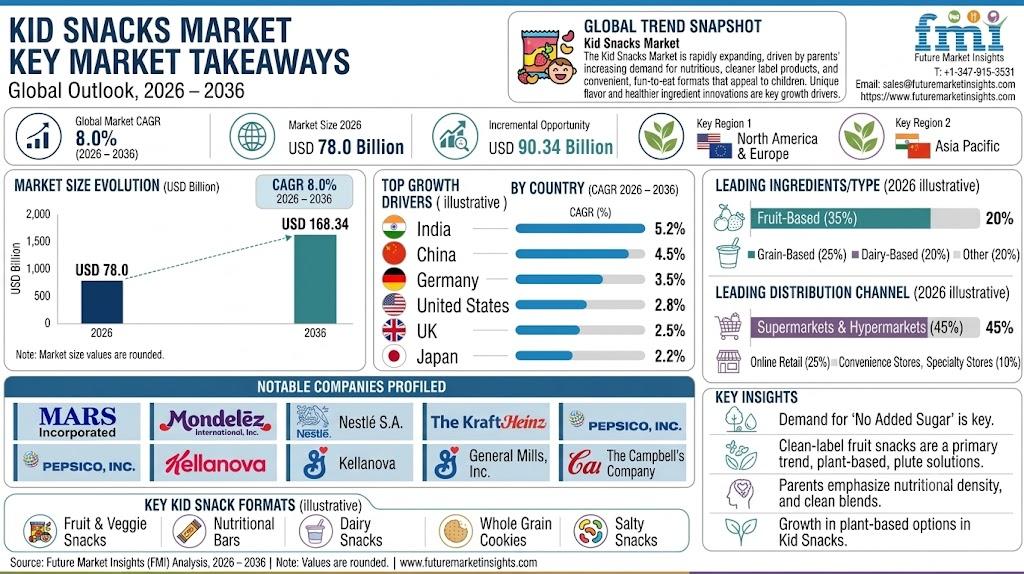
Cane Sugar Market to Reach USD 152.6 Billion by 2036, Growing at 5.0% CAGR NEWARK, Del., October 23, 2026 — The global cane sugar market is expected to experience steady growth as food and beverage manufacturers, confectionery producers, and industrial food processors continue to rely on cane sugar for sweetness, texture, and product functionality. According to the latest market...

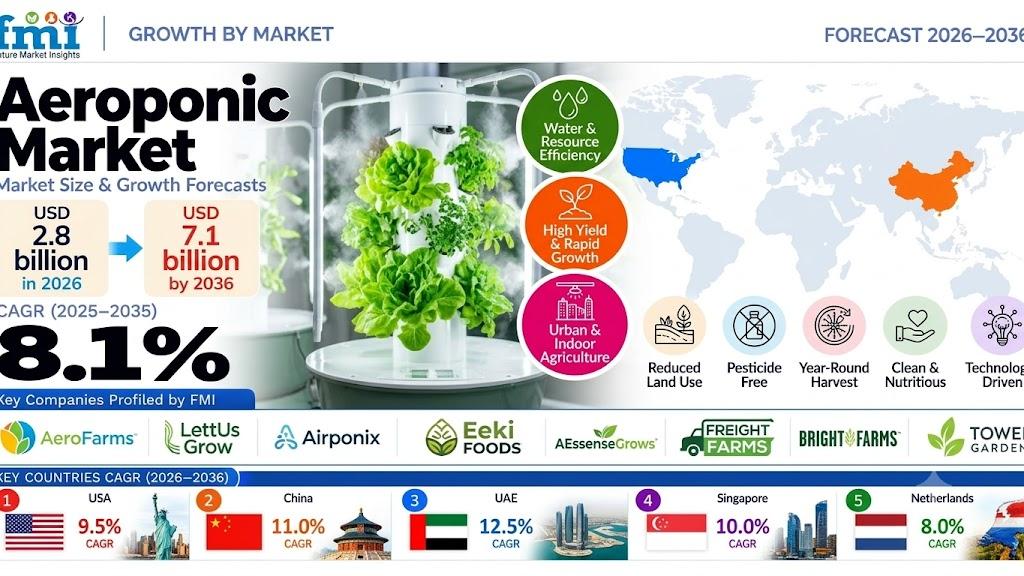
NEWARK, Del., October 21, 2026 — The global Aeroponic Market is gaining momentum as agricultural technology providers, commercial growers, and controlled-environment farming operators increasingly adopt innovative cultivation systems to improve resource efficiency and crop production. According to the latest market intelligence report published by Future Market Insights (FMI), the...