


Real-Time Surgical Precision and Neuro-Oncology Advances Driving Market Growth
Surging global demand for image-guided minimally invasive surgery, expanding installation of hybrid operating suites, and continuous refinements in high-field magnetic resonance technology are driving robust expansion across the global Intraoperative MRI Market. Valued for its ability to deliver real-time soft-tissue visualization during active surgical resection, intraoperative magnetic resonance imaging (iMRI) eliminates guesswork in complex neurosurgical cases. Neurosurgical departments, orthopedic surgery centers, and academic medical institutions rely heavily on 1.5T and 3.0T iMRI suites to differentiate tumor margins from functional brain tissue, dramatically reducing secondary re-operation rates.
In addition, integrating artificial intelligence software algorithms with intraoperative navigation systems enhances surgical workflow efficiency. AI tools coregister pre-operative diagnostic scans with intraoperative image captures automatically, compensating for surgical brain shift and guiding neurosurgeons along optimal instrument trajectories.
Beyond fixed single-room dedicated magnet setups, modern equipment development prioritizes ceiling-mounted movable magnets and multi-room hybrid operating suites. Movable iMRI scanners travel on overhead tracks between adjacent operating rooms and diagnostic bays, maximizing scanner utilization and return on investment for hospital capital budget managers.
Furthermore, cloud-based surgical data platforms enable secure transmission of intraoperative scans across hospital picture archiving and communication systems (PACS), allowing multidisciplinary clinical teams to review real-time resection progress remotely.
High-resolution intraoperative MRI systems provide real-time intraoperative visualization to optimize surgical tumor resections and improve long-term patient outcomes.
Do you think mobile low-field intraoperative MRI systems will democratize access to real-time image-guided surgery across community hospitals over the next decade?
People Also Ask What is the primary clinical advantage of intraoperative MRI in neurosurgery? Intraoperative MRI provides real-time high-resolution scans during surgery, allowing neurosurgeons to verify complete tumor resection while accounting for tissue shift before closing the patient.
How do 1.5T and 3.0T intraoperative MRI systems differ in clinical utility? 1.5T systems offer excellent diagnostic resolution with lower radiofrequency heating, whereas 3.0T systems provide ultra-high spatial resolution ideal for functional brain mapping and microscopic tumor boundary identification.
#IntraoperativeMRIMarket #Neurosurgery #ImageGuidedSurgery #MedicalImaging #WiseGuyReports
Catégories
Lire la suite
Venous thromboembolism is a significant healthcare concern because blood clots can develop in deep veins and potentially travel to the lungs, causing pulmonary embolism. Healthcare professionals use different preventive and treatment approaches depending on individual patient conditions. Inferior vena cava filters are specialized medical devices designed to capture certain blood clots traveling...

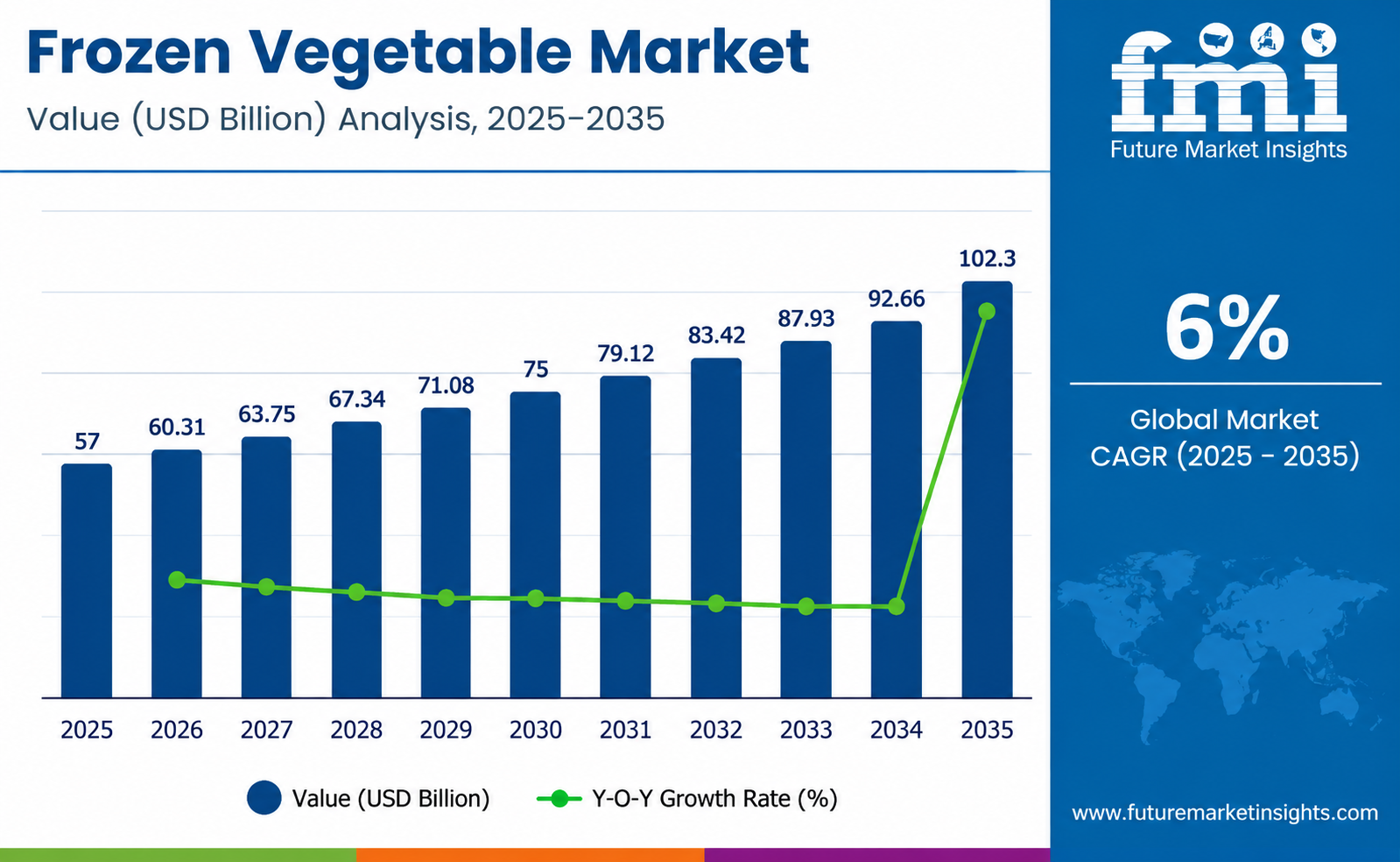
Frozen Vegetable Market ,Growing at a CAGR of 6% | FMI Research Report NEWARK, Del. — The global frozen vegetable market is valued at USD 57 billion in 2025 and is projected to reach USD 102.3 billion by 2035, expanding at a CAGR of 6% from 2025 to 2035, according to Future Market Insights (FMI). The market outlook reflects growing consumer preference for convenient meal preparation,...
The commercial acceleration of heterogeneous integration, chiplet-based processor designs, and high-bandwidth memory (HBM) packaging has heightened the necessity of wafer-level electrical testing. Because multiple individual silicon dies are integrated into a single high-value package, mounting a single defective die onto an interposer results in the loss of the entire multi-thousand-dollar...
Unlocking the innate and adaptive immune capabilities of gamma delta ($\gamma\delta$) T-cells is establishing a novel frontier in off-the-shelf cellular immunotherapies. Detailed analysis within the Gamma Delta T Cell Cancer Therapy Market report highlights how gamma delta T-cell receptors recognize stress-induced phosphoantigens overexpressed on cancer cells independently of major...
Healthcare and medical simulation involves the use of realistic training tools—such as manikins, virtual reality (VR), augmented reality (AR), and task trainers—to educate healthcare professionals and students. Simulation enables learners to practice clinical skills, procedures, and decision-making in a safe, controlled environment without risk to patients. The market for healthcare...