Kidney Stones and BPH: The Demographic Engines Driving the Urology Lasers Market
Markets grow for reasons — and in the case of the urology lasers market, the reasons are demographic and epidemiological. Kidney stone disease is rising globally, and benign prostatic hyperplasia affects the majority of men as they age. Both conditions increasingly rely on laser-based treatment, creating structural demand that is unlikely to fade. Understanding these drivers is essential to understanding the market's trajectory.
Kidney stone prevalence has increased markedly in recent decades, linked to dietary changes, obesity, and metabolic factors. Laser lithotripsy — particularly holmium laser fragmentation — has become the preferred approach for many stones, offering high success rates and minimal invasiveness. Meanwhile, BPH affects an estimated 50% of men by age 60 and up to 90% by age 85. Laser techniques such as holmium laser enucleation of the prostate (HoLEP) and thulium laser vaporisation offer durable symptom relief with less bleeding and shorter recovery than traditional surgery. According to urology lasers market research, the ageing global population — particularly in North America, Europe, and Asia-Pacific — is a powerful structural driver, as both stone disease and BPH are strongly age-associated.
Geographic variation matters. In developed markets, high procedure volumes and advanced hospital infrastructure support premium laser adoption. In emerging markets, rising healthcare access and growing awareness of minimally invasive options are creating new demand, though cost remains a barrier. Manufacturers are responding with tiered product lines and financing options.
Looking ahead, the combination of demographic pressure, technological improvement, and expanding access suggests a favourable long-term outlook. The urology lasers market is not dependent on any single breakthrough; it benefits from steady, predictable demand tied to some of the most common urological conditions worldwide.
People Also Ask
Q: Why are kidney stones becoming more common?
A: Dietary changes, rising obesity rates, and metabolic factors have contributed to increasing kidney stone prevalence worldwide.
Q: How common is BPH, and why does it drive laser demand?
A: BPH affects most men as they age, and laser procedures offer minimally invasive, durable relief, driving demand for laser systems.
Tags: #KidneyStones #BPH #UrologyLasers #AgeingPopulation #MinimallyInvasiveTreatment #MarketDrivers
Κατηγορίες
Διαβάζω περισσότερα
Escalating consumer demand for budget-friendly cosmetic dentistry, expanding clinical utility of highly polishable nanofilled composite resins, and single-visit treatment convenience are driving expansion in the direct resin sector of the Dental Veneers Market. Direct composite veneers offer an accessible, reversible cosmetic option for patients seeking immediate smile improvements. In...

Pregnancy tests are among the most widely used diagnostic tools in the world. They detect human chorionic gonadotropin (hCG) in urine or blood, providing a fast, accurate answer to one of life's biggest questions. From home tests to laboratory assays, the pregnancy testing market is large, diverse, and growing. As technology improves and access expands, demand continues to rise. Pregnancy tests...
Market Overview China's National Medical Products Administration has executed transformative regulatory reforms, joining ICH, accepting overseas clinical data, and creating breakthrough therapy designations that compress development timelines from a decade to under five years for priority innovations. These changes integrated Chinese biopharmaceuticals into global development pathways....
Market Overview Emerging economies are becoming increasingly important in the coronary artery bypass graft market as cardiovascular disease prevalence rises and healthcare infrastructure expands across developing regions. The epidemiological transition in emerging markets has led to increasing rates of coronary artery disease, creating substantial demand for surgical revascularization....
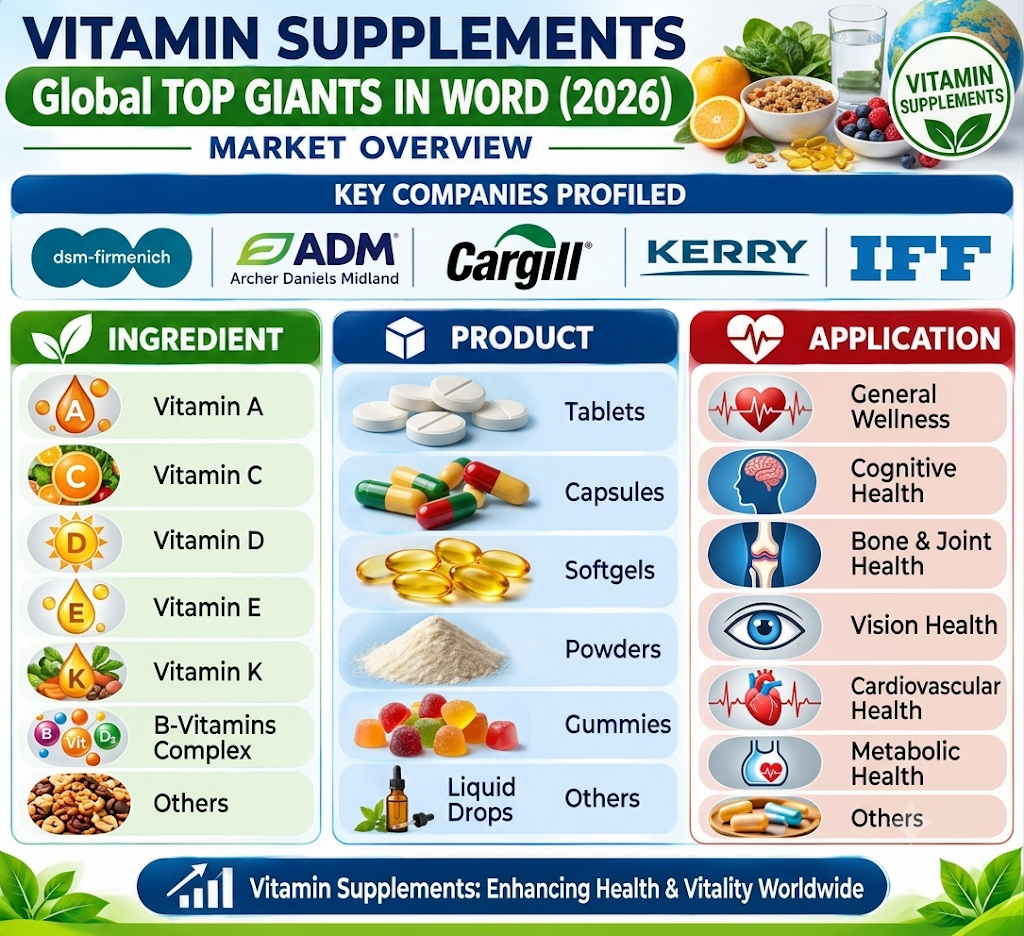
Vitamin Supplements Market at 6.5% CAGR, By FMI Report NEWARK, Del., November 5, 2026 — The global Vitamin Supplements Market is projected to reach USD 58.0 billion in 2026. According to Future Market Insights (FMI), the market is forecast to grow to USD 108.9 billion by 2036, expanding at a CAGR of 6.5% between 2026 and 2036. This represents an incremental market opportunity of USD...