


Preclinical Imaging In Vivo Market: Seeing Biology in Living Systems
Before a drug reaches human trials, researchers need to understand how it behaves in living organisms — where it goes, what it binds to, and how the body responds. Preclinical in vivo imaging allows scientists to observe these processes non-invasively in animals over time, replacing many terminal procedures and providing longitudinal data that was previously impossible to obtain. As drug development grows more sophisticated, the preclinical imaging in vivo market is expanding steadily.
The market includes imaging modalities such as MRI, PET, SPECT, CT, optical imaging (bioluminescence and fluorescence), ultrasound, and photoacoustic imaging, along with contrast agents, radiotracers, and analysis software. Applications span oncology, neurology, cardiology, immunology, and drug development. According to preclinical imaging in vivo market research, growth is being driven by rising R&D investment in biopharmaceuticals, the shift toward longitudinal studies, growth in oncology and neuroscience research, and advances in multimodal imaging. North America leads the market, supported by major research institutions and pharmaceutical companies, while Asia-Pacific is expected to grow fastest as research infrastructure expands.
Innovation is focused on sensitivity, resolution, and throughput. Multimodal systems combine complementary imaging techniques in a single session. New tracers and contrast agents enable more specific molecular imaging. AI-assisted analysis improves image interpretation and quantification.
Challenges include high equipment costs, the need for specialised expertise, animal welfare considerations, and regulatory requirements. Yet the scientific value is undeniable: in vivo imaging reduces animal numbers, improves data quality, and accelerates drug development. The market is expected to grow as research investment increases.
People Also Ask
Q: What is preclinical in vivo imaging?
A: It is non-invasive imaging of living animals used in research to study disease, drug distribution, and biological processes over time.
Q: What imaging modalities are used in preclinical research?
A: MRI, PET, SPECT, CT, optical imaging, ultrasound, and photoacoustic imaging are the main modalities.
Tags: #PreclinicalImaging #InVivoImaging #DrugDevelopment #MolecularImaging #ResearchTools #MarketResearch
الأقسام
إقرأ المزيد
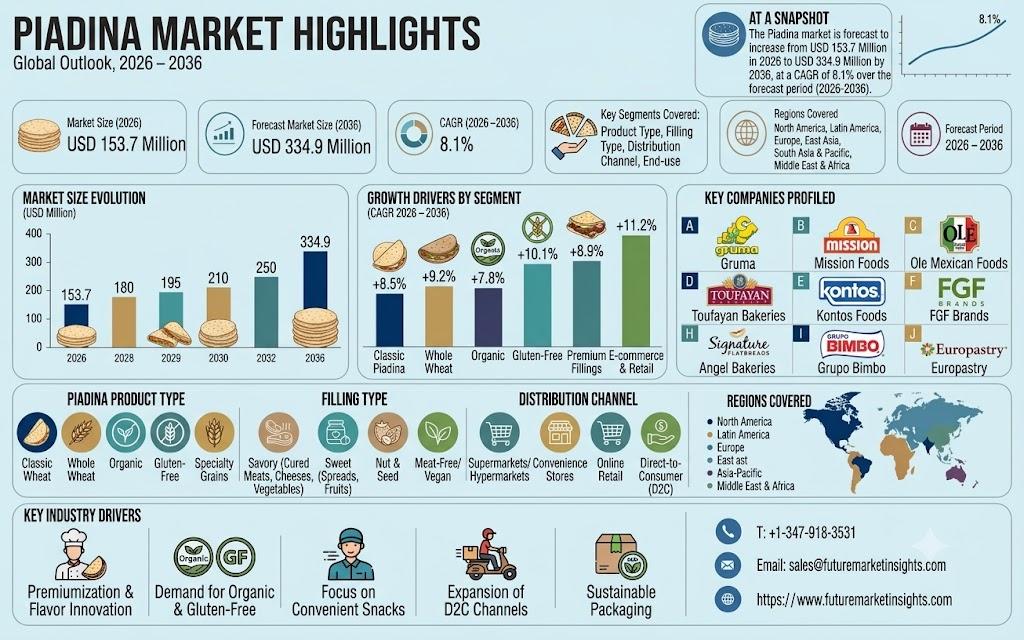
NEWARK, Del., September 25, 2026 According to Future Market Insights (FMI), the Piadina Market is projected to grow from sales of piadina estimated at USD 153.7 million in 2026 to USD 334.9 million by 2036, expanding at an 8.1% CAGR. Piadina demand is closely linked to convenience-led meal assembly, foodservice preparation, and retail formats where flatbreads must reheat quickly and...
Imagine windows that generate electricity without blocking the view, and building facades that double as power plants. Transparent solar panels are turning that vision into commercial reality. According to WiseGuyReports, the global transparent solar panels market was valued at USD 2.21 billion in 2025 and is projected to reach USD 15 billion by 2035, expanding at a remarkable compound annual...

The Germany TMJ Implants Market exhibits a dynamic competitive landscape characterized by innovation, strategic partnerships, and technological integration among key players. The market is projected to grow from USD 366.54 million in 2025 to USD 624.9 million by 2035, registering a CAGR of 5.48% during the forecast period. This growth trajectory reflects the collective efforts of major...
Recent findings from Market Research Future indicate that the Submersible Pumps Market Size is on a trajectory of significant expansion, with the global market estimated at USD 17.51 billion in 2024 and forecast to reach USD 37.7 billion by 2035. This growth trajectory, representing a 7.22% compound annual growth rate during the forecast period from 2025 to 2035, reflects fundamental...

Personalized cell therapy represents one of the most profound shifts in modern medicine — moving from one-size-fits-all treatments to therapies built around a patient's own biology. By harvesting, engineering, and reinfusing a patient's cells, these therapies can target disease with remarkable precision. From CAR-T treatments for blood cancers to stem cell approaches for degenerative...