Axial Compressor Manufacturers Compete on LNG and Data Centers
The axial compressor manufacturers landscape is one of the more concentrated in turbomachinery, where a small group of integrated OEMs supplies the high-flow compression equipment that LNG trains, gas turbines, and petrochemical plants depend upon. According to Market Research Future, the market was valued at $4.12 billion in 2025 and is projected to reach $6.97 billion by 2035, expanding at a compound annual growth rate of 5.4% over the forecast period, and the top five suppliers control an estimated 55–62% of revenue, with a Herfindahl-Hirschman Index in the 1,300–1,600 range consistent with a moderately to highly concentrated structure.
Report Key Statistics
Insights published by Market Research Future reveal a market segmented by stage and end-user. By stage, multi-stage machines captured a 72.5% share in 2025 because heavy-duty gas turbines, LNG refrigerant trains, and FCC air blowers need pressure ratios that only several stages can deliver, while single-stage units grow at a 5.9% CAGR on industrial ventilation, mine and tunnel air, and low-ratio process air. By end-user, oil and gas remained the largest at a 44.0% share spanning gas gathering, gas lift, injection, transmission, and storage, chemical applications generated $0.87 billion in 2025 led by air separation, nitric acid, and FCC air blower installations, steel holds a 13.5% share tied to blast-furnace blowers, and others including power generation is the fastest-growing end-user at a 6.3% CAGR. The competitive structure shows Siemens Energy at an estimated 14–17% revenue share, GE Vernova at 13–16%, Baker Hughes at 9–12%, Mitsubishi Heavy Industries at 8–11%, MAN Energy Solutions at 7–10%, Elliott Group at 4–6%, Solar Turbines at 3–5%, Atlas Copco at 2–4%, Kawasaki Heavy Industries at 2–4%, and Howden at 2–3%. Regionally, Asia-Pacific held a 41.5% share in 2025 and is the fastest-growing region, North America accounted for 22.0%, Europe represented $0.76 billion, South America grows at 4.6% CAGR, and Middle East and Africa at 5.8% CAGR.
Industry Trends
Findings from Market Research Future identify the LNG liquefaction capacity build-out as the largest source of demand, contributing roughly +1.2% to CAGR. North American export capacity is expected to increase from 11.4 Bcf/d in 2023 to 24.4 Bcf/d by 2027, while Qatar's North Field project will increase national capacity from 77 to 142 mtpa by about 2030, and every final investment decision instantly translates into multi-year compressor orders because each mega-train of 5–8 mtpa usually requires axial machines for low-pressure mixed-refrigerant duty. A second trend is gas-fired power and data center load, contributing about +1.0%, as U.S. utilities respond with multi-gigawatt combined-cycle proposals to the IEA's prediction that worldwide data center energy usage will more than double to roughly 945 TWh by 2030, and the compressor section of a heavy-duty gas turbine usually has 14 to 18 stages, making it one of the most valuable parts. Third, emerging-market gas pipeline expansion contributes about +0.8%, as pipeline networks in developing economies need compressor stations every 100–150 km, with India aiming to lift gas to 15% of its energy mix by 2030 from roughly 6% today supported by a national grid planned at more than 33,000 km, and Brazil's New Gas Market program opening transport capacity to third parties.
Challenges
Manufacturers face constraints that limit how quickly they can respond to demand. High capital cost and long lead times impose about −0.6% on CAGR, as large axial compressor trains typically have delivery timetables of 18 to 30 months and cost tens of millions of dollars, and Siemens Energy's record backlog of almost EUR 123 billion at the end of fiscal 2024 indicates full factories which lengthens lead times and drives some smaller purchasers toward deferred projects. Superalloy, forging, and casting constraints impose about −0.3%, as compressor blades, discs, and casings depend on a narrow base of nickel-alloy, titanium, and large-forging suppliers, with GE Vernova's 2024 annual report flagging supply chain capacity for castings and forgings as a key operational risk, and aerospace demand competing for the same materials. Policy and permitting volatility for LNG projects imposes about −0.3%, as the U.S. DOE paused new non-FTA LNG export approvals in January 2024, released an updated export study in December 2024, and resumed approvals in January 2025, and such swings delay final investment decisions, compress order windows, and make capacity planning harder. Substitution by centrifugal and screw compressors imposes about −0.4%, as many air separation tasks previously performed by axial-radial designs are now handled by integrally geared centrifugal machines.
Future Outlook
Analysis presented by Market Research Future identifies several strategic avenues. Hydrogen-ready and CO2 compression platforms offer a first-mover premium for suppliers that certify axial designs for high hydrogen blends and dense-phase CO2 service, with policy support concrete through the U.S. 45V credit paying up to $3 per kilogram of clean hydrogen and the European Hydrogen Bank awarding about EUR 720 million in its 2024 pilot auction. Emerging-market gas infrastructure remains underserved relative to projected gas use, and the World Bank estimates about 148 bcm of gas was flared globally in 2023 with much of it in Africa and the Middle East, so capturing even a fraction requires gathering and re-injection compression, and local assembly partnerships in India and ASEAN can win share where tariff and local-content rules favor domestic value addition. Performance-as-a-service and data monetization converts the installed fleet into recurring revenue, with OEMs selling guaranteed availability, efficiency, or emissions outcomes under long-term service agreements priced on operating data rather than hardware. Installed-base aerodynamic upgrades address thousands of heavy-duty gas turbines and process compressors installed before 2005, with upgrade packages raising efficiency by 1–3 percentage points and extending inspection intervals, and these projects need no new permits and pay back within a few years.
Expert Discussion
Industry practitioners describe a competitive field shaped by integrated portfolios and service reach. Siemens Energy holds an estimated 14–17% share as an integrated power and LNG supplier with a large global service fleet, offering SGT heavy-duty and industrial gas turbines, process compressors, and compressor section upgrades, and closed fiscal 2024 with a record order backlog of about EUR 123 billion. GE Vernova at 13–16% is a heavy-duty gas turbine leader benefiting from data center power demand with HA-class and LM-series aeroderivative turbines and compressor upgrade kits, and completed its spin-off from General Electric in April 2024 to sharpen focus. Baker Hughes at 9–12% is an LNG-focused specialist expanding industrial reach through acquisitions, offering LNG compression trains, gas turbine packages, and Cordant condition monitoring, and in July 2025 agreed to acquire Chart Industries, adding Howden's compressor and blower portfolio. Mitsubishi Heavy Industries at 8–11% is strong in Asia and an early mover in hydrogen co-firing. MAN Energy Solutions at 7–10% is a process-industry specialist with a deep chemical customer base, Elliott Group at 4–6% focuses on refining and petrochemical with a strong service network, and Solar Turbines at 3–5% is a midstream pipeline specialist. Buyers should note that energy consumption dominates lifetime cost, typically exceeding 70% of 25-year ownership cost versus under 15% for purchase price, so a one-point efficiency gain often outweighs a lower bid, and performance guarantees verified under ASME PTC 10 test codes backed by liquidated damages for shortfalls matter most in procurement.
Conclusion
The axial compressor manufacturer landscape is defined by concentration and by the two demand pillars of LNG and gas-fired power. Emerging opportunities lie in hydrogen and CO2 platforms, emerging market gas infrastructure, and service-led economics. Technological development will focus on three-dimensional blading, hydrogen-capable designs, and the condition monitoring that moves maintenance from calendar schedules to condition-based intervals. The long-term outlook favors manufacturers that combine aerodynamic know-how with test-bed infrastructure, local presence, and multi-decade service relationships. Where volume-driven markets such as the US Water Desalination Market compete on throughput and capital efficiency, axial compressor manufacturing rewards the aerodynamic design depth and manufacturing scale that few firms can replicate.
Categorías
Read More
The variable shunt reactor systems market covers the reactive power compensation equipment that absorbs or supplies reactive power dynamically to hold voltage within limits as grid conditions change. According to Market Research Future, the market was valued at $2.28 billion in 2024 and is projected to reach $3.896 billion by 2035, expanding at a compound annual growth rate of 4.99% over the...

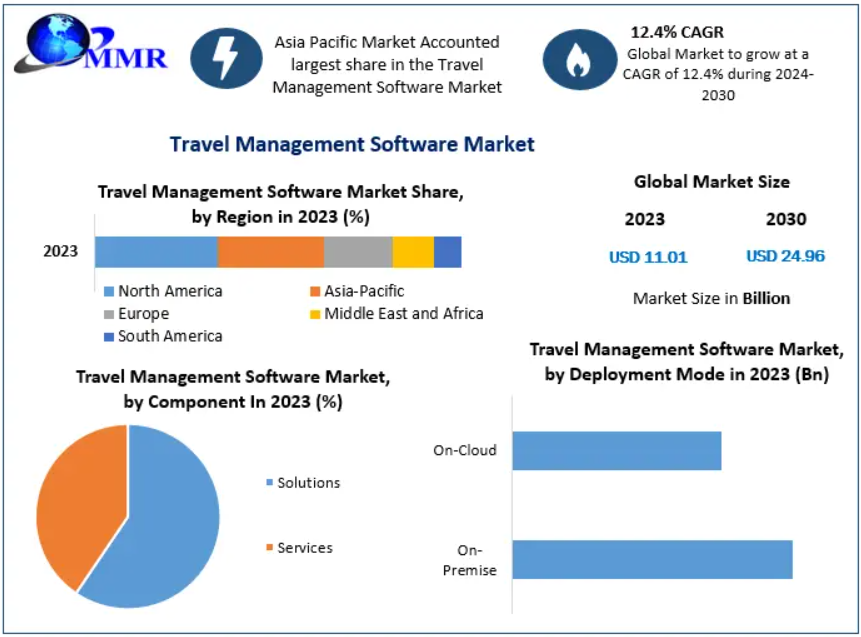
Travel Management Software Market Overview The Travel Management Software Market report provides an in-depth analysis that is required to make informed industry decisions and develop strategic growth plans. Regardless of the production method or cost structures, the Travel Management Software market report provides a full understanding of advanced tactics and...
Lupus is a chronic autoimmune disease that can affect nearly any organ in the body, causing inflammation, pain, and organ damage. It disproportionately affects women, particularly those of childbearing age, and can significantly impact quality of life. In South America, lupus prevalence varies by country, but the disease represents a significant health burden, and access to diagnosis and...
Breathing is something most people take for granted — until it becomes difficult. For millions of people living with asthma, COPD, sleep apnea, and other respiratory conditions, every breath can be a struggle. Respiratory therapeutic devices are the tools that make breathing easier, delivering medication, supporting ventilation, and monitoring lung function. From handheld inhalers to...
The Satellite Broadband Communication in Public Safety market is currently experiencing a robust transformation, projected to reach a market size of USD 6.857 billion by 2035, reflecting a CAGR of 8.18%. This rapid expansion is primarily driven by the increasing need for reliable and instantaneous communication in emergency scenarios. As climate change escalates the frequency of natural...