


Evaluating Regional Semiconductor Foundry Capabilities Global RF Supply Chains and Market Allocations
The worldwide development, compound wafer fabrication, and commercial deployment of radio frequency integrated circuits exhibit distinct regional characteristics that shape the Radio Frequency Integrated Circuit Market Share. Regional market dynamics reflect variations in compound semiconductor cleanroom infrastructure, telecommunications equipment manufacturing density, automotive assembly volumes, and advanced packaging capabilities. High-value fabless design houses in North America and Western Europe account for a major portion of global market value, driven by intellectual property patents, commercial aerospace defense contracts, and premium smartphone supply chain dominance. Concurrently, massive consumer electronics assembly ecosystems, expanding silicon foundry capacities, and aggressive 5G infrastructure rollouts across the Asia-Pacific region drive substantial unit shipment volumes, establishing the region as a primary driver of global hardware volume.
North America maintains a dominant position in high-value RFIC intellectual property, fabless semiconductor innovation, and defense microwave engineering. The United States serves as the corporate and R&D headquarters for several global RF front-end leaders, including Qualcomm Incorporated, Skyworks Solutions, Qorvo, Broadcom Inc., and Macom Technology Solutions. North American designers lead the world in developing integrated front-end modules, acoustic wave filter technologies, and millimetric wave beamforming transceivers for flagship commercial smartphones and aerospace defense applications. The region's market presence is further reinforced by substantial Department of Defense investments in advanced GaN radar foundries and federal funding allocated under the CHIPS and Science Act, which aims to onshore high-frequency compound semiconductor fabrication lines and protect strategic aerospace supply chains.
The Asia-Pacific region commands the dominant share of global RFIC wafer foundry throughput, advanced packaging assembly, and high-volume consumer device consumption. Taiwan, China, Japan, and South Korea represent the world's most concentrated corridor for semiconductor lithography, RF-SOI substrate production, wafer-level packaging, and mobile hardware integration. Taiwan Semiconductor Manufacturing Company (TSMC) and United Microelectronics Corporation (UMC) provide specialized RF-CMOS and RF-SOI fabrication services for global fabless designers, while Japanese material giants—such as Murata Manufacturing and TDK Corporation—command substantial market share in high-frequency ceramic substrates and acoustic filters. In China, massive domestic 5G cellular base station deployments and soaring electric vehicle manufacturing sustain vast domestic procurement of RF power amplifiers and transceivers, encouraging state-backed investments in domestic compound semiconductor foundries.
The European market maintains a specialized share anchored in automotive-grade RF electronics, industrial wireless automation, and satellite telecommunications equipment. European nations, led by Germany, France, the Netherlands, and Switzerland, host leading semiconductor conglomerates, including NXP Semiconductors, STMicroelectronics, and Infineon Technologies. European manufacturers lead the global market in 77 GHz to 79 GHz automotive radar transceivers, industrial wireless microcontrollers, and aerospace RF components certified to strict functional safety and environmental reliability standards. European research institutions, including imec in Belgium and the Fraunhofer Society in Germany, drive foundational research into sub-terahertz silicon technologies and heterogeneous chiplet architectures, establishing a stable, quality-focused regional market for high-reliability RF semiconductors.
Top Trending Reports :
Handheld Backscatter X Ray Device Market
Kategorien
Mehr lesen
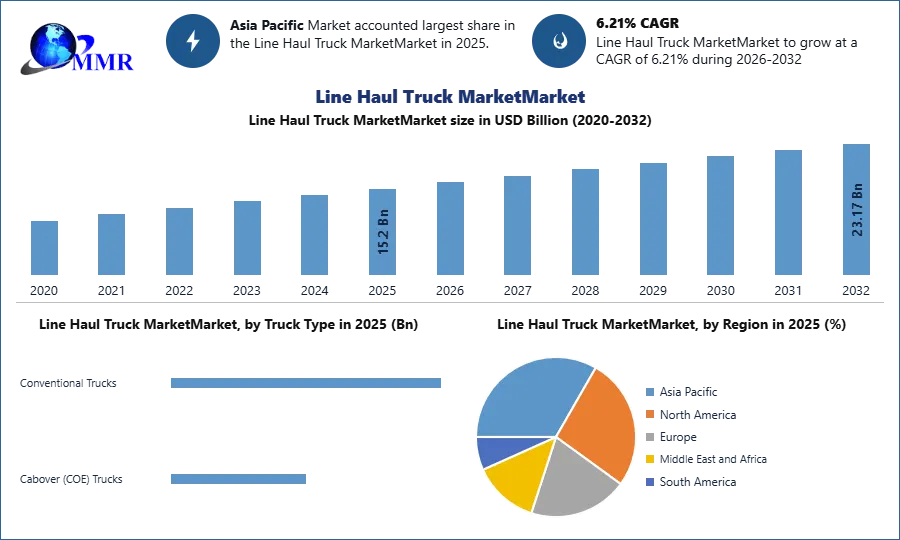
Line Haul Truck Market Overview The Line Haul Truck Market report provides an in-depth analysis that is required to make informed industry decisions and develop strategic growth plans. Regardless of the production method or cost structures, the Line Haul Truck market report provides a comprehensive understanding of advanced tactics and strategies. Line Haul...
Preventing sudden death and severe enterotoxemia in livestock herds requires robust immunization protocols across veterinary care. Detailed analysis within the Clostridium Vaccine Animal Health Market report shows that multi-component clostridial toxoid formulations provide broad protection against multiple bacterial strains. Livestock producers rely on these vaccines to safeguard cattle,...

Detailed market valuations, technological benchmarks, and global adoption trajectories are comprehensively evaluated in the Wearable Robot And Exoskeleton Market research analysis, capturing commercial acceleration across biomedical robotics manufacturers and industrial safety equipment providers. Contemporary operational environments across manufacturing assembly, warehouse logistics, and...
Market Overview The India Ophthalmic Drugs Devices Market is gaining momentum as the prevalence of diabetes increases demand for retinal screening and treatment. Diabetic retinopathy can develop gradually and may cause serious vision loss when diagnosis or treatment is delayed. Regular eye examinations, retinal imaging, laser therapy, and injectable medicines are important components of...
The growing trend of pet humanization alongside advancing veterinary care standards is driving sustained demand for canine mobility and joint health formulations. Detailed analysis within the Dog Joint Supplement Market report demonstrates that dog owners are increasingly seeking preventative healthcare solutions to manage age-related osteoarthritis, hip dysplasia, and joint inflammation in...