


Accelerating Industrial Decarbonization Mandates and Chemical Refining Modernizations Driving Worldwide Analyzer Procurement
The tightening of international greenhouse gas emissions standards, combined with extensive corporate capital investments in chemical refining automation and clean hydrogen infrastructure, is driving sustained commercial momentum across the Process Analyzer Market Growth. Chemical manufacturers, power generation utilities, and pharmaceutical conglomerates face regulatory requirements to monitor environmental pollutants, eliminate unmonitored fugitive emissions, and optimize raw material utilization. Traditional periodic emissions audits are insufficient for statutory compliance, as environmental protection agencies mandate continuous, tamper-evident emissions logging. Consequently, industrial conglomerates and municipal utilities are channeling substantial capital expenditure budgets toward permanently installed Continuous Emission Monitoring Systems (CEMS), Tunable Diode Laser analyzers, and automated process gas chromatographs.
A primary operational catalyst accelerating hardware procurement is the worldwide implementation of strict environmental mandates governing industrial flare stacks, sulfur recovery units, and combustion exhaust chimneys. Regulatory frameworks—such as the US EPA Clean Air Act rules (including Subpart Ja for refinery flare monitoring) and the European Union’s Industrial Emissions Directive (IED)—mandate real-time quantification of total sulfur, hydrogen sulfide, and heating values of flared gases. Industrial refineries and petrochemical plants must install automated gas analyzers capable of measuring wide dynamic concentration ranges within seconds to verify combustion efficiency and track greenhouse gas releases. Failing to maintain compliant emissions monitoring leads to heavy statutory fines and judicial operating shutdowns, driving multi-million-dollar capital procurement contracts for certified environmental analyzer shelters across global energy hubs.
Simultaneously, the pharmaceutical and biotechnology manufacturing sectors provide an enduring commercial foundation for continuous in-line analyzer adoption. Global health regulatory bodies, led by the US Food and Drug Administration (FDA) and European Medicines Agency (EMA), actively advocate for Process Analytical Technology (PAT) and the transition from traditional batch processing toward continuous drug manufacturing. Implementing continuous bioprocessing requires non-destructive, real-time chemical analysis at every manufacturing stage—including cell culture fermentation, continuous crystallization, and tablet powder blending. Pharmaceutical companies deploy near-infrared and Raman spectroscopic probes directly into active powder mixers and fluid lines to measure active pharmaceutical ingredient (API) concentrations continuously, ensuring batch quality while shortening drug release timelines from weeks to hours.
The global expansion of green hydrogen generation, carbon capture, utilization, and storage (CCUS) projects, and renewable natural gas (RNG) distribution networks further reinforces equipment procurement. Electrolyzer hydrogen production facilities deploy trace moisture and oxygen analyzers to prevent explosive atmospheric mixtures and ensure hydrogen purity compliant with fuel-cell vehicle standards (ISO 14687). In carbon capture facilities, gas analyzers measure CO2 concentrations across absorption and desorption towers, verifying capture rates and certifying transport purity for geological sequestration. As energy utilities invest hundreds of billions of dollars to build decarbonized energy systems, recurring procurement demand for specialized, explosion-proof process gas and liquid analyzers maintains a steady upward trajectory.
Top Trending Reports :
Non Glass Capacitive Sensor Market
Catégories
Lire la suite
The integration of digital health applications, virtual reality environments, and interactive cognitive stimulation platforms is redefining therapeutic engagement for individuals with memory loss. Detailed analysis within the Dementia Care Product Market report indicates that digital cognitive stimulation software provides personalized brain training activities, memory exercises, and...

Enteral stenting is evolving, driven by technology, clinical needs, and the growth of minimally invasive care. The future promises more effective, safer, and easier-to-use stents, improving outcomes for patients. Understanding these trends helps providers, manufacturers, and patients anticipate what is coming. Several developments will shape the field. Biodegradable stents are being explored...
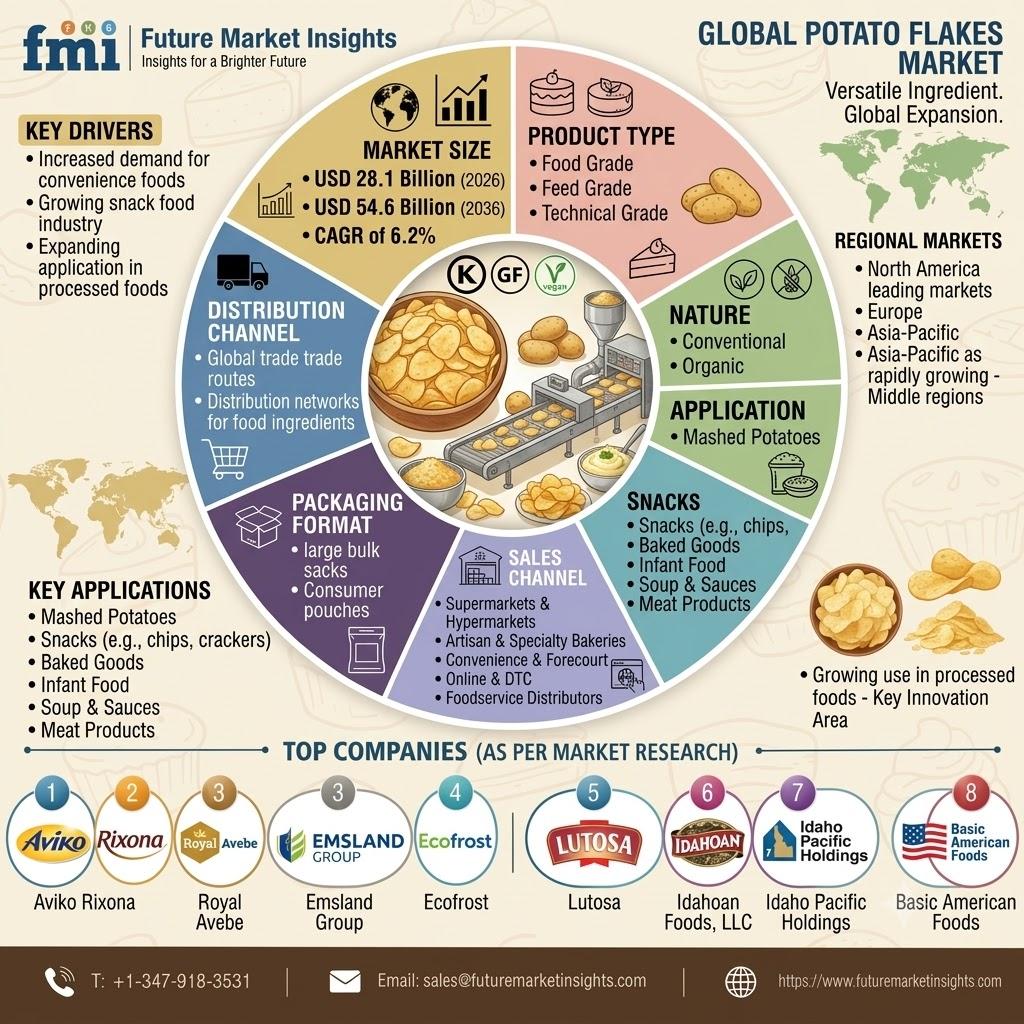
Potato Flakes Market to Reach USD 54.6 Billion by 2036 at 6.2% CAGR The global potato flakes market is projected to grow from USD 30.0 billion in 2026 to USD 54.6 billion by 2036, expanding at a 6.2% CAGR during the 2026–2036 forecast period. Growth is being supported by the expansion of established potato-processing infrastructure and demand for shelf-stable, easy-to-prepare potato...
Ships at berth traditionally run diesel generators to power onboard systems, and onshore power supply systems let them plug into the grid instead — cutting emissions and noise in port areas. According to WiseGuyReports, the global onshore power supply system market was valued at USD 1.95 billion in 2023 and is projected to reach USD 3.5 billion by 2032, growing at a compound annual growth...
Market Overview Novel GABA modulators are reducing dependence risk in the anxiolytic market by providing anxiolytic efficacy through allosteric modulation mechanisms that avoid benzodiazepine-associated tolerance, dependence, and withdrawal. These next-generation agents target specific GABA receptor subtypes responsible for anxiolysis while sparing those mediating dependence. The Anxiolytic...