


Fusion Energy Industry Embraces HTS Magnets and AI-Optimized Plasma Control

As per Market Research Future's industry analysis, the Fusion Energy Industry is experiencing a transformative phase, characterized by heightened interest and investment in advanced energy solutions. The industry, valued at approximately USD 7.231 billion in 2024 and forecast to reach USD 50.76 billion by 2035, is characterized by the transition from scientific proof-of-concept to commercial pilot plant engineering.
The Technology Transformation
From Laboratory to Commercial Pilot
The fusion energy industry has evolved through distinct phases. Early research focused on demonstrating the physics of fusion. The introduction of larger tokamaks and improved confinement methods advanced the science.
Today, the industry is transitioning toward commercial pilot plants. Innovation is focused on high-temperature superconducting (HTS) magnets and AI-optimized plasma control to achieve sustained net energy gain.
HTS Magnets
High-temperature superconducting magnets enable stronger magnetic fields in smaller devices, potentially reducing the size and cost of fusion reactors. This technology is a key enabler for compact tokamak and stellarator architectures.
AI-Optimized Plasma Control
Artificial intelligence is being applied to plasma control, enabling real-time optimization of plasma stability and performance. Machine learning algorithms can predict and prevent disruptions, improving operational reliability.
Private Investment Surge
Record Funding Rounds
Private investment in fusion has surged. Helion raised $425 million in January 2025. Proxima Fusion closed a €130 million Series A. Pacific Fusion raised a $900 million Series A. TAE Technologies raised over $150 million.
Power Purchase Agreements
Google signed a major power purchase agreement for 200 megawatts of clean fusion power from Commonwealth Fusion Systems' first commercial fusion power plant, ARC, in Virginia.
Public-Private Partnerships
The proliferation of public-private partnerships is accelerating progress. Governments are partnering with private companies to share risk and expertise.
Market Drivers
Growing Demand for Clean Energy
The increasing demand for clean energy sources is a primary driver. Energy demand is projected to rise by 30% by 2040.
Government Support
Government support plays a crucial role. The United States has invested billions in fusion research. The ITER project in Europe has received significant backing.
Technological Advancements
Technological advancements are pivotal. Innovations in plasma physics, superconducting materials, and magnetic confinement techniques are enhancing feasibility.
International Collaboration
International collaboration is emerging as a significant driver. Projects like ITER exemplify how countries can pool resources.
Segment Analysis
By Technology
Magnetic Confinement Fusion stands as the backbone of the sector. Inertial Confinement Fusion represents an emerging yet promising technology.
By Fuel Type
Deuterium-Tritium is the dominant fuel. Deuterium-Deuterium is viewed as an emerging contender.
By System Type
Commercial Reactors represent the dominant force. Experimental Reactors are emerging as significant players.
By Investment Type
Public Sector Investments are characterized by significant backing from government bodies. Private Sector Investments are rapidly emerging.
Regional Dynamics
North America: Innovation Hub
North America is the largest market, holding approximately 45% of the global share. The United States is the leading country, with key players like General Fusion, Helion Energy, and TAE Technologies.
Europe: Collaboration Focus
Europe is the second-largest market, accounting for about 30% of the global share. France, home to the ITER project, and the United Kingdom are leading.
Asia-Pacific: Growth Frontier
Asia-Pacific is an emerging powerhouse, holding approximately 20% of the global share. China is leading the charge with significant investments.
Competitive Landscape
The industry features a dynamic competitive landscape. Key players include General Fusion, Helion Energy, Tokamak Energy, ITER Organization, First Light Fusion, TAE Technologies, Plasma Physics Laboratory, and National Renewable Energy Laboratory.
General Fusion announced a partnership with a leading aerospace company to develop advanced materials. ITER Organization reported significant progress in the construction of its experimental reactor.
Future Industry Outlook
The fusion energy industry is projected to grow at a 19.38% CAGR from 2025 to 2035. New opportunities lie in advanced superconducting materials, public-private partnerships, and modular fusion power plants.
By 2035, the industry is expected to be transformed, with HTS magnets becoming standard, AI-optimized plasma control embedded, and PPAs driving commercial deployment. Companies that anticipate these trends and invest accordingly will be well positioned to lead the industry forward.
Explore key developments shaping industry transformation:
Categorias
Leia mais
Mycoprotein Market USD 778.1 Million by 2036, Japan - CAGR 10.2%, South Korea - CAGR 8.1% NEWARK, Del., October 8, 2026. — The global mycoprotein market is estimated at USD 362.5 million in 2026 and is projected to reach USD 778.1 million by 2036, expanding at a CAGR of 7.9% from 2026 to 2036, according to Future Market Insights (FMI). The market was valued at USD 336.0 million in 2025....

North America holds a dominant position in the global toxicology drug screening market, driven by high substance abuse prevalence, stringent regulatory requirements, and advanced healthcare infrastructure. The region's leadership is a critical factor shaping the direction of the Toxicology Drug Screening Market worldwide. High Substance Abuse Prevalence and Regulatory Requirements The United...

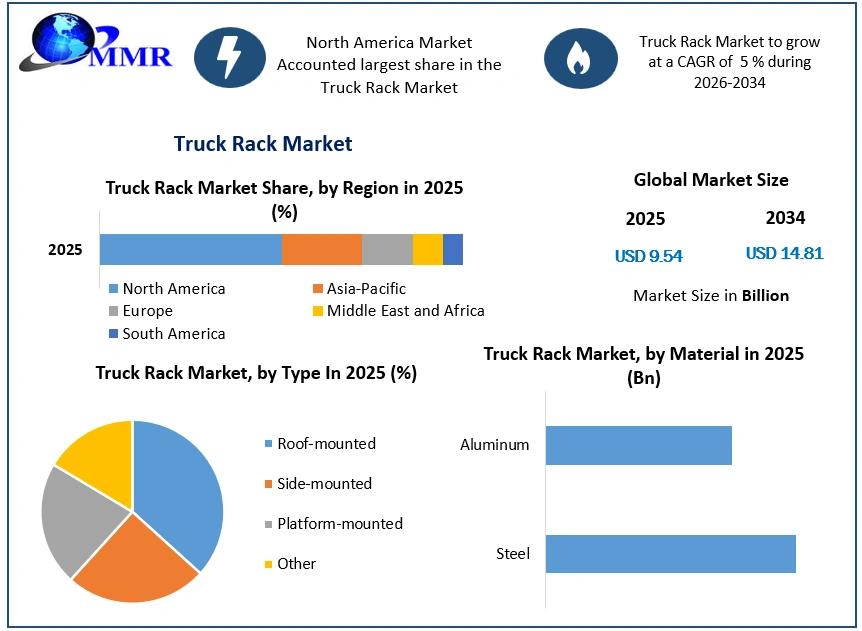
Market Overview The Truck Rack Market is witnessing steady growth as demand increases for efficient cargo transportation, commercial vehicle accessories, fleet optimization, and versatile pickup truck storage solutions. According to Maximize Market Research, the global truck rack market was valued at approximately USD 9.54 billion in 2025 and is projected to reach USD 14.81 billion by...
The Vehicle Mobile Hospital Market is experiencing rapid growth, driven by increasing demand for mobile healthcare services, rising prevalence of chronic diseases, and government initiatives for healthcare infrastructure development. According to detailed industry evaluation, the market was valued at USD 1.55 billion in 2024 and is projected to reach USD 4.5 billion by 2032,...
The Preclinical Imaging Solution Market is experiencing steady growth, driven by advancements in imaging technologies, increasing investments in research and development, and the growing demand for non-invasive methods in drug discovery. According to detailed industry evaluation, the market was valued at USD 2.5 billion in 2025 and is projected to reach USD 4.5 billion by 2035,...