PPA Industry Reshapes Renewable Energy Finance
The Power Purchase Agreement PPA Industry structures the long-term contracts underpinning renewable project finance, giving developers revenue certainty while offering buyers clean electricity at predictable prices. The report segments the market by contract type across physical, financial, virtual, and corporate agreements; by end user spanning corporations, utilities, government entities, and non-profit organizations; by energy source covering solar, wind, hydro, biomass, and geothermal; and by contract duration across short-, medium-, and long-term agreements. Forecasts extend to 2035 with country-level breakdowns across all major regions.
Report Key Statistics
Contract type segmentation separates physical agreements — where electricity moves directly from generator to buyer — from financial agreements that settle on a差价 basis without physical delivery. Virtual agreements decouple renewable attributes from physical electricity, letting corporate buyers procure clean energy certificates while power flows normally to the grid. Corporate agreements are structured around sustainability targets and typically pair long duration with creditworthy counterparties.
End-user segmentation places corporations as a major demand pool driven by Scope 2 emissions commitments and long-term price certainty. Utilities represent traditional offtakers procuring generation for regulated customer bases. Government entities use agreements to satisfy renewable procurement mandates, and non-profit organizations participate where sustainability commitments align with budget predictability.
Energy source segmentation follows resource endowment and cost competitiveness: solar and wind carry dominant volumes on cost leadership, while hydro, biomass, and geothermal serve regional niches. Duration segmentation distinguishes short-term agreements for merchant or bridge requirements, medium-term agreements matching corporate planning horizons, and long-term agreements that underpin new-build project finance.
Industry Trends
Mandatory climate disclosure frameworks are compelling thousands of corporations to quantify and reduce Scope 2 emissions, and renewable procurement through agreements or on-site generation is the most direct lever available. This creates structural demand largely independent of commodity cycles.
Virtual agreement structures are extending beyond North America and Europe into Asia-Pacific and Latin America, broadening the buyer pool beyond traditional corporate offtakers. Government procurement is also expanding as public entities use agreements to meet renewable mandates and support domestic generation buildout.
Challenges
Contract complexity and credit risk assessment remain barriers, particularly for smaller corporate buyers without energy procurement expertise. Basis risk in virtual structures introduces financial exposure requiring treasury capability. Regulatory variation across jurisdictions affects enforceability and renewable attribute recognition, and long-duration commitments require counterparties to accept extended price exposure.
Future Outlook
Growth rests on the convergence of corporate decarbonization mandates and renewable cost competitiveness. As disclosure requirements expand and renewables become the cheapest new supply in most markets, contracted clean capacity should grow. Virtual structure expansion into emerging markets and buyer-pool broadening beyond technology-sector leaders represent the most significant growth avenues.
Expert Discussion
Participants emphasize increasingly sophisticated structuring as buyers balance price certainty, additionality requirements, and balance-sheet treatment. The physical-versus-virtual distinction matters increasingly for accounting, and buyers select structures based on how emissions reductions are reported rather than price alone. Counterparty creditworthiness on both sides remains the central determinant of contract terms.
Conclusion
Momentum rests on corporate procurement and solar and wind cost leadership. Opportunities lie in virtual agreement expansion and buyer-pool broadening. The Power Purchase Agreement PPA Industry is expected to grow through 2035 as long-term contracting becomes the default mechanism for financing and procuring renewable generation.
الأقسام
إقرأ المزيد
Petroleum transportation infrastructure moves crude oil and refined products from production sites to refineries and end markets through gathering, transmission and distribution networks. According to Market Research Future, petroleum transportation infrastructure remains dominated by crude oil service, which holds the largest market share through extensive utilisation in energy generation and...

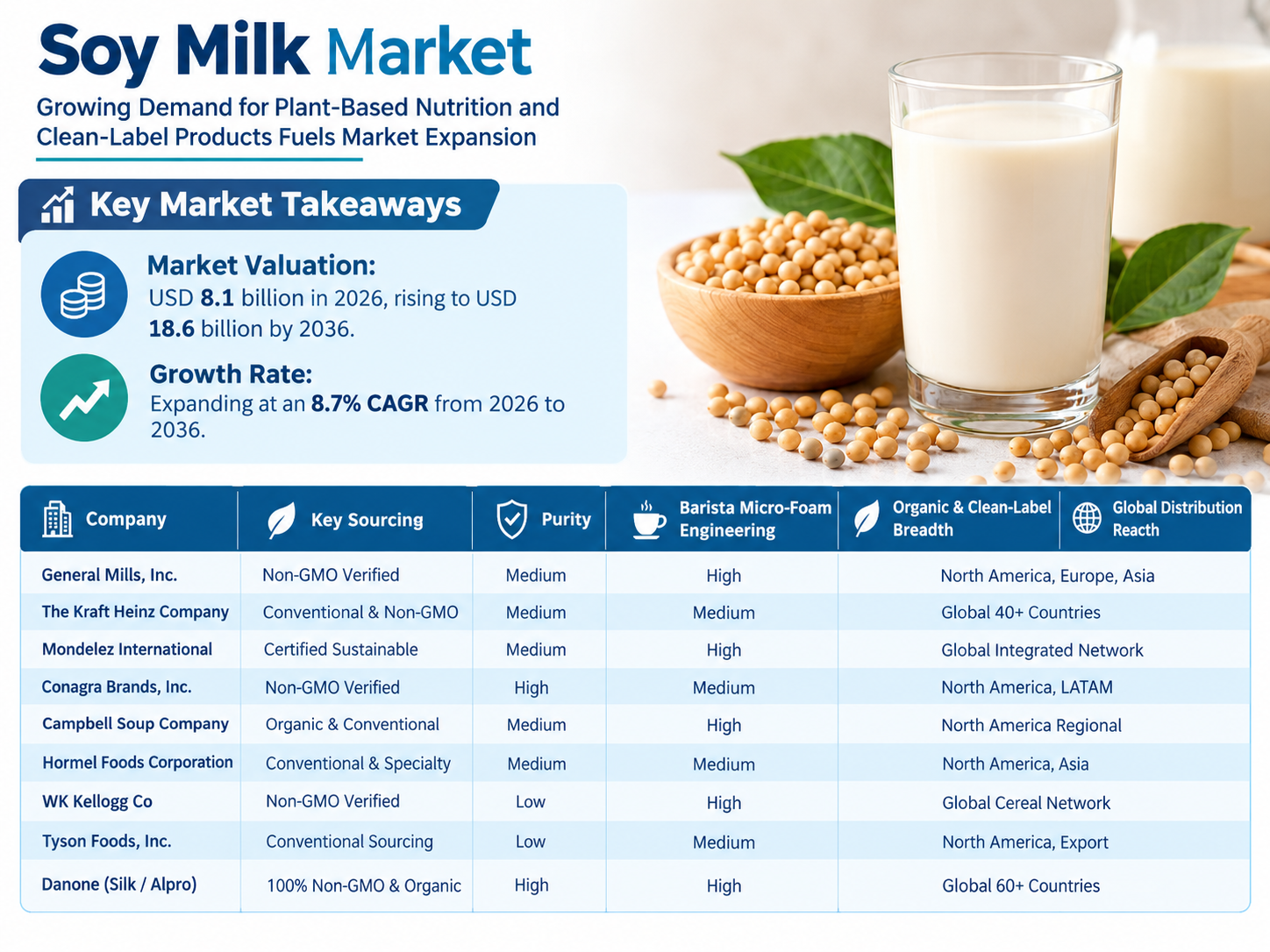
NEWARK, Del., October 16, 2026 — The global Soy Milk Market is gaining momentum as consumers increasingly explore plant-based beverages, protein-rich nutrition, and alternatives to conventional dairy products. According to the latest market intelligence report published by Future Market Insights (FMI), the market is estimated at USD 8.1 billion in 2026 and is projected to reach USD 18.6...
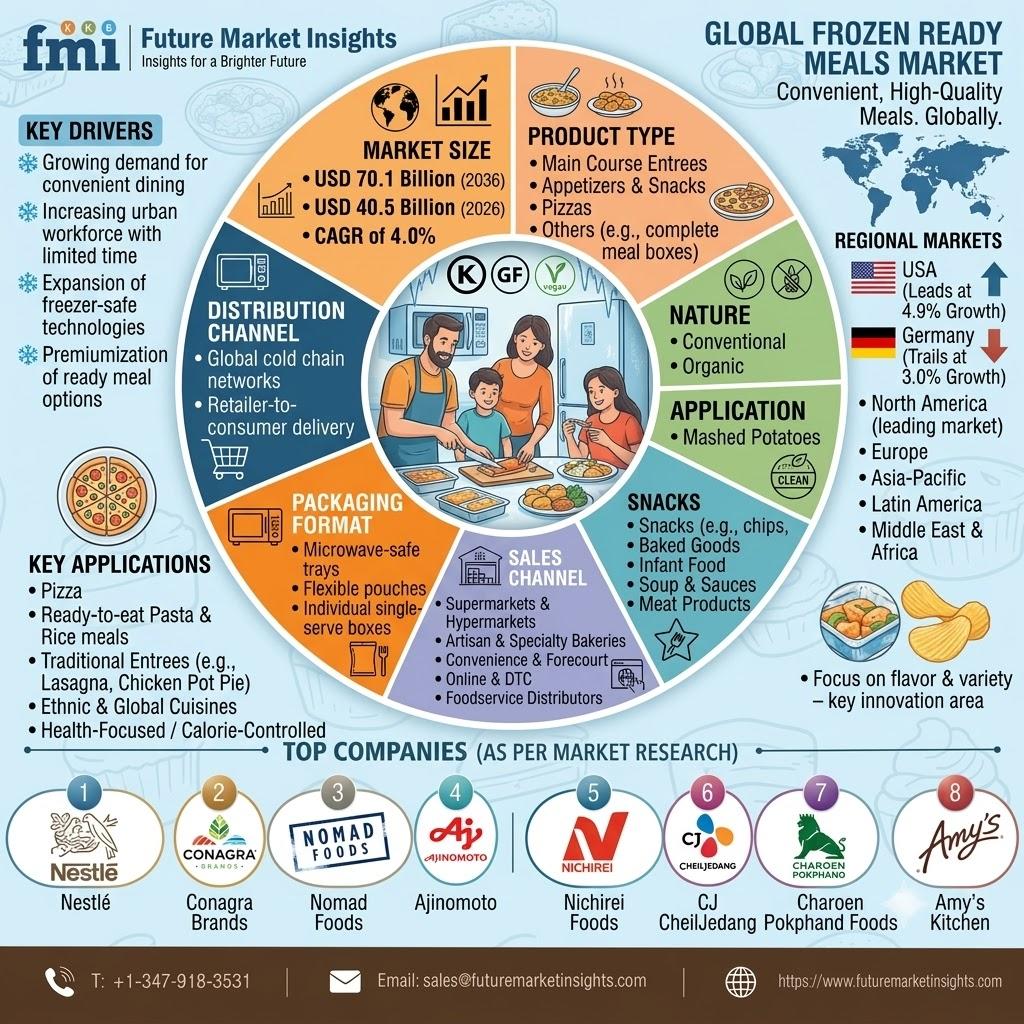
Frozen Ready Meals Market to Reach USD 70.1 Billion by 2036 at 4.0% CAGR; USA Leads Country Growth at 4.9%, Germany Trails at 3.0% The global frozen ready meals market is projected to increase from USD 47.2 billion in 2026 to USD 70.1 billion by 2036, expanding at a 4.0% CAGR during the 2026–2036 forecast period. Demand is supported by limited cooking time at home and demand for...
Melanocortin Receptor 4 (MC4R) is a G protein-coupled receptor that plays a critical role in regulating energy balance, appetite, and body weight. It is also involved in pigmentation, sexual function, and cardiovascular regulation. The market for MC4R-targeting therapeutics is expanding rapidly, driven by the rising prevalence of obesity and rare genetic disorders, increasing research...

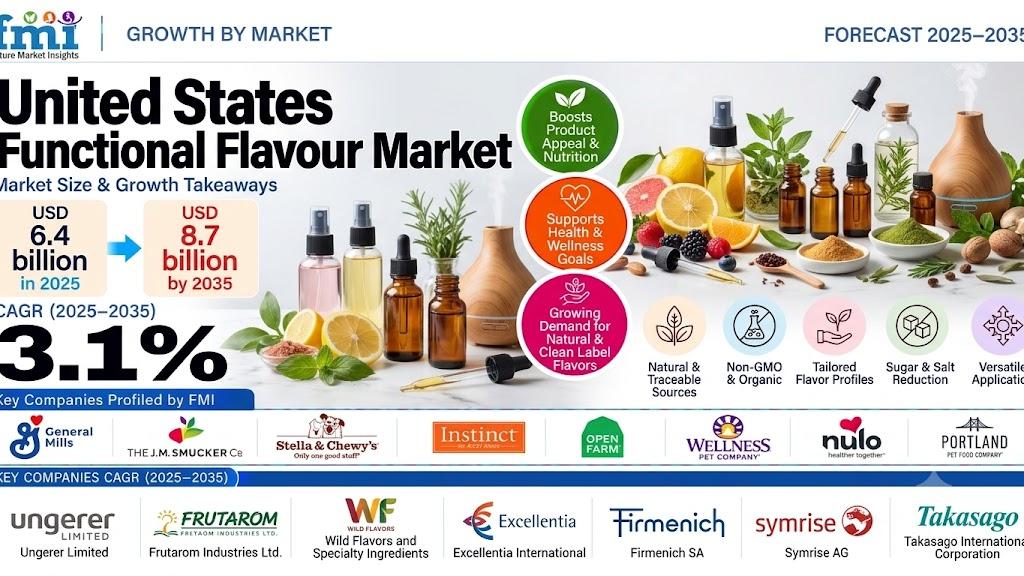
Demand for Functional in USA Flavour Market Outlook NEWARK, Del., October 22, 2026 — The United States Functional Flavour Market is experiencing steady growth as food and beverage manufacturers increasingly incorporate flavour systems that improve sensory appeal while supporting health-oriented product formulations. According to the latest market intelligence report published by Future...