Comprehensive Strategic Evolution of High-Power Semiconductor Laser Diodes, Direct-Diode Processing, and Photonic Micro-Machining Architectures
Modern automotive electric vehicle battery welding lines, precision semiconductor wafer dicing and annealing tools, aerospace additive manufacturing platforms, and minimally invasive clinical surgical suites depend fundamentally on high-brightness, high-efficiency coherent optical photon sources, establishing the operational foundation of the Semiconductor Laser Equipment Industry. For decades, industrial thermal material processing was dominated by legacy carbon dioxide ($CO_2$) gas lasers and lamp-pumped solid-state crystal lasers (such as Nd:YAG). While capable of delivering high raw output power, these legacy laser sources suffered from severe physical and operational limitations: extremely poor electrical-to-optical wall-plug conversion efficiencies (typically a meager 5% to 10% for $CO_2$ lasers), massive physical equipment footprints, short consumable tube lifecycles, and complex optical mirror beam-delivery trains that required continuous manual realignment and purging. Semiconductor laser equipment—utilizing high-power semiconductor laser diode bars, fiber-coupled direct-diode arrays, and vertical-cavity surface-emitting lasers (VCSELs)—resolves these physical bottlenecks by converting electrical current directly into coherent laser light within microscopic quantum-well semiconductor junctions. By delivering wall-plug electrical efficiencies exceeding 45% to 55%, compact solid-state physical footprints, flexible optical fiber beam delivery, and maintenance-free operational lifecycles exceeding tens of thousands of hours, semiconductor laser equipment powers modern industrial manufacturing and precision micro-machining globally.
The foundational engineering of contemporary semiconductor laser equipment platforms centers on compound semiconductor quantum-well heterostructures, spatial beam combining optics, and high-efficiency micro-channel liquid cooling. At the photonic chip level, semiconductor laser equipment utilizes high-power Edge-Emitting Laser (EEL) diode bars fabricated on Gallium Arsenide (GaAs) or Indium Phosphide (InP) substrates: the active region incorporates strained quantum wells sandwiched between aluminum gallium arsenide (AlGaAs) or indium gallium arsenide phosphide (InGaAsP) optical cladding layers, emitting high-intensity coherent light at calibrated near-infrared wavelengths (predominantly 808 nm, 915 nm, 940 nm, and 976 nm). A single 10-millimeter-wide semiconductor diode laser bar integrates dozens of individual emitter stripes, outputting hundreds of watts of continuous-wave (CW) optical power. However, semiconductor laser diodes exhibit asymmetric beam divergence (a fast axis diverging at 30° to 40° and a slow axis diverging at 6° to 10°). Modern semiconductor laser equipment resolves this spatial asymmetry through high-precision Micro-Optics: cylindrical acylindrical micro-lenses collimate the fast and slow axes, while Spatial and Polarization Beam Combiners pair multiple diode bars into a single symmetrical optical beam. For high-brightness applications, the combined laser light is coupled directly into flexible optical delivery fibers (core diameters from 100 to 400 micrometers), delivering multi-kilowatt optical power densities exceeding megawatts per square centimeter at the workpiece surface.
Deploying comprehensive semiconductor laser equipment platforms delivers decisive energy conservation, processing speed, and metallurgical precision advantages across automotive e-mobility, electronics packaging, and medical surgery. In electric vehicle lithium-ion battery manufacturing, direct-diode and blue/green semiconductor laser equipment welds highly reflective battery busbars, copper foil stacks, and aluminum casing tabs: conventional near-infrared lasers suffer from extreme optical back-reflection and unstable melt pools when welding pure copper, whereas modern semiconductor lasers emitting at high-absorption visible blue wavelengths (450 nm) achieve optical absorption in copper that is eight to ten times higher, executing spatter-free, high-conductivity electrical welds without thermal cracking. In semiconductor microelectronics manufacturing, high-precision pulsed semiconductor lasers execute wafer stealth dicing, thermal laser annealing of ion-implanted silicon wafers, and PCB micro-via drilling, vaporizing material with sub-micron feature precision while maintaining cold heat-affected zones (HAZ). Furthermore, in clinical medical dermatology and surgical suites, compact fiber-coupled semiconductor laser systems provide calibrated optical wavelengths for precise surgical tissue cutting, vascular lesion coagulation, and non-invasive photodynamic cancer therapies.
Looking toward strategic long-term industrial photonics roadmaps, semiconductor laser equipment architectures are converging with multi-kilowatt Direct-Diode Laser (DDL) cutting heads, high-power blue and green Gallium Nitride (GaN) industrial laser engines, and high-speed multi-beam VCSEL processing arrays. Direct-diode laser systems are systematically replacing traditional fiber and disk lasers in industrial sheet-metal cladding, hardening, and brazing: by bypassing intermediate crystal or optical fiber gain stages and projecting the semiconductor diode beam directly onto the workpiece, direct-diode equipment achieves industry-leading wall-plug electrical efficiencies exceeding 45% to 50%, slashing factory electricity consumption by half. Concurrently, GaN blue laser foundries are scaling multi-kilowatt visible laser systems for high-speed copper 3D additive manufacturing and battery tab welding. Supported by international laser safety classifications (Class 4 industrial laser enclosures compliant with IEC 60825-1) and ISO 9001 advanced manufacturing standards, semiconductor laser equipment maintains an indispensable technological foundation driving the future of smart manufacturing, clean transportation electrification, and precision micro-photonics worldwide.
Top Trending Reports :
Online Professional Development Courses Market
Organic Certification Services Market
Organizational Change Management Services Market
Categorias
Leia Mais
Market Overview The modular hospital market is growing as healthcare systems seek faster, more flexible, and cost-effective ways to expand capacity. Prefabricated units built off-site can be assembled quickly to create wards, operating theaters, intensive care units, and full hospitals. Demand rose sharply as governments prioritized pandemic preparedness, and it continues with rural access and...

Some homes are designed to impress immediately. Others become more interesting the longer you think about how they would fit into everyday life. Nakheel Podium Villas at Palm Jumeirah belong to the second category because the concept invites a different question from the usual property search: what happens when villa-style privacy is combined with the vertical character of a...

Typhus treatment is evolving, driven by research, public health efforts, and the changing epidemiology of vector-borne diseases. The future promises better diagnostics, more accessible treatments, and stronger prevention. Understanding these trends helps manufacturers, providers, and policymakers anticipate what is coming. Several developments will shape the field. Rapid diagnostic tests are...
Consumers are increasingly scrutinizing the ingredients in personal care products, and callus treatments are no exception. The shift toward natural and organic formulations is transforming the market, driving demand for products that use plant extracts, essential oils, and other gentle yet effective ingredients. This trend is a major driver of growth in the Callus Treatment Market . Consumer...
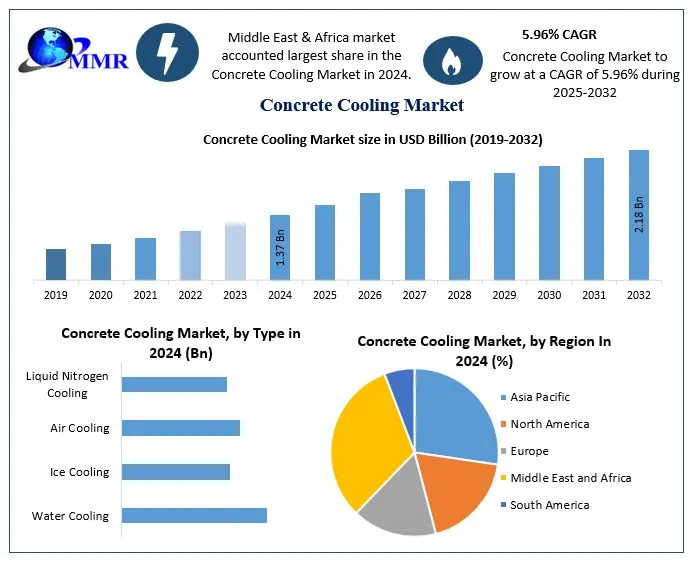
Market Overview The Concrete Cooling Market is witnessing steady growth, driven by increasing infrastructure development, rising demand for durable concrete structures, and the growing adoption of advanced temperature-control technologies in construction projects. According to Maximize Market Research, the global Concrete Cooling Market was valued at approximately USD 1.37...