


Microgrid Automation Market Poised for Innovation

The deployment of advanced microgrid automation is becoming increasingly critical as grid operators, industrial facilities, and communities seek to automate the complex decision-making processes required to balance generation and load, ensure reliability, and maximize economic value in real-time. Analysis presented by Market Research Future reveals that the market is experiencing significant growth, fueled by resilience mandates, renewable capacity additions, and the electrification of transport and heating. This article explores the current state, challenges, and future opportunities for microgrid automation.
Report Key Statistics
Market Research Future's analysis indicates that the Microgrid Control System Market was valued at USD 4.44 billion in 2025, with strong growth projections to USD 16.16 billion by 2035 at a CAGR of 13.8%. The market's expansion is supported by the global push for digitalization in the energy sector, with IEA noting that digitalization investment within grid budgets continues to grow at a faster rate than physical asset spending. North America holds 38.5% of 2025 revenue, while Asia-Pacific expands fastest at a 16.9% rate through 2035.
The component segment analysis shows that Hardware currently leads with a 44.0% share, reflecting the physical installation requirements of controllers, gateways, and protection devices. However, Software is the fastest-growing component segment at a 16.4% CAGR, propelled by the rising deployment of AI, predictive analytics, and real-time load forecasting required to balance intermittent distributed energy resources.
Industry Trends: Utility Dominance and Defense Growth
The microgrid automation market exhibits a significant focus on Utilities, which are the largest application, generating USD 1.38 billion in 2025. Utility procurement sets technical standards that the rest of the market eventually adopts, with a focus on distribution deferral and resilience obligations.
Defense is the highest-margin segment, since specifications emphasize survivability and certification over unit cost. The U.S. Department of Defense targets carbon-free installation electricity by 2030, and similar directives appear in NATO member procurement, creating a specification-driven niche for microgrid automation.
Challenges: Capital Intensity and Standardization
The microgrid automation industry faces challenges related to capital intensity, particularly for smaller sites where controllers rarely arrive alone, and fragmented tariff and regulatory frameworks. Sites below one megawatt frequently fail internal hurdle rates once integration labor is included. Additionally, fragmented regulatory frameworks in Asia-Pacific and South America create complexity for standardization and cross-border project development.
Future Outlook: Reporting Obligations and Data Demand
The future outlook for microgrid automation is closely tied to reporting obligations that create data demand. Most facilities are not currently equipped to deliver the verified, granular energy data required by CSRD and similar disclosure regimes. Controllers are now the system of record, increasing their strategic role inside corporate IT architectures and broadening the buying committee beyond facilities engineering. Furthermore, the electrification supercycle, with transport, heating, and industrial process electrification adding substantial load to distribution networks, makes local balancing the cheapest deferral mechanism for capacity upgrades.
Expert Discussion: The Economic and Operational Value of Automation
The economic and operational value of microgrid automation is a central topic of discussion among industry stakeholders. The potential for reducing diesel runtime, lowering energy costs, and improving grid reliability creates a compelling case for continued investment. According to Market Research Future, AI predictive microgrid control reduces diesel runtime at hybrid sites by an estimated 15–22%, creating a measurable return on investment that is driving the adoption of autonomous dispatch across the market.
Conclusion
The microgrid automation market is poised for significant expansion, driven by the need for intelligent, resilient, and efficient energy management in a rapidly evolving energy landscape. According to Market Research Future, the market is projected to reach USD 16.16 billion by 2035, reflecting the essential role of automation in the future of energy. The strategic deployment of advanced Microgrid Control Systems technologies will be essential for meeting the complex demands of modern energy systems while supporting the transition to a more distributed, decarbonized, and digitally enabled energy future.
Gain valuable insights through comprehensive industry analysis:
Industrial Medium Voltage Switchgear Industry
Industrial Virtual Pipeline Industry
Industrial Liquid Tight Flexible Non metallic Conduit Industry
Intelligent Completion Industry
Ground Mounted Solar PV Mounting System Industry
Generator Circuit Breaker Industry
الأقسام
إقرأ المزيد
The Vonoprazan Fumarate API market is characterized by a diverse range of dosage forms and therapeutic applications that cater to different patient needs and clinical settings. The versatility of this potassium-competitive acid blocker allows for multiple administration routes and formulations, making it suitable for both chronic management of acid-related disorders and acute care situations...

Market OverviewThe clinical rehabilitation service sector is expanding as more patients require recovery support after stroke, orthopedic surgery, cardiac events, and neurological injury. Aging populations and rising chronic disease prevalence are increasing therapy demand. The sector is projected to grow through 2030, supported by early rehabilitation protocols, insurance coverage, and...
Budesonide is a corticosteroid used to treat a range of inflammatory conditions, particularly those affecting the respiratory and gastrointestinal systems. It is available in multiple formulations, including inhaled, oral, and nasal preparations, allowing it to be tailored to specific conditions. Budesonide works by reducing inflammation, which is central to many chronic diseases. Its...
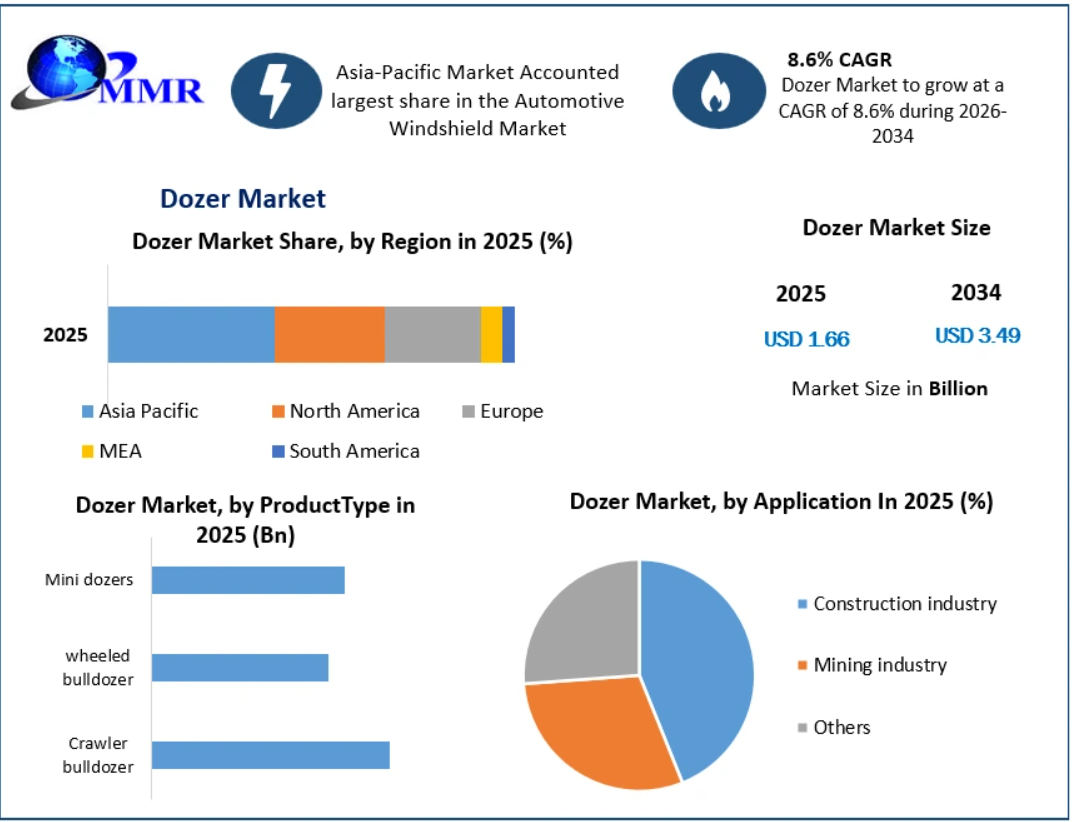
Dozer Market Overview The Dozer Market report provides an in-depth analysis that is required to make informed industry decisions and develop strategic growth plans. Regardless of the production method or cost structures, the Dozer market report provides a full understanding of advanced tactics and plans. Dozer Market Forecast Dozer Market size was valued...
Digital transformation is rapidly reaching laboratory containment infrastructure through IoT integration and centralized facility monitoring platforms. Smart safety cabinets now incorporate wireless telemetry, automated sensor calibration, and continuous cloud-based logging of airflow velocities and filter conditions. To explore digital equipment integration models, sensor technology...