Oil & Gas Separators Market Share Shifts to Water Separation

Market share analysis in the oil and gas separators sector reveals a competitive landscape where established application leaders retain dominance while water separation and midstream end uses reshape positioning. Based on Market Research Future's assessment, the Oil & Gas Separators Market Share is distributed across a market estimated at USD 0.08 million in 2024 and projected to reach USD 0.155 million by 2035 at a 5.82% compound annual growth rate. Tracking where share sits today, and where it is migrating, provides a clearer picture of competitive dynamics than aggregate growth figures alone.
Share Distribution Across Applications and End Uses
Oil separation remains the dominant application, characterized by mature technologies emphasizing efficiency and reliability in oil extraction, and preferred in various industrial applications due to its critical role in enhancing oil recovery processes. Water separation is recognized as an emerging segment, driven by increasing regulatory concerns regarding water pollution and the need for environmental compliance, with growth heavily influenced by innovations that improve the removal of water from crude oil, and as environmental standards become stricter, the demand for effective water separation solutions is anticipated to rise.
The upstream segment is characterized by its critical role in the extraction phase, utilizing separators to manage separation of oil, gas, and water efficiently, with established infrastructure supporting extensive drilling and production operations. The midstream segment is emerging as a vital area for growth, focusing on transportation and storage of hydrocarbons, with innovations in separator technologies aimed at enhancing oil and gas transportation efficiency and rising investment in pipeline networks contributing to rapid expansion.
Share Dynamics Across Types and Technologies
Horizontal separators are currently dominant due to superior performance in handling large volumes of mixed fluids, with design allowing for longer residence time that aids in effective separation of oil, gas, and water, making them ideal for high-capacity production facilities. Vertical separators are emerging as a popular choice thanks to space-saving features and versatility, efficiently separating fluids in compact environments and motivating adoption in smaller operations and offshore applications.
Mechanical separation has established itself as the dominant method, primarily due to simplicity and low operational costs, efficiently separating substances based on density differences and ideal for fields with consistent compositions. Chemical separation is gaining traction as an emerging technology, particularly in scenarios involving challenging feedstocks, leveraging chemical reactions to enhance separation efficiency, and as environmental regulations tighten, chemical separation is positioned to grow rapidly.
Carbon steel is the dominant material, widely recognized for strength, affordability, and ease of fabrication, making it suitable for standard applications. Stainless steel represents an emerging segment, increasingly favored for enhanced corrosion resistance and durability, essential for separators used in challenging conditions, with the shift toward more reliable and long-lasting materials underscoring growing importance.
Regional Share Concentration
North America continues to lead with a 40% market share in 2024, driven by increasing oil production, technological advancements, and stringent environmental regulations, with the United States as the primary player and major companies like Schlumberger, Halliburton, and Baker Hughes leading, and the presence of advanced manufacturing facilities and R&D centers enhancing capability to innovate. Europe holds 20%, driven by stringent environmental regulations and a shift toward sustainable energy practices, with the UK, Germany, and Norway leading and companies like TechnipFMC and Aker Solutions prominent, and a competitive landscape characterized by a mix of established players and emerging startups focusing on innovative solutions. Asia-Pacific holds 10%, driven by increasing energy demands, rapid industrialization, and investments in oil and gas exploration, with China and India leading and significant investments from both domestic and international players. The Middle East and Africa holds 10%, driven by abundance of natural resources and increasing investments in oil and gas infrastructure, with Saudi Arabia and the UAE leading.
Competitive Forces Reshaping Share
Key players are strategically positioning themselves through digitalization and sustainability. Emerson Electric announced a strategic partnership in November with a leading renewable energy firm to develop hybrid separation technologies integrating renewable energy sources, positioning Emerson at the forefront of the transition toward sustainable energy solutions. Honeywell launched a new line of advanced separators in October designed to optimize performance in harsh environments, addressing the specific needs of operators in challenging conditions. TechnipFMC secured a major contract in September for the supply of separators in a large-scale offshore project, underscoring operational capabilities and highlighting the growing trend of offshore extraction.
The report also documents longer-horizon developments: Schlumberger completed the acquisition of Sulzer's VIEC electrostatic coalescer technology in July 2026. Halliburton Labs added Osmoses to its technology ecosystem in August 2026. Baker Hughes published three field case studies for its Boosted GasSep gas separator in March 2026. Emerson documented an offshore North Sea application in September 2025 using acoustic sand monitors. Honeywell released UniSim Design R520 in December 2025. National Oilwell Varco secured an order in April 2026 for gas-separation membranes.
Challenges Affecting Share Stability
Share positions are not fixed. The market structure is moderately fragmented, with several players competing for market share, though the collective influence of major companies like Emerson Electric and Honeywell contributes to a competitive atmosphere where technological prowess and strategic partnerships are paramount. Companies are localizing manufacturing and optimizing supply chains to enhance operational efficiency. Digitalization, sustainability, and AI integration are increasingly defining competitive trends, with strategic alliances becoming more prevalent.
Future Outlook for Share Distribution
The forward view anticipates share migration rather than wholesale displacement. Oil separation is expected to retain leadership, while water separation gains share. Midstream is expected to gain share relative to upstream in percentage terms. Gas separation is expected to gain share relative to oil separation. Integration of AI for predictive maintenance and development of modular separator units represent emerging share opportunities.
Expert Discussion
Analysts note that share leadership in oil and gas separators is less about any single technology than about fit between separator characteristics and operating requirements. Oil separation suits mature extraction processes; water separation suits regulatory-driven produced water handling; gas separation suits natural gas processing; horizontal separators suit high-capacity facilities; vertical separators suit compact and offshore installations.
Experts also emphasize that competitive differentiation is likely to evolve from traditional price-based competition to a focus on innovation, technology integration, and supply chain reliability, reflecting the industry's shift toward more sustainable and efficient operational practices.
Conclusion
The oil and gas separators market share landscape reflects a sector where leadership is distributed across applications, types, and regions. Current share positions favor oil separation in application and horizontal separators in type, while water separation and midstream represent the fastest-moving share gainers. Emerging opportunities lie in AI-enabled predictive maintenance, modular deployment, and hybrid separation technologies. Technological developments in electrostatic coalescing and membrane systems are steadily reshaping competitive positioning. The long-term outlook anticipates continued share migration toward integrated, digitally enabled providers, with the Oil & Gas Separators Market evolving into a more technology-segmented competitive arena by 2035.
Gain a competitive edge with insightful market reports:
US Pad Mounted Transformer Market
US Thin Film Photovoltaic Market
Categorie
Leggi tutto
Eye bag removal is a cosmetic procedure designed to improve the appearance of puffiness, loose skin, and excess fat beneath the eyes. Although the treatment focuses on the under-eye area, recovery is an equally important part of achieving a smooth and natural-looking result. Understanding the healing process can help patients prepare for treatment and feel more confident throughout their...

Global Dinner Rolls Market Outlook NEWARK, Del., October 27, 2026 — The global dinner rolls market is gaining momentum as consumers, commercial bakeries, foodservice operators, and retailers respond to growing demand for convenient bakery products suitable for everyday meals, family gatherings, and hospitality applications. Demand for frozen dinner rolls, multipack formats, and premium...

Detailed market valuations, technology segmentations, and competitive vendor market shares are systematically evaluated in the Wavelength Sensor Market intelligence coverage, benchmarking spectral discrimination devices across telecommunications, industrial automation, healthcare, aerospace, and semiconductor metrology domains. Conventional optical photodiodes are spectrally non-selective: they...

Heightened regulatory scrutiny and updated quality control mandates are transforming manufacturing protocols across the domestic pharmaceutical landscape. Detailed analysis within the India Cough Syrup Market report indicates that regulatory bodies like the Central Drugs Standard Control Organization (CDSCO) are enforcing rigorous testing standards for all export-bound and domestic cough...
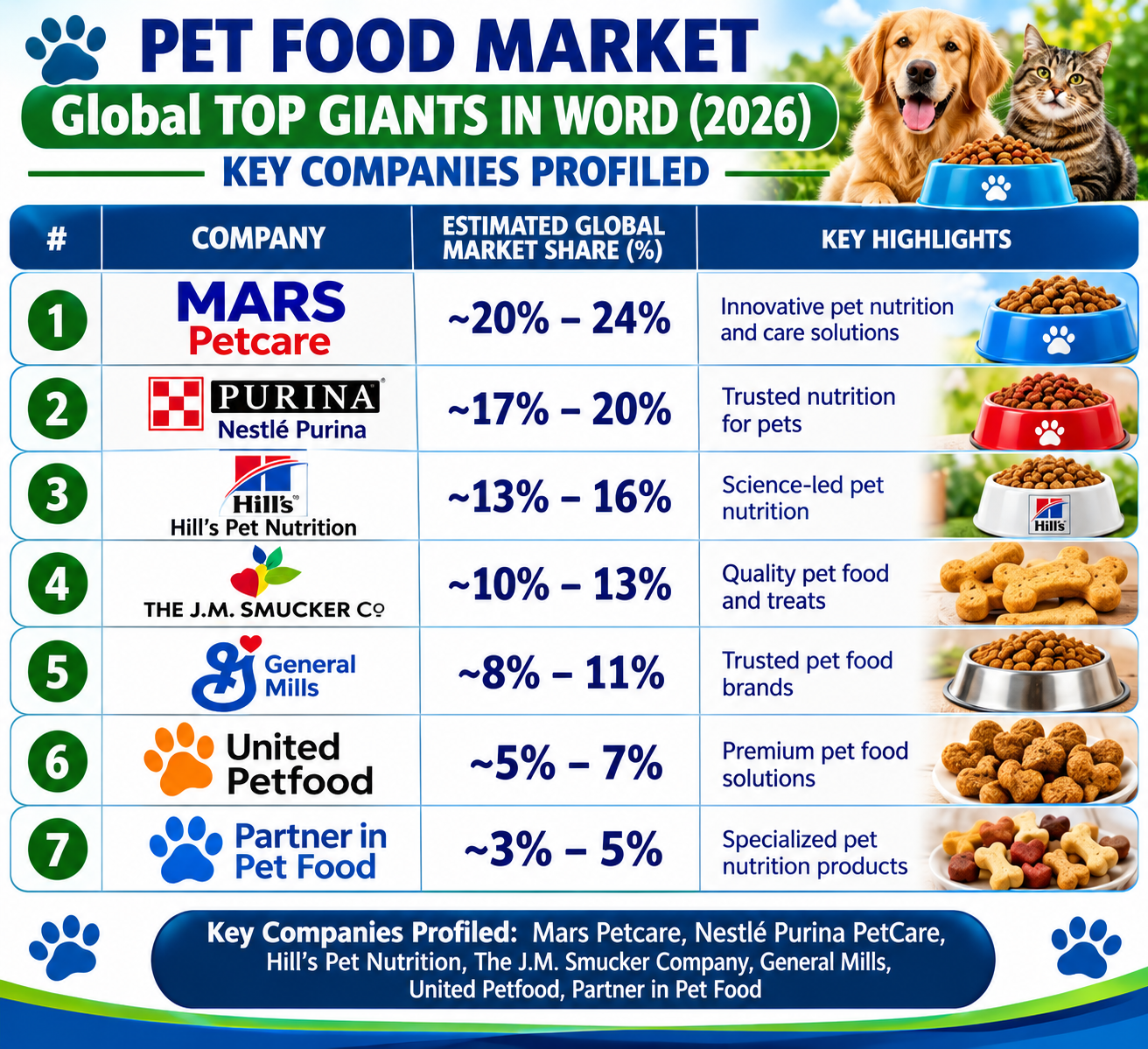
NEWARK, Del., November 5, 2026 — The global Pet Food Market is projected to reach USD 141.0 billion in 2026. According to Future Market Insights (FMI), the market is forecast to grow to USD 263.8 billion by 2036, expanding at a CAGR of 6.5% between 2026 and 2036. This represents an incremental market opportunity of USD 122.8 billion over the forecast period. The market outlook...