COPD Asthma Drug Devices Market: Sustainability and the Next Generation of Inhaler Technology
Inhalers are essential drug delivery devices for many people living with asthma and chronic obstructive pulmonary disease. As respiratory treatment demand continues across healthcare systems, manufacturers are examining how inhaler technologies can improve usability, medication delivery, and environmental performance. Sustainability has become an important topic, particularly because some inhaler designs rely on propellants that contribute to greenhouse gas emissions.
The COPD Asthma Drug Devices Market includes metered-dose inhalers, dry powder inhalers, soft mist inhalers, nebulizers, and supporting devices. Market development is shaped by respiratory disease management needs, technological innovation, healthcare access, and environmental considerations. Manufacturers are exploring alternative propellants, propellant-free delivery systems, and product designs that balance environmental objectives with reliable therapeutic performance.
Environmental Considerations in Inhaler Design
Pressurized metered-dose inhalers use propellants to deliver medication as an aerosol. Some traditional propellants have environmental impacts, leading to interest in alternatives with lower global warming potential.
Dry powder inhalers generally do not rely on the same type of propellant system. However, switching device formats is not straightforward because inhalers differ in medication formulation, inhalation requirements, and usability.
Development of Alternative Propellants
Pharmaceutical and device manufacturers are researching next-generation propellants intended to reduce the climate impact of pressurized inhalers. Such developments require careful testing to ensure that changes do not compromise dose consistency, aerosol characteristics, product stability, or patient safety.
Regulatory review and manufacturing adaptation are also important parts of bringing new formulations to market.
Patient Needs Remain Central
Environmental improvements must be considered alongside patient requirements. Different people have different abilities to use inhaler devices correctly, and the most sustainable option is not automatically the most suitable for every patient.
Healthcare professionals consider the prescribed medication, inhalation technique, clinical condition, and device availability when supporting treatment decisions.
Innovation Across Device Categories
Beyond propellant development, companies are investing in dose counters, connected inhalers, improved ergonomic designs, and more efficient nebulizers. These developments reflect a broader effort to improve respiratory care while responding to changing healthcare and environmental expectations.
Future Market Perspective
Sustainability initiatives, digital features, and improved drug delivery systems may influence the next phase of respiratory device development. Manufacturers that successfully combine environmental responsibility, dependable performance, and patient-friendly design may find opportunities in the evolving market.
People Also Ask
1. Why are inhaler propellants being redesigned?
Some conventional propellants contribute to greenhouse gas emissions, encouraging research into lower-impact alternatives.
2. Are dry powder inhalers propellant-free?
Yes. Dry powder inhalers generally use the patient's inhalation to disperse medication rather than a pressurized propellant.
Tags: COPD Asthma Drug Devices Market, Sustainable Inhalers, Respiratory Device Innovation, Metered-Dose Inhalers, Dry Powder Inhalers, Green Healthcare
Categorii
Citeste mai mult
The substation is where the electrical grid becomes legible. For a century, that legibility was mechanical—relays, copper wiring, analog meters. Today, the Utility Scale Digital Substation Market represents the wholesale replacement of that mechanical logic with digital intelligence, and the financial stakes are enormous. According to Market Research Future, the sector was valued at USD...

Market Overview The methadone market is being transformed by innovations in treatment delivery, including telemedicine, mobile units, and extended-release formulations. The market is projected to grow through 2030, driven by growing demand and technological advances. OTPs and addiction clinics are increasingly adopting innovative delivery models. Growing adoption of the Methadone Market...

Rising global awareness regarding vector-borne bacterial infections, expanding vulnerability among displaced and homeless populations, and continuous advancements in molecular diagnostics are propelling expansion across the global Trench Fever Treatment Market. Trench fever—a louse-borne bacterial infection caused by Bartonella quintana—presents with recurrent fever spikes, severe...
Pregnancy testing has become faster, cheaper, and more accessible than ever, thanks in part to HCG pregnancy test strips. Unlike bulky midstream tests, strips are simple dip-and-read devices that detect human chorionic gonadotropin in urine. They are inexpensive, compact, and widely available online and in stores. For women who want to test early, test frequently, or simply save money, strips...
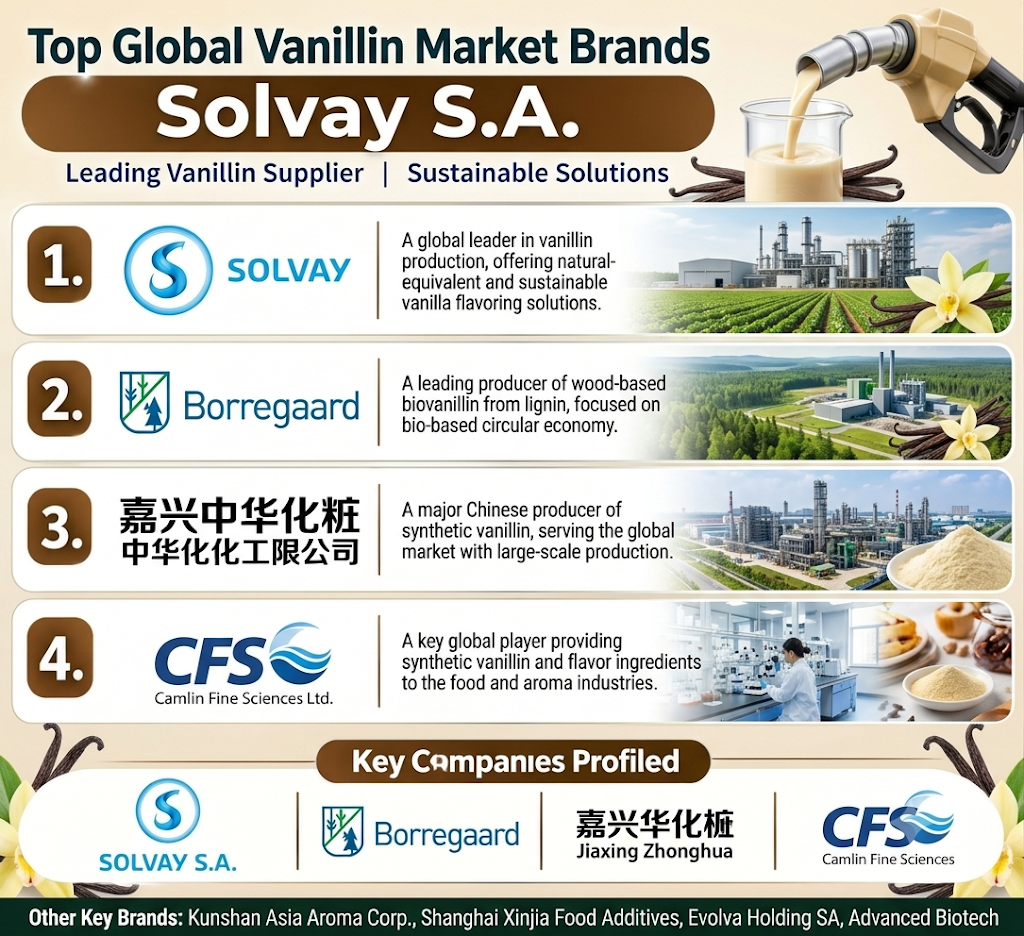
NEWARK, Del., November 3, 2026 — The global Vanillin Market is estimated to reach USD 909.0 million in 2026. According to Future Market Insights (FMI), the market is projected to reach USD 1,771.4 million by 2036, expanding at a CAGR of 6.9% between 2026 and 2036. This represents an additional market value of USD 862.4 million over the forecast period. The outlook reflects growing demand...