Printed Flexible Battery Industry to Hit $8.5B
The Printed Flexible Battery Industry was valued at USD 1.26 billion in 2025 and is projected to grow to USD 8.5 billion by 2035, at a compound annual growth rate of 21% during the 2026 to 2035 forecast period. The market moved from USD 1.04 billion in 2024, with historical data spanning 2020 through 2024 and the base year set at 2025. These batteries use printing and thin-film technologies to create lightweight, conformal energy storage that integrates into curved surfaces, wearables, medical devices, and smart packaging where conventional batteries cannot fit.
Report Key Statistics
Application segmentation shows consumer electronics dominating at USD 479 million in 2024, projected to expand to USD 3,850 million by 2035, driven by increasing demand for lightweight and flexible power sources in devices such as smartphones, tablets, and other portable electronics. Wearable devices have seen steady expansion influenced by rising adoption of smartwatches and fitness trackers, which necessitate compact and flexible power solutions that integrate into various designs. Medical devices are witnessing moderate growth due to technological advancements facilitating development of portable and wearable medical devices, and as healthcare increasingly leans toward remote monitoring and telemedicine, the need for flexible batteries capable of supporting such devices becomes paramount. Smart packaging, while currently smaller, is exhibiting promising potential through gradual increase in demand for innovative packaging solutions that leverage battery technology for added features such as real-time tracking and temperature monitoring.
Type segmentation shows printed batteries demonstrating strong growth due to lightweight and flexible characteristics, making them suitable for consumer electronics and smart packaging. Flexible batteries exhibit steady expansion, primarily driven by advancements in materials and manufacturing processes, making them increasingly popular for wearable devices and medical applications. Thin film batteries are witnessing gradual increase in demand across sectors like IoT devices and RFID tags.
Energy density segmentation shows high energy density as the most significant category, supporting a wide range of applications, particularly in electric vehicles and renewable energy integration, with strong growth due to increasing demand for efficiency and longer-lasting power solutions. Medium energy density options have gained attention, demonstrating steady expansion as they cater to consumer electronics and wearable devices. Low energy density batteries maintain a consistent presence in specific markets where size and weight are less critical.
Production technology segmentation shows screen printing exhibiting strong growth due to ability to produce high-quality printed electronics efficiently, making it a favored choice for manufacturers. Inkjet printing is gaining traction as it allows for precision in deposition of materials and customization of battery designs. Roll-to-roll processing continues to play a significant role in enhancing scalability and cost-efficiency.
Industry Trends
The industry is projected to grow at an impressive CAGR of 21.0% from 2025 to 2035, driven by increasing demand for compact energy storage solutions in consumer electronics and electric vehicles. Advancements in materials science, particularly the development of conductive polymers and innovative ink formulations, are expected to enhance performance and cost-efficiency. The demand for flexible batteries in the wearable electronics sector is on the rise, as manufacturers seek lightweight and space-saving power sources to integrate into health-monitoring devices.
Recent developments include Imprint Energy announcing in March 2025 a partnership with FlexEl to co-develop printed flexible batteries for wearable electronics, leveraging FlexEl's substrate expertise to accelerate scale-up of ultrathin, conformal energy storage on curved surfaces. Blue Spark Technologies disclosed in November 2024 a strategic collaboration with Energizer Holdings to integrate printed microbatteries into smart packaging and lightweight wearable devices, aiming to expand use-cases for ultra-thin energy sources. VARTA AG launched in January 2025 a new line of ultra-thin printed microbatteries targeting IoT sensors and wearables, highlighting advancements in flexible form factors and compatibility with plastic and textile substrates.
Challenges
The industry faces challenges such as high cost of production, limited energy density, and safety concerns. The market is fragmented, with numerous small and medium-sized players. Regulatory hurdles and technological complexity in scaling manufacturing affect adoption pace.
Future Outlook
Wearable technology integration, IoT device power solutions, sustainable energy storage alternatives, customizable battery designs, and smart packaging applications represent the primary opportunities. The increasing adoption of wearable electronics is a significant driver, with the wearable technology market expected to grow at a compound annual growth rate of approximately 15% from 2025 to 2035, and nearly 50% of adults in the US owning at least one wearable device as of 2024 according to the Consumer Technology Association. Significant advancements in energy storage technologies are also driving growth, with innovations in battery chemistry and materials, particularly in organic and solid-state batteries, making flexible battery solutions more viable and efficient, and ongoing research and development initiatives expected to double the energy density of batteries by 2030 according to the United States Department of Energy.
Expert Discussion
LG Chem has positioned itself as a strong player, with commitment to research and development leading to significant advancements in battery technology, allowing for production of flexible batteries that are both efficient and versatile, with robust manufacturing capability and focus on high-quality materials, and strong emphasis on sustainability ensuring products align with global environmental standards. Panasonic also plays a significant role with a distinct approach to battery technology emphasizing reliability and performance, having invested heavily in developing flexible battery solutions that integrate into a wide range of devices, with reputation for quality and durability as a core strength, and strategic focus on innovation and incorporation of advanced technologies into battery design.
Key players include LG Chem, Panasonic, Apple, FlexEl, Energizer Holdings, Enfucell, Toyota Motor, Strem Chemicals, VARTA AG, G24 Power, Excellatron Solid State, Samsung SDI, Imprint Energy, ZapGo, and Blue Spark Technologies.
Conclusion
The industry shows strong growth fundamentals. Current momentum rests on consumer electronics dominance and high energy density leadership. Emerging opportunities lie in wearable integration, IoT device power, and sustainable energy storage. Technological developments in conductive polymers and innovative ink formulations are steadily improving performance. The long-term outlook anticipates the Printed Flexible Battery Industry reaching USD 8.5 billion by 2035, supported by wearable electronics demand, IoT applications, and sustainable energy focus worldwide.
Categorias
Leia mais
A comprehensive LCD Panel Market Analysis reveals an integrated global manufacturing ecosystem connecting specialty chemical refiners, precision glass substrate fabricators, semiconductor foundry equipment builders, display module assemblers, and consumer hardware brands. At the foundational layer of this value chain are raw material suppliers producing ultra-flat borosilicate glass substrates...

Detailed market valuations, technological benchmarks, and global adoption trajectories are comprehensively evaluated in the Wearable Robot And Exoskeleton Market research analysis, capturing commercial acceleration across biomedical robotics manufacturers and industrial safety equipment providers. Contemporary operational environments across manufacturing assembly, warehouse logistics, and...
Rising global prevalence of celiac disease, expanding clinical awareness regarding autoimmune cutaneous manifestations, and continuous advancements in targeted dermatological therapeutics are driving growth across the global dermatitis herpetiformis treatment Market. Dermatitis Herpetiformis (DH)—a severe, chronic autoimmune blistering skin condition characterized by intensely itchy,...
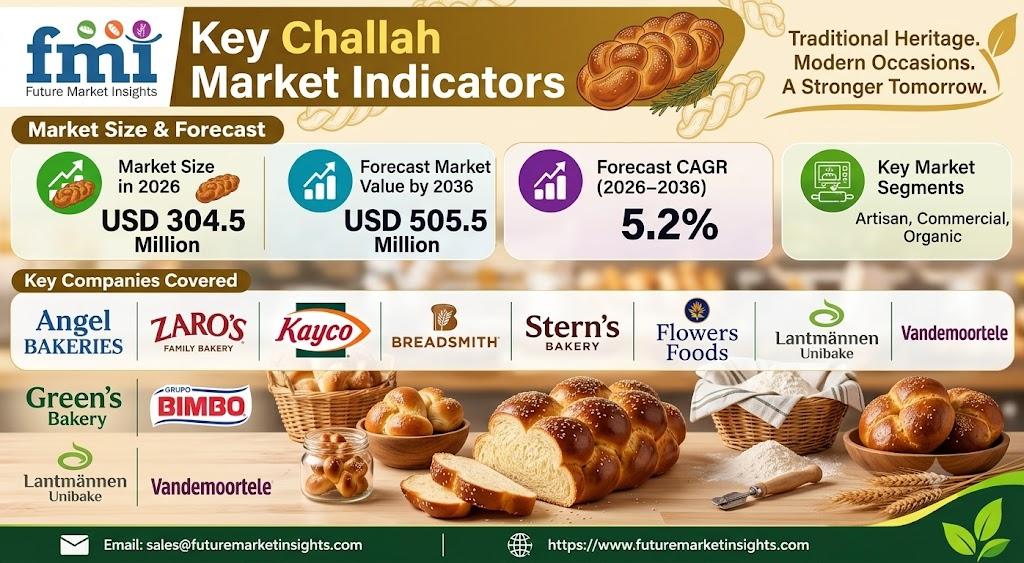
NEWARK, Del., October 29, 2026 — The global challah market is gaining momentum as specialty bakeries, supermarkets, and foodservice operators expand their offerings of traditional braided bread and premium bakery products. Recurring demand associated with religious observances, growing availability through retail bakery channels, and the use of challah in sandwiches, brunch menus, and...
According to Market Research Future, the Underground Gas Storage Market was valued at USD 430.2 billion in 2024 and is projected to reach USD 603.95 billion by 2035, expanding at a CAGR of 3.13% during the forecast period. This steady growth reflects the critical role that underground storage plays in ensuring energy security, balancing seasonal demand variations, and supporting the...