


How Circulating Tumor Cell Technologies Support Precision Oncology Research
Precision oncology places greater emphasis on understanding the biological characteristics of individual tumors. Researchers are increasingly investigating biomarkers that can provide information about tumor behavior, molecular changes and potential treatment responses. Circulating tumor cells (CTCs) are one area receiving attention because they can be collected from blood and studied as a source of tumor-related cellular information.
This research activity is creating opportunities across the Circulating Tumor Cell Market, particularly in detection, enrichment and pharmaceutical research.
The Circulating Tumor Cell Market analysis covers technologies used for CTC detection and enrichment as well as applications in research and drug development.
CTCs and Tumor Biology
CTCs are cancer cells that detach from a primary tumor and enter the bloodstream. Some CTCs can travel to other areas of the body and contribute to metastatic disease.
For researchers, these cells offer an opportunity to examine tumor characteristics using a blood sample. Studying CTCs can contribute to investigations into how tumors change, spread and respond to different conditions.
The ability to collect blood samples repeatedly is also relevant to research. Rather than relying solely on a single tissue sample, investigators can explore whether cellular characteristics change over time.
Role in Treatment Research
One potential application of CTC analysis is studying treatment response. Researchers can examine changes in CTC characteristics during different stages of cancer treatment and investigate whether particular cellular patterns are associated with disease progression or response.
However, the clinical significance of CTC findings varies across cancers. The National Cancer Institute notes that CTCs are used as biomarkers in some cancers, including for treatment planning or prognosis, rather than being universally applicable to every cancer diagnosis.
This distinction is important as CTC technologies move from research settings toward broader clinical applications.
Importance of CTC Enrichment
CTCs can be difficult to identify because they may occur at very low concentrations in blood. Enrichment technologies are therefore an important part of the market.
These systems are designed to separate potential tumor cells from normal blood components before further testing. After enrichment, researchers can use imaging, molecular analysis or other laboratory techniques to characterize the cells.
Improving recovery, purity and reproducibility can make these workflows more useful for research applications.
Pharmaceutical Research Opportunities
Drug-development organizations are another potential end-user group. CTC analysis can provide researchers with additional cellular material for investigating tumor biology and potential mechanisms associated with treatment response.
The broader liquid-biopsy field is already being investigated by the National Cancer Institute through academic and industry partnerships designed to advance and validate technologies for cancer research.
Outlook
The future development of the Circulating Tumor Cell Market will depend on continued innovation and evidence generation. Improvements in enrichment, detection, molecular characterization and automation could expand the usefulness of CTC technologies.
At the same time, standardization and validation will remain important. Researchers need reliable methods that can produce consistent results across laboratories and cancer applications.
As precision oncology continues to evolve, CTC technologies may provide researchers with another valuable source of information for studying tumor biology, disease progression and therapeutic response.
Категории
Больше
Modern commercial hatcheries across India are rapidly adopting automated in-ovo vaccination platforms to streamline mass immunization procedures for day-old chicks. Strategic evaluations of the India Poultry Vaccines Market demonstrate that automated in-ovo technology injects precise vaccine doses directly into embryonated eggs prior to hatching. Early embryonic vaccination establishes robust,...

The global Nitinol Compression Staple Market is expanding as surgeons increasingly use advanced fixation devices in orthopedic, spinal, thoracic, and abdominal procedures. The market was valued at USD 1.88 billion in 2024 and is projected to reach USD 3.91 billion by 2032, growing at a CAGR of 9.58%. The Nitinol Compression Staple Market includes straight, wavy, and hook staples; Nitinol 60,...
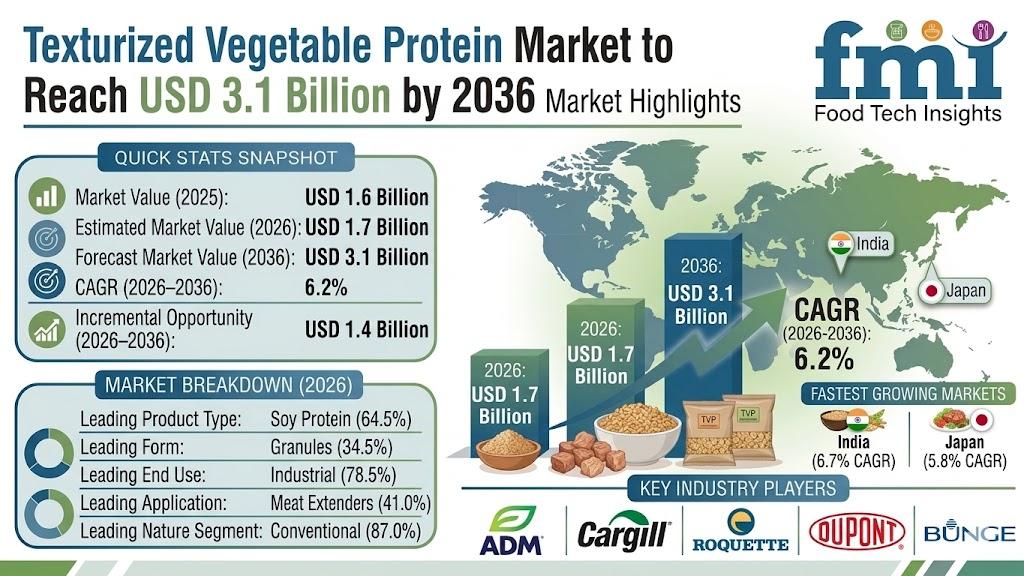
Texturized Vegetable Protein Market Size to USD 3.2 Billion by 2036, Germany – CAGR 8.4%, UK – CAGR 8.0% By FMI Research Report NEWARK, Del., October 10, 2026. — The global texturized vegetable protein market is estimated at USD 1.7 billion in 2026 and is projected to reach USD 3.2 billion by 2036, expanding at a CAGR of 6.6% from 2026 to 2036, according to Future Market...
Market OverviewThe clinical rehabilitation service sector is expanding as more patients require recovery support after stroke, orthopedic surgery, cardiac events, and neurological injury. Aging populations and rising chronic disease prevalence are increasing therapy demand. The sector is projected to grow through 2030, supported by early rehabilitation protocols, insurance coverage, and...
Market OverviewThe US health supplements market is propelled by a confluence of factors, including increasing health awareness, the aging population, and the rise of e-commerce. The market was valued at USD 1,874.69 million in 2024 and is projected to reach USD 5,190.54 million by 2035, growing at a CAGR of 9.7%. Approximately 70% of adults in the US actively consider their nutritional intake,...