Regional Food Safety Trends Shape the Allergen Detection Market
The demand for allergen detection technologies varies across global markets because food-labeling regulations, consumer awareness, manufacturing practices, laboratory infrastructure, and regulatory systems differ between regions. These differences are creating a diverse environment for companies operating in the Allergen Detection Market.
According to the Allergen Detection Market report from WiseGuyReports, North America held the largest regional share in 2024, with a market value of approximately USD 1.1 billion. The global market is projected to reach USD 5.5 billion by 2035, compared with USD 2.7 billion in 2024. (wiseguyreports)
North America benefits from established food-testing infrastructure and detailed regulatory requirements. The United States has a defined framework covering nine major food allergens, and the FDA conducts inspections and sampling related to allergen labeling and cross-contact controls. These requirements support demand for analytical testing, laboratory services, and food-safety technologies. (fda.gov)
The U.S. regulatory environment has also evolved in recent years. Sesame became the ninth major food allergen recognized under federal law in January 2023. Manufacturers therefore need to consider sesame alongside the eight allergens previously recognized as major allergens under U.S. law. (fda.gov)
Europe represents another important market for allergen detection. Food manufacturers operating across European markets need to manage allergen information and production controls within established food-safety frameworks. International trade can also increase the importance of testing because manufacturers may need to meet requirements in both domestic and export markets.
Asia-Pacific provides additional opportunities as food-processing industries expand and analytical capabilities develop. Countries including China, India, Japan, and South Korea have substantial food manufacturing sectors, creating demand for laboratory testing, rapid detection systems, and quality-control technologies.
The region's diversity means that testing requirements can vary significantly. Manufacturers serving domestic markets may face different regulatory conditions from companies exporting products to North America or Europe. This creates opportunities for testing providers that can offer flexible analytical services across different food categories and regulatory environments.
Beyond food and beverages, the market also includes pharmaceutical, environmental, and other applications. This broader segmentation allows allergen-detection technology providers to serve customers outside conventional food manufacturing. (wiseguyreports)
Technology selection is another regional consideration. ELISA remains an established method for detecting allergenic proteins, while PCR and mass spectrometry offer alternative analytical approaches. The FDA confirms that all three methodologies are used for allergen analysis, while its multiplex xMAP assay demonstrates the development of systems capable of testing multiple allergens in a single analysis. (fda.gov)
International scientific guidance is also becoming more important. FAO and WHO have developed risk-based approaches covering priority allergens, reference doses, and precautionary allergen labeling. In 2025, an expert consultation further considered guidance for food-allergen risk assessment in response to requests from Codex. (who.int)
For companies expanding internationally, regional strategy therefore requires more than identifying potential food-manufacturing demand. Regulatory requirements, laboratory infrastructure, testing costs, distribution networks, food-production practices, and customer education can all affect adoption.
As global food supply chains become increasingly interconnected, manufacturers have greater incentive to maintain consistent allergen-management processes across production and distribution networks. This creates opportunities for laboratories, testing-kit manufacturers, instrument providers, and digital quality-management companies.
The regional development of the Allergen Detection Market is therefore closely linked to food-safety regulation, manufacturing growth, analytical infrastructure, and international trade. Continued investment in testing capabilities across mature and emerging food markets is expected to create opportunities for companies providing detection technologies and related services.
Kategoriler
Read More
Market Overview The hydrogen inhalation unit market is gaining momentum as molecular hydrogen therapy attracts interest from both wellness consumers and clinical researchers exploring its antioxidant potential. These devices generate hydrogen gas for inhalation, purportedly supporting cellular protection against oxidative stress. The Hydrogen Inhalation Unit Market is projected to expand...

Market Overview The pet arthritis market is expanding as owners of dogs, cats, and other companion animals seek broader joint care solutions beyond single-species treatment options. The market is projected to grow through the coming years, driven by rising pet longevity across species, growing veterinary diagnostic capability, and increased owner willingness to invest in chronic condition...
Market Overview The ophthalmic disease therapeutic market continues to expand as aging populations and rising rates of diabetes drive demand for treatments addressing retinal and corneal conditions. The Ophthalmic Disease Therapeutic Market is projected to grow through 2030, driven by innovation in intravitreal injections, gene therapy research, and increasing screening for age-related macular...
Market Overview The China vascular embolization market is expanding in peripheral embolization applications beyond oncology, including management of uterine fibroids, benign prostatic hyperplasia, and trauma-related bleeding. Growing awareness of minimally invasive treatment options and favorable clinical outcomes are driving procedure growth. The market is projected to expand as interventional...
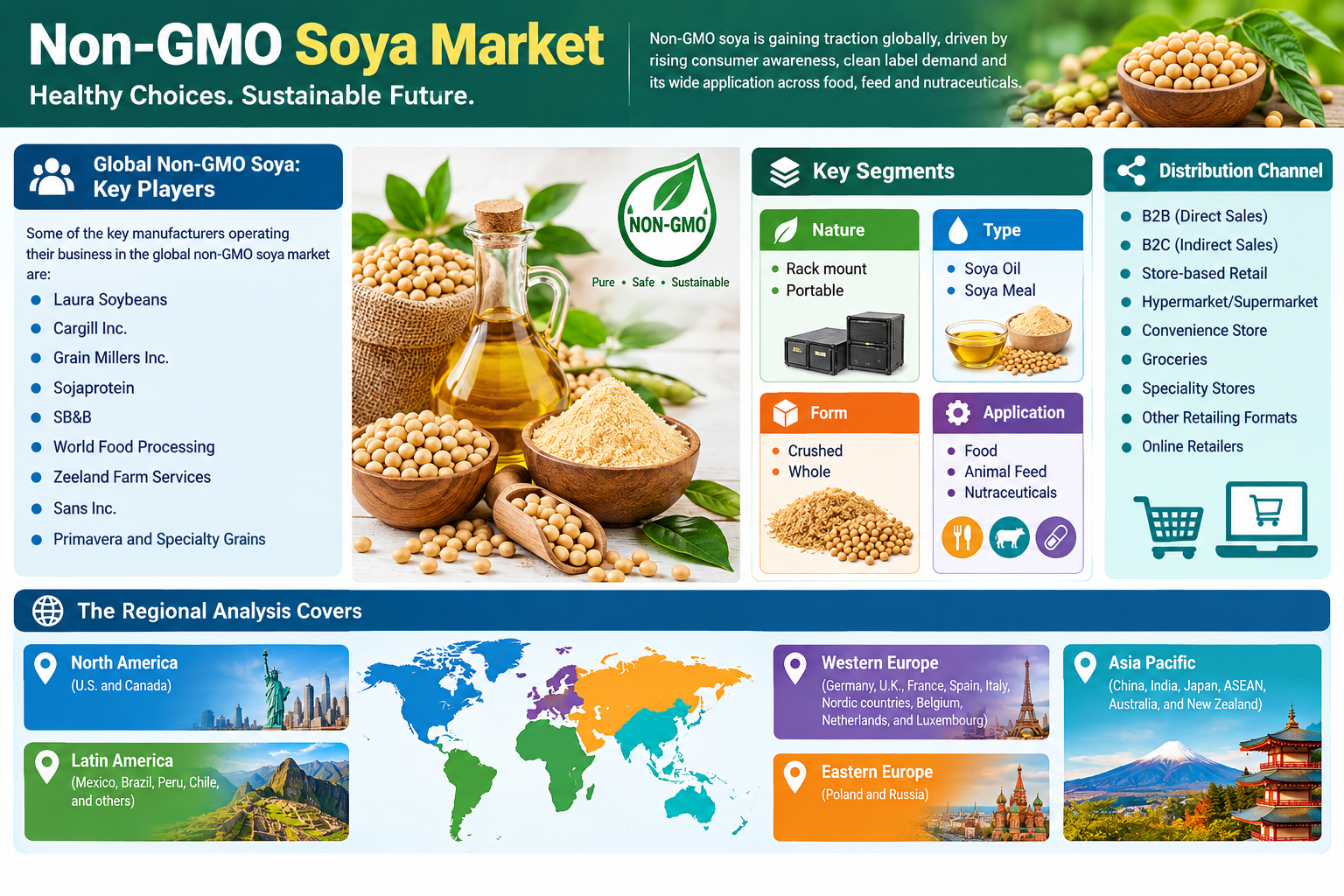
NEWARK, Del. October 9, 2026. — The global non-GMO soya market is gaining attention as consumers increasingly seek non-genetically modified ingredients, protein-rich foods and clean-label products. According to Future Market Insights (FMI), demand is being supported by growing health awareness, expanding plant-based diets and the wider availability of non-GMO soya products through...