White Biotechnology Market – Synthetic Biology Accelerating Bio-Based Chemical Production
Market Overview
Synthetic biology is accelerating the production of bio-based chemicals in the white biotechnology market by enabling engineered microorganisms to convert renewable feedstocks into fuels, materials, and specialty chemicals. This approach can replace petrochemical routes with more sustainable fermentation-based processes. The White Biotechnology Market is projected to grow from USD 305.36 billion in 2025 to USD 497.49 billion by 2035, expanding at a 5.0% CAGR. Synthetic biology is one of the key technologies reshaping traditional manufacturing, alongside fermentation, biocatalysis, and genetic engineering.
Current Market Landscape
Engineered microbes producing bio-based chemicals, amino acids, organic acids, and polymer precursors. Fermentation remaining the largest technology segment, providing the foundation for many biomanufacturing processes. Companies including Genomatica, LanzaTech, BASF, DuPont, DSM, and Evonik investing in bio-based chemical platforms. LanzaTech advancing carbon capture and gas fermentation to convert industrial emissions into fuels and chemicals. Bio-based chemicals used in packaging, textiles, cosmetics, agriculture, and pharmaceuticals. North America leading innovation through companies such as DuPont, Cargill, and Genomatica. Europe supporting adoption through circular-economy and climate policies. Asia-Pacific emerging rapidly due to industrial demand and government investment. Feedstock availability, scale-up, and cost competitiveness influencing commercialization. Synthetic biology enabling more precise control of metabolic pathways. Strategic partnerships accelerating development and commercialization.
Emerging Trends
AI is becoming a powerful tool in synthetic biology by predicting metabolic pathways, optimizing strains, and improving fermentation yields. Machine learning can analyze large datasets from genetic design, fermentation conditions, and product output to identify improvements faster than traditional experimentation. Precision fermentation is enabling production of high-value molecules with greater consistency and lower environmental impact. Carbon utilization is an emerging frontier, with gas fermentation turning industrial emissions into useful products rather than treating them solely as waste. Companies are also focusing on feedstock flexibility, using agricultural residues, industrial gases, and other non-food inputs. These advances are improving the economic case for bio-based chemicals.
Future Outlook
Synthetic biology will expand the range of chemicals that can be produced sustainably at industrial scale. Bio-based chemicals will increasingly compete with petrochemical products in packaging, textiles, personal care, and specialty applications. Asia-Pacific will be a major growth region due to industrialization and policy support. Companies that combine strain engineering, fermentation scale-up, and cost-efficient feedstocks will lead commercialization. By 2035, synthetic biology is expected to be a central technology for low-carbon manufacturing and circular production systems.
Conclusion
Synthetic biology is transforming white biotechnology by enabling engineered organisms to produce valuable chemicals from renewable and waste-derived feedstocks. It supports lower-carbon manufacturing and reduces dependence on petrochemical supply chains. Advances in AI, fermentation, and carbon utilization will determine how quickly these solutions scale.
FAQ
Q1: What is synthetic biology in industrial manufacturing?
A: Synthetic biology uses engineered biological systems, often microbes, to produce useful products. In industrial manufacturing, engineered microorganisms can convert sugars, biomass, or gases into chemicals and materials. It combines genetic engineering, fermentation, and computational design. It is used to make fuels, chemicals, polymers, and ingredients. The goal is more sustainable production.
Q2: How can synthetic biology reduce carbon emissions?
A: It can replace fossil-based chemical production with bio-based processes that use renewable feedstocks. Some platforms use industrial emissions or waste gases as inputs. Fermentation can also use less energy than traditional chemical manufacturing. These approaches can lower lifecycle emissions. They support circular and low-carbon production systems.
#WhiteBiotechnology #SyntheticBiology #BioBasedChemicals #IndustrialBiotech
Catégories
Lire la suite
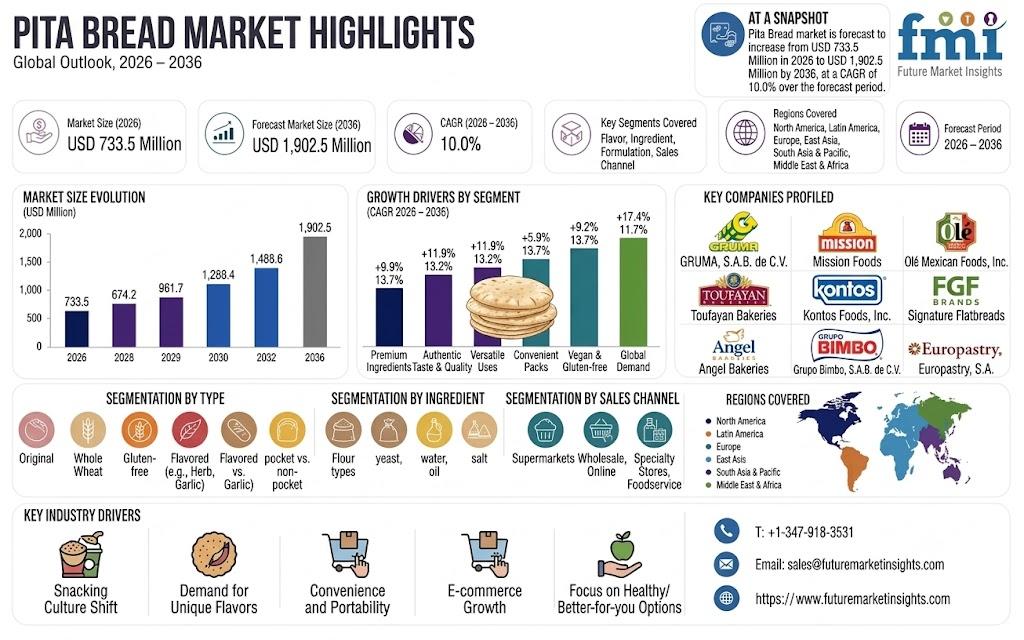
Pita Bread Market Classic-Original Pita Leads Product Demand at 37.0% The global pita bread market is forecast to increase from USD 733.5 million in 2026 to USD 1,902.5 million by 2036, expanding at a 10.0% CAGR during the 2026–2036 forecast period, according to Future Market Insights. Demand is expanding as restaurants, foodservice operators, retailers, and households increasingly use...
The production, engineering, and commercial distribution ecosystem for electromechanical components in India is characterized by established brand trust, stringent safety certifications, and strong consolidation among leading domestic engineering conglomerates alongside global multinational electrical corporations. A granular investigation into global India Electromechanical Components Market...

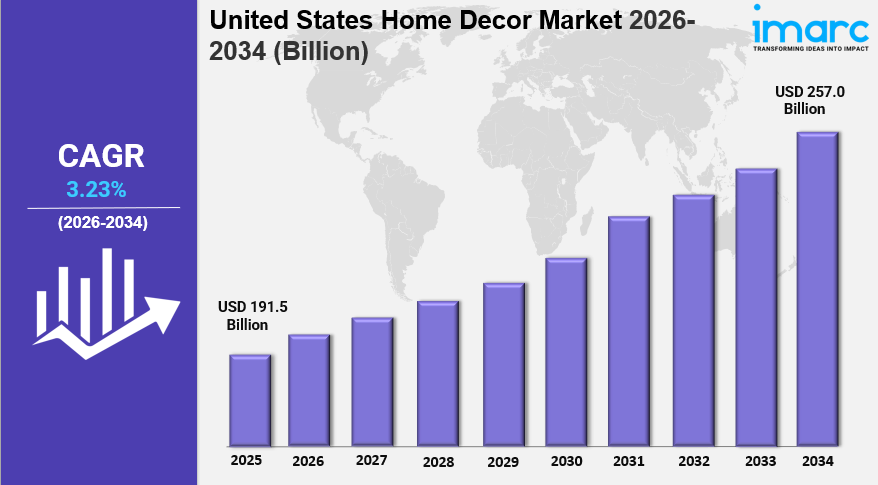
The latest report by IMARC Group, titled "United States Home Decor Market Size, Share, Trends and Forecast by Product Type, Distribution Channel, and Region, 2026-2034", offers a comprehensive analysis of the industry, which comprises insights on the United States home decor market. The report also includes competitor and regional analysis. United States Home Decor Market Size Overview and...
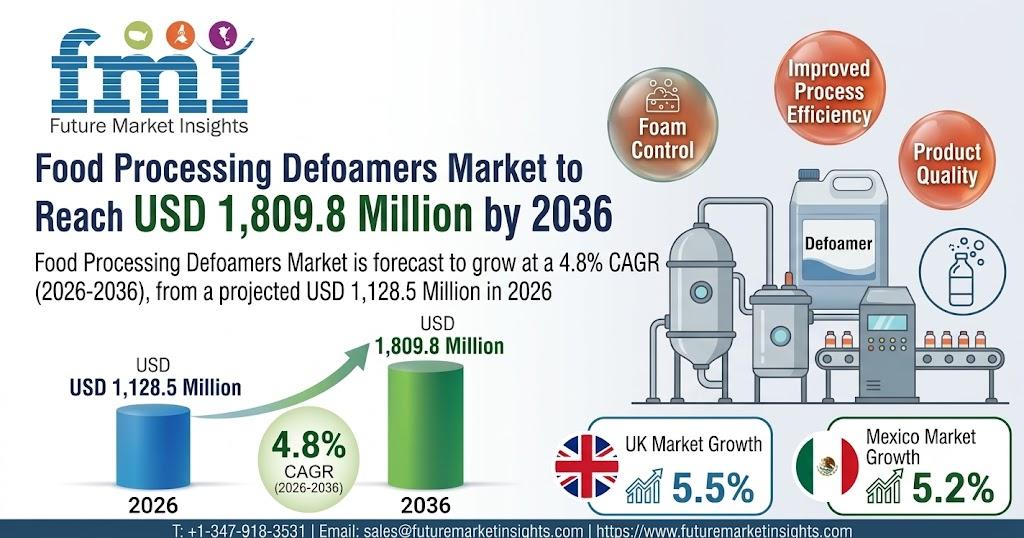
Food Processing Defoamers Market UK Leads Country Growth at 5.5%, Mexico Follows at 5.2% The global food processing defoamers market is forecast to increase from USD 1,128.0 million in 2026 to USD 1,809.8 million by 2036, expanding at a 4.8% CAGR during the 2026-2036 forecast period, according to Future Market Insights. The market stood at USD 1,075.9 million in 2025. Growth is being...
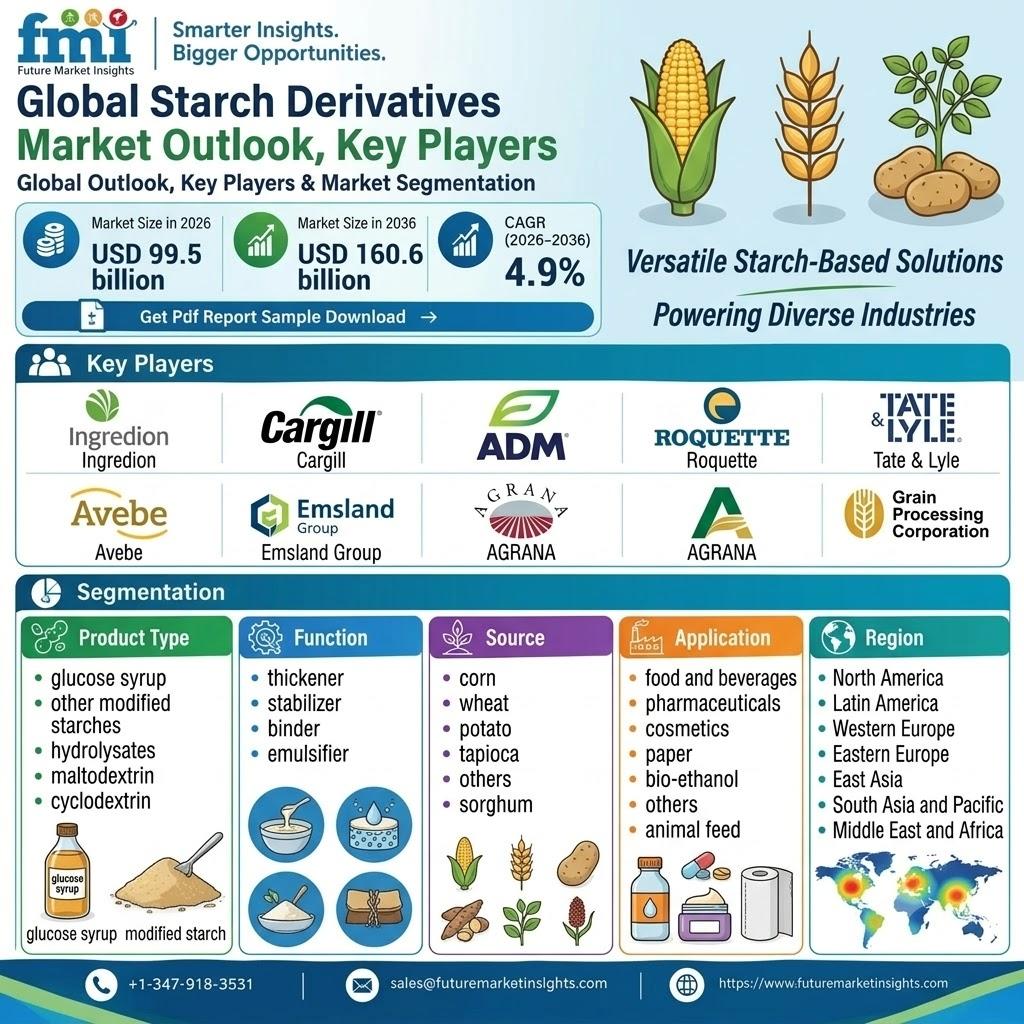
NEWARK, Del., October 8, 2026. — The global starch derivatives market is estimated at USD 99.5 billion in 2026 and is projected to reach USD 160.6 billion by 2036, expanding at a CAGR of 4.9% from 2026 to 2036, according to Future Market Insights (FMI). The market stood at USD 94.9 billion in 2025. The growth outlook is being shaped by rising production of processed food, beverages, paper...