Integrated Direct Current Power Architectures Deliver Resilient Electrical Infrastructure Across Network Solutions

Delivering reliable, clean direct-current electrical power across modern, high-capacity cellular networks requires a coordinated synthesis of high-power semiconductor electronics, electrochemical energy storage engineering, and automated digital controls, establishing the Telecom Power System Market Solution framework as a primary pillar of contemporary telecommunications infrastructure engineering. Modern telecom power solutions have evolved from isolated battery backup cabinets into integrated, responsive energy management platforms capable of managing multiple disparate electrical inputs, dynamically regulating voltage and current, protecting connected radios from destructive lightning transients, and shedding non-critical loads during extended utility outages. At the core of these integrated solutions is the modular direct-current power bus architecture that coordinates power rectifiers, battery storage, and active communications loads in real time. By synchronizing high-frequency switched-mode rectification, multi-tier battery management, and centralized supervisory controls, these platforms ensure that telecommunications base stations maintain continuous signal transmission with minimal electrical conversion losses and maximum asset longevity.
In modern 5G cellular macro sites, rooftop installations, and centralized baseband unit (BBU) hotels, integrated telecom power solutions operate as the central architecture for continuous operational reliability. A typical macro installation deploys an outdoor-rated, thermally insulated power cabinet housing a high-capacity -48V DC power distribution plant. The integrated solution incorporates multiple modular switched-mode rectifiers operating in parallel N+1 redundant configurations. When commercial AC utility power is active, the rectifiers convert incoming alternating current into stable direct current, simultaneously powering active radios and maintaining battery strings at optimal float voltages. The integrated system incorporates Low-Voltage Disconnect (LVD) contactors configured into dual-priority tiers: if an extended utility blackout occurs and battery reserves reach predetermined discharge thresholds, the system automatically drops non-critical auxiliary loads (such as cabinet cooling fans and peripheral security lights) while maintaining continuous DC power to active 5G emergency communication radios, extending site operating runtime during severe emergency crises.
Architectural Layers of Modern Integrated Telecom Power Systems:
-
Supervisory and Telemetry Layer: Centralized microprocessor controller managing SNMPv3/Modbus telemetry, remote battery testing, and cloud EMS sync.
-
Multi-Source Ingress Management Bus: Automated transfer switches coordinating AC utility grid, standby diesel genset, and DC solar PV inputs.
-
Modular Switched-Mode Rectifier Plant: High-frequency parallel rectifiers delivering -48V DC power at >96% conversion efficiency with N+1 hot-swap redundancy.
-
Dual-Priority DC Distribution Core: Electronic circuit breaker panels equipped with electronic Low-Voltage Disconnect (LVD) contactors for load prioritization.
-
Advanced Energy Storage Array: Modular Lithium Iron Phosphate (LFP) battery strings equipped with integrated BMS cell balancing and thermal monitoring.
On the off-grid and remote rural telecommunications side, integrated power solutions are engineered to operate as autonomous hybrid microgrids that minimize fossil fuel reliance and operational maintenance overhead. The integrated rural power skid combines a high-output solar photovoltaic array, an intelligent MPPT solar charge controller, a high-cycle lithium-ion battery bank, and a compact diesel generator into a unified, self-governing power plant. The supervisory controller continuously evaluates live solar generation, battery state-of-charge, and historical site load curves. During sunny daylight hours, solar power satisfies one hundred percent of radio loads while recharging the battery array. If cloudy weather or nighttime loads deplete battery reserves to designated safety limits, the controller automatically signals the diesel generator to start, running the engine at optimal load capacity to recharge batteries rapidly before shutting down automatically. This coordinated hybrid control eliminates continuous generator idling, cutting fuel consumption and extending generator engine overhaul intervals from months to years.
Finally, the maintenance, diagnostics, and long-term optimization of modern telecom power solutions are supported by automated cloud telemetry monitoring and predictive battery analytics. System administrators and network operations center (NOC) engineers monitor the operational health of thousands of dispersed cell site power plants from centralized web-based management dashboards. Background diagnostic software continuously evaluates rectifier operating temperatures, fan tachometer speeds, and battery internal impedance profiles, alerting maintenance teams before component degradation causes unexpected site drops. Furthermore, automated routine testing algorithms allow engineers to execute remote battery discharge capacity tests without dispatching field technicians to the site, verifying true battery backup runtime before severe weather seasons arrive. Through these synchronized power electronics, electrochemical, and digital software capabilities, modern telecom power solutions provide the dependable, resilient foundation required for efficient, continuous telecommunications operations worldwide.
Top Trending Reports :
Talent Mapping And Succession Planning Services Market
Tax Advisory And Compliance Services Market
Tax Compliance And Reporting Services Market
Tax Law And Consulting Services Market
Technical And Engineering Training Services Market
Catégories
Lire la suite
Market Overview The diabetes mellitus drugs market is undergoing rapid transformation as next-generation therapies move beyond glucose control toward cardiovascular and renal protection. Pharmaceutical innovation in GLP-1 receptor agonists, SGLT2 inhibitors, and combination therapies is redefining treatment algorithms for both type 1 and type 2 diabetes. The market is projected to expand...

Chondrosarcoma presents significant challenges in diagnosis. Because it is rare, many clinicians have limited experience with the condition, and diagnosis may be delayed. The tumor's resistance to chemotherapy and radiation limits treatment options, making surgery the primary approach. These challenges drive research and shape the Chondrosarcoma Treatment Market report. Diagnosis can be...
The Germany Recombinant Proteins Market is poised for substantial growth over the coming decade, with the market projected to expand from USD 232.4 Million in 2025 to USD 471.62 Million by 2035 at a CAGR of 7.33%. This outlook reflects the accelerating demand for biologic therapies, the expansion of precision medicine, and continued investment in biotechnology infrastructure. A central theme of...
Heightened regulatory scrutiny and updated quality control mandates are transforming manufacturing protocols across the domestic pharmaceutical landscape. Detailed analysis within the India Cough Syrup Market report indicates that regulatory bodies like the Central Drugs Standard Control Organization (CDSCO) are enforcing rigorous testing standards for all export-bound and domestic cough...
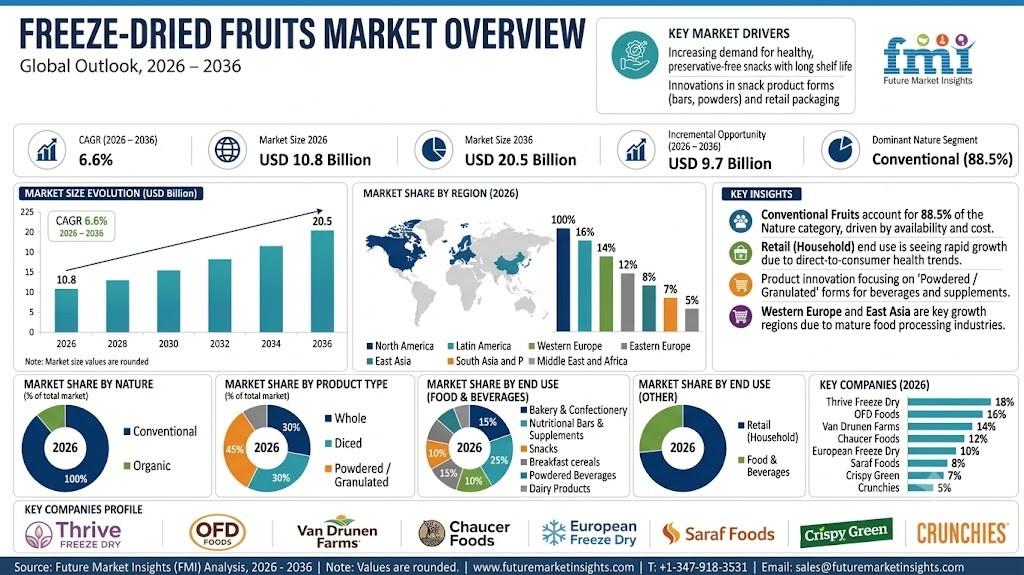
Freeze-Dried Fruits Market Conventional Fruits Lead Nature Category at 88.5% The global freeze-dried fruits market is forecast to increase from USD 10.8 billion in 2026 to USD 20.5 billion by 2036, expanding at a 6.6% CAGR during the 2026-2036 forecast period, according to Future Market Insights. The market stood at USD 10.1 billion in 2025. Growth is being supported by increasing demand for...