How Theranostics Is Transforming Cancer Care in China
Theranostics is one of the most significant developments in modern oncology — a combined approach in which a diagnostic test identifies whether a patient is likely to benefit from a specific therapy, and the same molecular target is then used to deliver treatment. In China, theranostics is moving from specialist centres into mainstream cancer care, particularly for prostate cancer, neuroendocrine tumours, and thyroid cancer. As cancer incidence rises and healthcare investment grows, the China theranostics market is expanding rapidly.
The most established theranostic approach pairs molecular imaging with targeted radioligand therapy. Patients undergo a PET scan using a radiotracer that binds to a specific target; if uptake is sufficient, they may be eligible for therapy using the same targeting molecule linked to a therapeutic radioisotope. This "see it, treat it" model has demonstrated improved outcomes in clinical trials. Similar principles apply to companion diagnostics that guide targeted therapies in oncology. According to analysis of the China Theranostics Market, growth is being driven by rising cancer incidence, expanding clinical evidence, and investment in nuclear medicine and molecular diagnostics infrastructure.
Several factors are shaping the market. First, cancer burden. China has one of the highest cancer incidence rates in the world. Second, regulatory reform. China's drug and device approval processes have accelerated, enabling faster access to innovative therapies. Third, hospital investment. Leading hospitals are building theranostics capabilities. Fourth, domestic innovation. Chinese companies are developing radiopharmaceuticals and diagnostics. Fifth, policy support. Government initiatives prioritise precision medicine and cancer care.
For patients, theranostics offers a personalised approach that can identify effective treatments while avoiding ineffective ones. For clinicians, it provides a framework for precision oncology. For manufacturers, China represents a large and growing market. For policymakers, it raises questions about access, affordability, and infrastructure. As evidence accumulates and capacity expands, theranostics is likely to become an increasingly important part of cancer care in China, and the market will continue to develop.
People Also Ask
What is theranostics?
It is an approach that combines diagnostics and therapeutics, using a molecular target to both identify patients likely to benefit from a therapy and deliver that therapy.
Which cancers are treated with theranostics in China?
Prostate cancer, neuroendocrine tumours, and thyroid cancer are the most established applications, with research expanding into other cancers.
Tags: #Theranostics #PrecisionOncology #ChinaHealthcare #NuclearMedicine #CancerTreatment #PatientCare
Categorie
Leggi tutto
The global Nitinol Compression Staple Market is expanding as surgeons increasingly use advanced fixation devices in orthopedic, spinal, thoracic, and abdominal procedures. The market was valued at USD 1.88 billion in 2024 and is projected to reach USD 3.91 billion by 2032, growing at a CAGR of 9.58%. The Nitinol Compression Staple Market includes straight, wavy, and hook staples; Nitinol 60,...

According to Market Research Future, the Industrial Gearbox Market closed 2025 at USD 32.54 billion and is projected to reach USD 49.35 billion by 2035, expanding at a CAGR of 4.27% during the forecast period. This steady growth trajectory reflects the indispensable role that gearboxes play in industrial operations, converting motor speed into usable torque for applications ranging from...

The Arginase Deficiency Therapeutics Market was valued at USD 500 million in 2025 and is projected to grow to USD 1,500 million by 2035, registering a CAGR of 10.6% during the forecast period. This significant growth trajectory reflects the essential role of arginase deficiency therapeutics in addressing the demand for effective treatments for this rare genetic disorder, improved patient...
Market OverviewTherapeutic insulin production is transforming diabetes management through recombinant human insulin and insulin analogs produced in bacterial and yeast expression systems that provide consistent, pure insulin supply for millions of diabetes patients worldwide, replacing animal-derived insulin with improved safety and efficacy. Rapid-acting, long-acting, and premixed insulin...
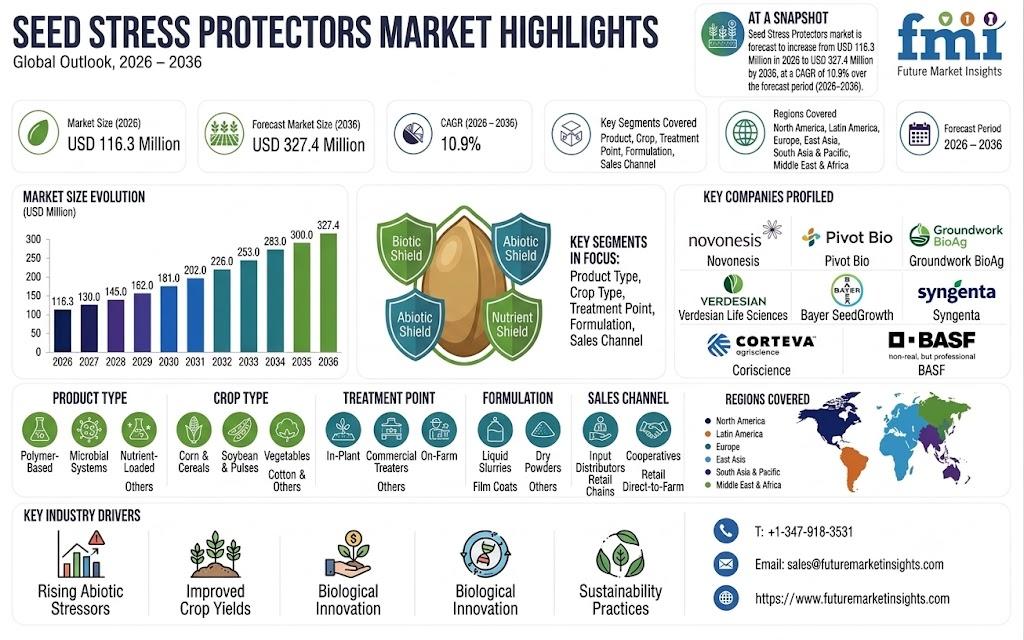
Seed Stress Protectors Market Polymer-Based Systems Lead Product Demand at 48.0% The global seed stress protectors market is forecast to increase from USD 116.3 million in 2026 to USD 327.4 million by 2036, expanding at a 10.9% CAGR during the 2026–2036 forecast period, according to Future Market Insights. Demand is rising as seed companies seek earlier stress control that can be...