Geothermal Power Generation Market Advances with EGS and Lithium Co-Production

The Geothermal power generation market is advancing rapidly, driven by the development of Enhanced Geothermal Systems (EGS) and the emergence of lithium co-production from geothermal brine. According to Market Research Future, the market is evolving from conventional hydrothermal power generation towards engineered systems that can access hot rock resources far beyond traditional plate boundaries. The convergence of drilling innovations from the oil and gas sector, supportive government policies like the U.S. Inflation Reduction Act, and the growing demand for firm renewable power is creating unprecedented opportunities for geothermal power generation. Simultaneously, the potential to extract lithium and other critical minerals from geothermal brine is transforming project economics, turning a mono-product asset into a dual-revenue powerhouse. These advancements are positioning geothermal power generation as a key enabler of a sustainable, firm, and mineral-rich energy future.
Key Market Statistics
Findings from Market Research Future indicate that the Geothermal Power Generation market is on a significant growth trajectory. The broader Geothermal Power Market is projected to grow from USD 9.22 Billion in 2026 to USD 21.22 Billion by 2035, at a CAGR of 9.7%. By plant type, Flash Steam captured 44.2% of installed value in 2025, but Enhanced Geothermal Systems (EGS) represent the fastest-expanding technology class at a 17.5% CAGR through 2035. Binary Cycle installations accounted for USD 2.26 billion of 2025 value. By application, Electricity Generation commanded 55.2% of the market in 2025. By region, the United States holds 68.4% of North American value, driven by tax credit transferability and firm-power contracting. Asia-Pacific is the largest region with 41.2% share, growing at an 11.1% CAGR. Key players like Ormat Technologies, Enel Green Power, and Pertamina Geothermal Energy are leading the development of next-generation geothermal projects.
Industry Trends and Technological Evolution
The Geothermal Power Generation market is at the forefront of several key trends. Enhanced Geothermal Systems (EGS) are a defining trend, with horizontal drilling, multi-stage stimulation, and closed-loop systems enabling power generation from hot dry rock formations previously considered uneconomic. The U.S. DOE committed USD 74 million across seven pilot demonstrations, targeting a 90% cost reduction by 2035 . Lithium co-production is another major trend, with direct lithium extraction (DLE) pilots at the Salton Sea showing recovery rates more than 90% at demonstration scale [citation:18]. A single 50 MW plant with extraction can yield mineral revenue similar to power revenue.
Clean firm power procurement is a key driver, with utility and corporate buyers seeking 24/7 carbon-free energy. Data center offtake for geothermal power passed 850 MW cumulatively by end of 2025 [citation:12]. Drilling cost deflation from shale technique transfer is enabling EGS development, with costs falling roughly 49% across four iterations in Nevada between 2022 and 2024 . Repowering legacy steam fields with bottoming cycles is capturing 8–12% incremental output without new drilling [citation:13].
Feed-in tariffs and sovereign de-risking in Southeast Asia are unlocking development, with Indonesia's regulatory framework moving roughly 1.4 GW of concessions into active development . Binary cycle technology is advancing, with organic Rankine efficiency gains enabling power generation from medium-temperature resources. Hybrid configurations combining geothermal with solar-thermal augmentation are emerging. Subsurface data monetization through digital reservoir twins is enabling optimized make-up well scheduling [citation:18].
Challenges Facing the Market
The Geothermal Power Generation market faces challenges that require continuous innovation. Exploration and resource confirmation risk is the most significant restraint, with roughly one in four exploration wells failing [citation:14]. Capital intensity per installed megawatt is high, ranging from USD 3,400 to 6,200 per kilowatt [citation:15]. Permitting duration in the United States historically consumed 7–10 years before power flowed [citation:16]. Induced seismicity concerns have led to project suspensions and stricter protocols [citation:17].
High-temperature equipment supply bottlenecks extended lead times to 14–18 months in 2024 [citation:8]. Competition from other renewables and cheaper energy sources can affect viability. Geographic constraints limit development to areas with suitable geology, though EGS is expanding this. Transmission interconnection queues, averaging four to five years in some U.S. markets, can delay projects. Lack of standardized EGS stimulation protocols can increase costs and risks.
Future Outlook
Analysis suggests that the Geothermal Power Generation market will continue to advance, with opportunities emerging from technology and market needs. Widespread commercialization of EGS will unlock gigawatt-scale potential beyond traditional boundaries. Full integration of lithium extraction will transform project economics and contribute to battery supply chains [citation:18]. Development of closed-loop geothermal systems will eliminate seismicity concerns and expand deployable locations.
Repricing of clean firm capacity in wholesale markets will benefit geothermal disproportionately [citation:11]. Expansion of geothermal into new geographies through EGS and low-enthalpy development will create new markets. Partnerships between geothermal developers and data center operators for long-term firm-power contracts will be crucial [citation:12]. Standardization of EGS drilling and stimulation techniques will reduce costs and risks. By 2035, the market is expected to be characterized by widely deployed, cost-competitive, and mineral-producing geothermal power generation.
Conclusion
According to Market Research Future, the Geothermal Power Generation market is on a path of significant advancement, driven by EGS and lithium co-production. The market's evolution is defining geothermal power as a scalable, firm, and economically transformative energy source. While challenges related to exploration risk, capital intensity, and permitting persist, the long-term outlook is positive. The drive towards EGS technology, mineral co-production, and firm power contracting will continue to shape the market. The Geothermal Power Market will be central to the future of clean, firm, and resilient power generation.
Discover emerging opportunities with in-depth research reports:
Ground Mounted Solar EPC Industry
Electro Chemical Energy Storage System Industry
Industrial Hot Water Boiler Industry
Industrial Hydraulic Power Unit Industry
Electrochemical Gas Analyzer System Industry
Field Electrification Industry
Categorias
Leia Mais
Market OverviewCombination therapies are emerging as a significant trend in the South America Keytruda market. Pairing Keytruda with chemotherapy, targeted therapies, and other immunotherapies is enhancing efficacy across multiple cancer types. The market is projected to grow through 2030, fueled by clinical evidence supporting combination approaches. The South America Keytruda Market benefits...

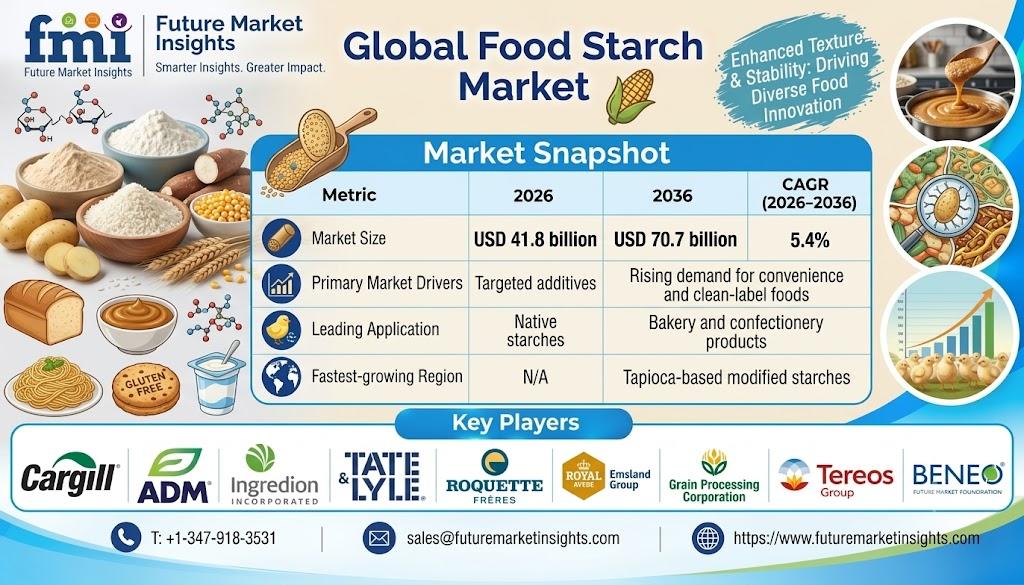
Food Starch Market Wheat Leads Source Demand at 30.3% The global food starch market is forecast to increase from USD 41.8 billion in 2026 to USD 70.7 billion by 2036, expanding at a 5.4% CAGR during the 2026–2036 forecast period, according to Future Market Insights. The market stood at USD 39.7 billion in 2025. Demand is expanding as food manufacturers rely on starches for dependable...
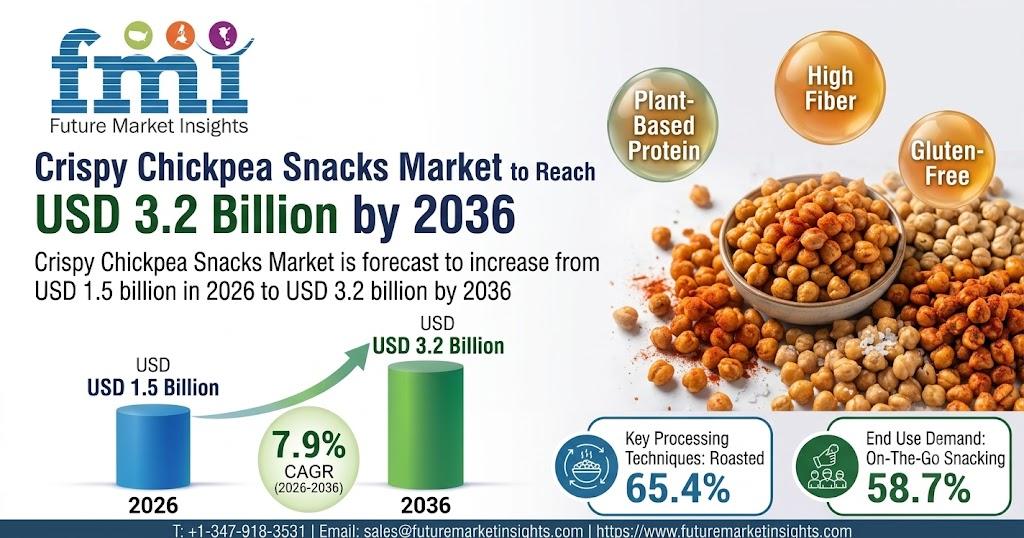
Crispy Chickpea Snacks Market USA Leads Country Growth at 9.2%, Türkiye Follows at 6.6% The global crispy chickpea snacks market is forecast to increase from USD 1.5 billion in 2026 to USD 3.2 billion by 2036, expanding at a 7.9% CAGR during the 2026-2036 forecast period, according to Future Market Insights. The market stood at USD 1.4 billion in 2025. Growth is being supported by the...
The China Veterinary Laboratory Testing Market exhibits a dynamic competitive landscape characterized by innovation, strategic partnerships, and technological integration among key players. The market is projected to grow from USD 457.03 million in 2025 to USD 1,296.5 million by 2035, registering a CAGR of 10.99% during the forecast period. This growth trajectory reflects the collective efforts...
Modern civil infrastructure, commercial workspaces, and residential living environments are experiencing a comprehensive technological shift away from energy-inefficient legacy incandescent bulbs and fluorescent tubes toward connected solid-state lighting architectures. Within this rapidly advancing optoelectronic and building infrastructure landscape, the Lighting Product Industry functions as...