


Global Destinations and Key Players: Understanding the Medical Tourism Ecosystem
The medical tourism market is characterized by a complex and dynamic ecosystem of destinations, service providers, and facilitators that compete to attract international patients. Understanding this landscape requires examining the distinct regional dynamics that make certain countries preferred destinations for specific treatments, as well as the competitive strategies of leading healthcare providers. The global medical tourism ecosystem is evolving rapidly, with established players expanding their capabilities while new destinations emerge, creating a competitive environment that ultimately benefits patients through improved quality, lower prices, and enhanced service offerings.
According to comprehensive market analysis, the regional distribution of medical tourism reveals distinct patterns and preferences. For a complete understanding of regional dynamics, key players, and competitive insights, you can refer to the detailed Medical Tourism Market report. North America currently contributes over 45% of global revenue, driven primarily by high domestic healthcare costs and cross-border treatment demand. The high cost of healthcare in the United States has made Mexico a popular destination for Americans seeking lower-cost dental and cosmetic services, both due to geographic proximity and government efforts to promote health travel. CDC healthcare utilization data shows over 60% of U.S. adults delay or avoid treatment due to high costs, reinforcing outbound medical tourism demand. Conversely, the United States also attracts inbound patients seeking highly specialized care in oncology, cardiology, and advanced surgeries, offered by world-class facilities.
Europe represents a significant market, valued at USD 14,783.87 million in 2024, holding a 30% share of the global market. Medical tourism has grown in prominence throughout Europe as patients seek more timely and cost-effective treatments in the midst of burdened home healthcare systems and long waiting lists. In the UK, post-COVID outflow began to accelerate, with around 350,000 UK residents traveling abroad for procedures in 2022 compared to around 248,000 in 2019, pushed mostly by overburdened NHS waiting times. Clinics in Lithuania, Poland, Croatia, and France are increasingly catering to these patients, providing faster access at reduced costs. A Highland patient's hip replacement in Poland, for instance, cost about half as much as private care in the UK. Germany and Spain report waiting time reductions of up to 40% through cross-border patient programs, driving outbound and intra-Europe medical tourism for faster access to specialized procedures.
The Asia-Pacific region has been strongly influenced by rising healthcare expenses in Western countries, the development of technologically advanced medical infrastructure throughout Asia, and increased consumer awareness of cross-border treatment choices. Since 2019, Thailand, India, Malaysia, and South Korea have attracted millions of patients each year seeking high-quality, low-cost medical operations ranging from cardiac surgery and orthopedics to cosmetic enhancements and fertility treatments. Thailand's combination of refined wellness with therapeutic services has made it a top destination, particularly for cosmetic and gender-affirming procedures. The Rest of the World segment, including the Middle East, has seen significant transformation due to strategic infrastructure investments, government initiatives, and growing patient flows. The United Arab Emirates, particularly Dubai and Abu Dhabi, has established itself as a leading worldwide healthcare destination, with platforms such as DXH offering one-stop access to consultations, accommodation, visas, and tourism packages.
The competitive landscape is characterized by a mix of global, regional, and local vendors, making the market highly competitive. Major players include Fortis Healthcare, Apollo Hospitals, Bumrungrad International Hospital, Medanta, Bangkok Hospitals, Raffles Medical Group, and Asklepios Kliniken GmbH & Co. KGaA. These companies compete based on cost, product quality, reliability, and government regulations, and must provide cost-efficient, high-quality services to survive and succeed. Fortis Healthcare has expanded its advanced surgical programs and international patient care units, supported by partnerships with global insurance providers and healthcare facilitators. In its FY26 results, Fortis reported an 18.5% year-on-year increase in international patient revenue, reaching Rs 639 crore and contributing 7.8% to overall hospital business revenue. Apollo Hospitals continues expanding its global healthcare footprint through acquisitions and new specialty centers, reporting over 70% occupancy in international patient wards across major Indian cities.
People Also Ask
Which country is the most popular destination for medical tourism?
Thailand is one of the most popular destinations, particularly for cosmetic and gender-affirming procedures, attracting millions of patients annually. Other leading destinations include India (known for cardiac surgery and orthopedics), Mexico (popular with Americans for dental and cosmetic services), Malaysia (cardiology, fertility, and cancer treatments), and Turkey (various specialties).
Who are the major players in the medical tourism industry?
Major players include Fortis Healthcare, Apollo Hospitals, Bumrungrad International Hospital (Thailand), Medanta, Bangkok Hospitals, Raffles Medical Group (Singapore), and Asklepios Kliniken GmbH & Co. KGaA (Germany). These organizations compete through service quality, cost efficiency, and international patient management capabilities.
Tags: #MedicalTourismDestinations #HealthcareCompetition #GlobalHealthcare #AsiaPacificHealthcare #EuropeanHealthcare #NorthAmericanHealthcare #MedicalTourismCompanies #HealthcareProviders
Categorias
Leia mais
The global plant-based snacks market is forecast to increase from USD 45.7 billion in 2026 to USD 100.5 billion by 2036, expanding at a 8.2% CAGR during the 2026-2036 forecast period, according to Future Market Insights. The market stood at USD 42.2 billion in 2025. Growth is being supported by increasing demand for convenient plant-based foods, familiar snack formats, protein- and...

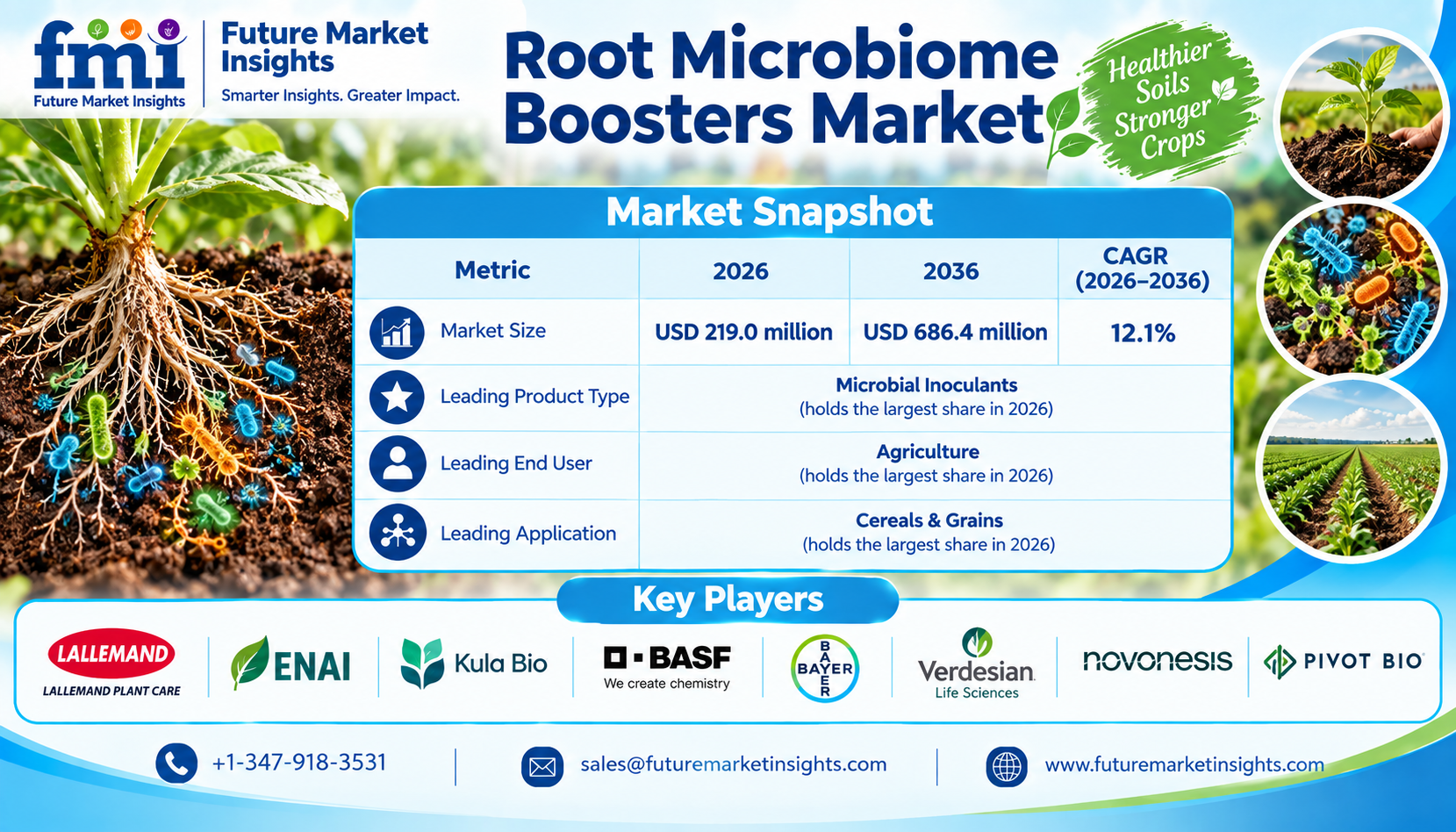
Root Microbiome Boosters Market Nutrient Efficiency and Root-Zone Performance Drive Agricultural Adoption The global Root Microbiome Boosters Market is projected to grow from USD 219.0 million in 2026 to USD 686.4 million by 2036, advancing at a 12.1% CAGR during the forecast period, according to the latest research from Future Market Insights (FMI). The market is supported by growing interest...
The energy-based aesthetic devices market is experiencing explosive growth, driven by a global cultural shift towards non-invasive cosmetic procedures and a growing emphasis on maintaining a youthful appearance. These advanced devices, which use sources like lasers, radiofrequency, and ultrasound to rejuvenate skin, contour bodies, and remove hair, have become the cornerstone of modern...

Fusing molecular neurobiology, micro-electronics, and bio-interface materials is establishing bioelectronic therapeutics as a major non-pharmacological treatment pillar. Detailed analysis within the bioelectronic medicine Market report highlights how vagus nerve stimulators, sacral neuromodulation implants, deep brain stimulation (DBS) devices, and bio-compatible micro-electrodes deliver...
Proactive government policies and streamlined visa procedures are lowering barriers for international patients seeking healthcare across Asia. Detailed analysis within the Asia Medical Tourism Market report demonstrates that countries like Malaysia, Thailand, and India are introducing dedicated medical visas with extended stay allowances and multi-entry privileges. Simplified visa frameworks...