


How Debt Recovery Lawyers Can Help Businesses Recover Outstanding Payments
Unpaid invoices can create serious problems for businesses of every size. A company may complete its work, deliver products, or provide professional services, yet still struggle to receive the money it is owed. When payment delays continue, they can affect cash flow, employee wages, supplier payments, and future business plans. This is where debt recovery lawyers can provide valuable assistance.
Debt recovery involves more than simply asking someone to pay an overdue invoice. Depending on the circumstances, the process may involve reviewing agreements, communicating with the debtor, preparing formal notices, negotiating payment arrangements, or taking legal action. Having professional legal support can help a creditor understand the available options and choose an appropriate strategy.
Understanding Debt Recovery
Debt recovery is the process of attempting to collect money that is legally owed by an individual or business. The debt may result from an unpaid invoice, loan, contractual obligation, unpaid service, or another financial agreement.
Not every overdue payment requires immediate court action. In many situations, a well-prepared communication from a legal professional can encourage the debtor to resolve the issue. However, when informal requests fail, stronger recovery methods may become necessary.
Why Businesses Struggle With Unpaid Debts
Late payments can happen for many reasons. A customer may experience temporary financial difficulties, dispute an invoice, misunderstand the payment terms, or simply ignore repeated reminders.
For a business owner, repeatedly contacting a customer about an unpaid balance can also consume valuable time. Instead of concentrating on operations and growth, staff may spend hours following up on old invoices.
Working with debt recovery lawyers can help businesses handle these situations more systematically while keeping communication professional.
Reviewing the Evidence
Before pursuing a debt, it is important to establish that the amount is genuinely owed. Lawyers can review relevant documentation, including contracts, invoices, purchase orders, correspondence, delivery records, and payment histories.
This review can help identify potential weaknesses before further action is taken. For example, a contract may contain specific payment terms or procedures for resolving disputes. Understanding these details can influence the appropriate recovery strategy.
Sending Formal Payment Demands
A formal demand for payment can be an important step in the recovery process. Unlike an informal reminder, a professionally prepared demand can clearly explain the amount outstanding, the basis of the debt, and what may happen if payment is not made.
The objective is often to encourage resolution without unnecessary escalation. Giving the debtor a clear opportunity to respond may result in payment or a negotiated arrangement.
See more: debt collection
Negotiating Payment Arrangements
Not every debtor can immediately pay the entire amount. In some circumstances, negotiating a structured repayment plan may be more practical than pursuing lengthy legal proceedings.
A legal professional can help assess proposed arrangements and ensure that the terms are clearly documented. Depending on the situation, an agreement might establish payment amounts, deadlines, consequences for missed payments, and other relevant conditions.
When Legal Action May Be Necessary
If reasonable attempts to recover the money do not succeed, court proceedings may become an option. The appropriate process depends on the jurisdiction, the value of the debt, the contractual terms, and the specific facts of the dispute.
Debt recovery lawyers can explain the potential advantages, costs, risks, and requirements associated with legal action. This allows the creditor to make a more informed decision rather than pursuing a case without understanding the consequences.
Protecting Important Business Relationships
Debt collection does not always have to become confrontational. Businesses sometimes want to recover overdue money while maintaining a relationship with a customer or supplier.
Professional communication can help keep the situation focused on resolving the financial issue. In appropriate cases, negotiation or mediation may provide a solution that allows both parties to move forward.
Recovering Different Types of Commercial Debts
Debt recovery can involve many different circumstances. Businesses may need assistance with unpaid trade invoices, commercial contracts, outstanding service fees, loans, or other contractual obligations.
The approach should be adapted to the type of debt. A straightforward unpaid invoice may require a different strategy from a disputed commercial contract. This is why reviewing the specific circumstances is important before choosing a recovery method.
Preventing Future Payment Problems
Recovering an existing debt is only part of the solution. Businesses can also reduce future payment problems by establishing clear payment policies.
Written contracts should explain payment deadlines, late-payment provisions, dispute procedures, and other relevant terms. Businesses may also benefit from checking customer information before extending credit and monitoring outstanding invoices regularly.
Keeping accurate records is particularly important. Clear documentation can make it easier to demonstrate what was agreed and what remains unpaid.
Choosing the Right Legal Support
When searching for debt recovery lawyers, businesses should consider experience, communication, knowledge of applicable laws, and familiarity with commercial disputes. It is also useful to understand how the lawyer charges for their services and what steps are included in the proposed recovery process.
A good legal professional should explain the situation in understandable language and provide realistic expectations rather than promising a guaranteed result.
Final Thoughts
Outstanding debts can place unnecessary pressure on a business, especially when overdue invoices accumulate over time. Taking action early can help prevent a manageable payment issue from becoming a larger financial problem.
Debt recovery lawyers can assist with reviewing documentation, communicating with debtors, negotiating repayment solutions, and explaining potential legal options when voluntary payment does not occur. Their involvement can give businesses a more structured approach to recovering money while allowing owners and staff to focus on running the company.
Ultimately, effective debt recovery is about finding a practical and lawful path toward resolution. With clear records, well-defined agreements, professional communication, and appropriate legal guidance, businesses can improve their chances of dealing with unpaid debts efficiently.
See more blogs: Visit Here
الأقسام
إقرأ المزيد
The Pharmacovigilance And Drug Safety Software Market was valued at USD 2 billion in 2025 and is projected to grow to USD 5.8 billion by 2035, registering a CAGR of 8.8% during the forecast period. This significant growth trajectory reflects the essential role of pharmacovigilance software in addressing the demand for effective drug safety monitoring, regulatory compliance, and improved patient...

Automotive Cameras Market Overview The Automotive Cameras Market report provides an in-depth analysis that is required to make informed industry decisions and develop strategic growth plans. Regardless of the production method or cost structures, the Automotive Cameras market report provides a full understanding of advanced tactics and plans. Automotive...

The Cosmetic Procedures And Products Market was valued at USD 704.7 billion in 2025 and is projected to grow to USD 980 billion by 2035, registering a CAGR of 3.3% during the forecast period. This remarkable growth trajectory reflects the fundamental role of cosmetic procedures and products in addressing the demand for personal grooming, aesthetic enhancement, and self-care across the global...
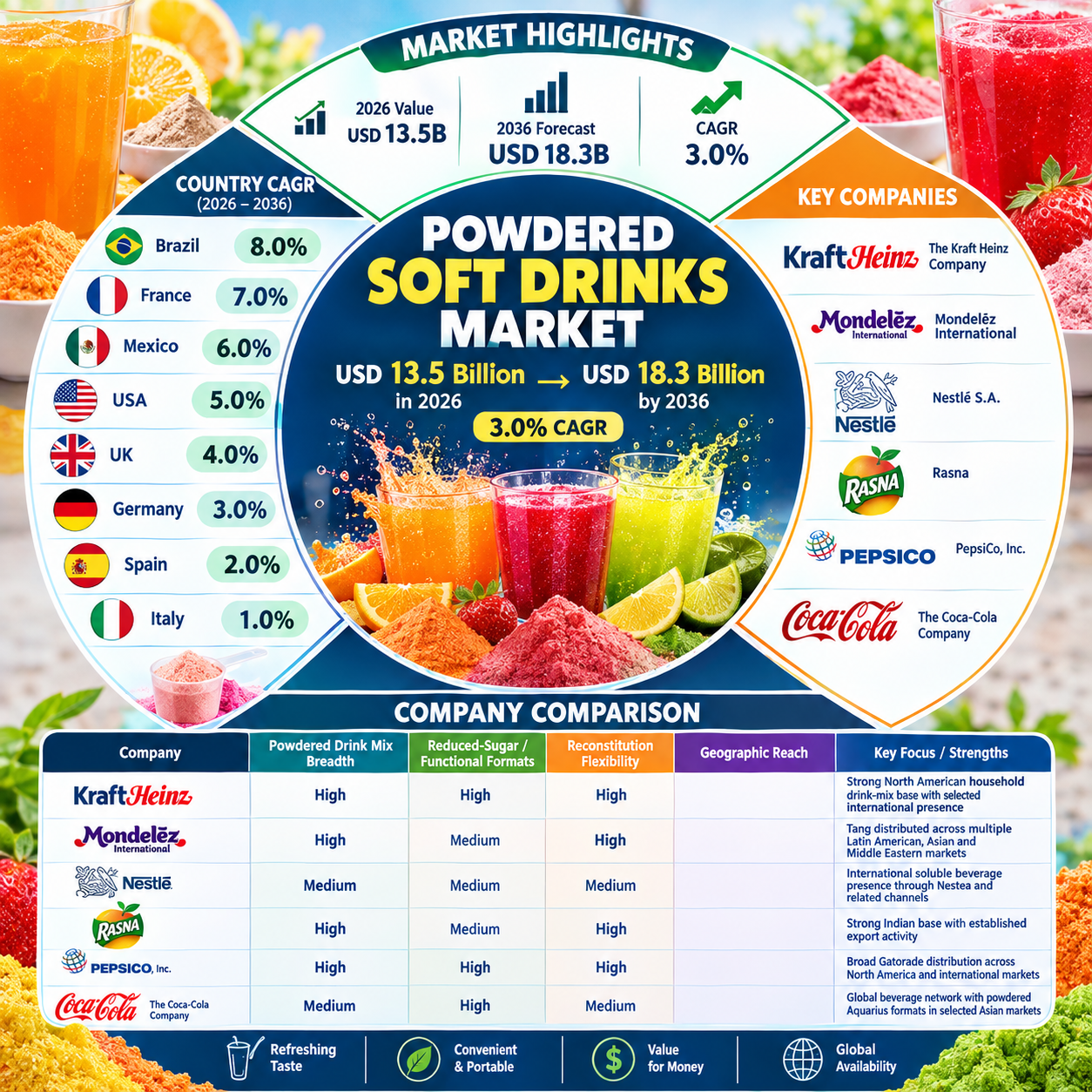
Powdered Soft Drinks Market Orange Leads Flavour Demand at 30.0% The global powdered soft drinks market is forecast to increase from USD 13.5 billion in 2026 to USD 18.3 billion by 2036, expanding at a 3.0% CAGR during the 2026–2036 forecast period, according to Future Market Insights. The market stood at USD 13.1 billion in 2025. Demand remains supported by the economic advantages of dry...
A comprehensive Nuclear Density Gauge Market Analysis reveals an integrated, specialized industrial technology ecosystem connecting radioactive isotope producers, radiation detection component fabricators, precision mechanical shielding foundries, embedded software developers, and field testing end-users. At the foundational layer of this value chain are certified isotope processors producing...